Raytheon Wins $6.3 Billion Interceptor Deal, but Missile Count Is Undisclosed
The United States has given Raytheon a long-term vehicle worth as much as $6.3 billion to manufacture missile interceptors that operate outside Earth’s atmosphere. Yet the disclosed terms omit the figure needed to judge what taxpayers and missile-defense operators will receive: the number of interceptors covered.
Announced October 8, 2026, the official contract notice identifies a base value of $4,432,040,944 and a total potential value of $6,342,404,516 with options. The base period runs five years, with two additional option years. That ceiling is not money already spent: $454,215,132 in fiscal 2026 procurement funding was obligated at award.
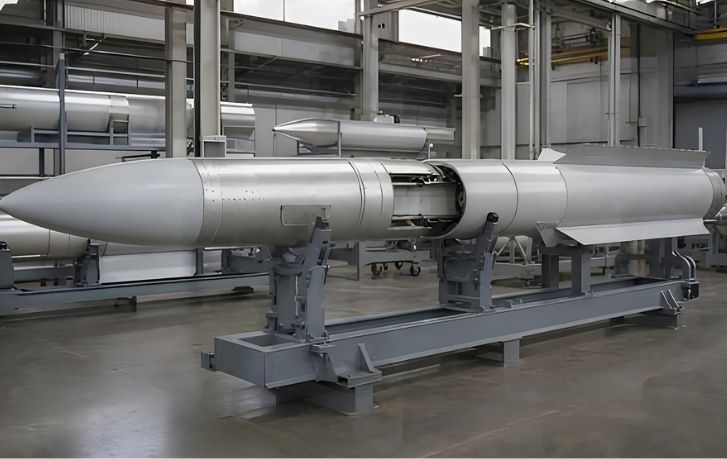
The noncompetitive agreement covers manufacturing and assembly of complete Standard Missile-3 Block IB rounds. Work will occur primarily at Raytheon facilities in Tucson, Arizona, and Huntsville, Alabama, with an estimated completion date of October 31, 2034. The government describes the award as an undefinitized contract action, while allowing work to begin immediately.
What the interceptor does
The SM-3 Block IB occupies a specialized part of the missile-defense architecture. Integrated with the Aegis Ballistic Missile Defense system, it can be launched from naval vessels or land-based Aegis Ashore installations. It is designed to engage short- to intermediate-range ballistic threats during their midcourse flight, after launch but while they are traveling outside the atmosphere.
Unlike an interceptor relying on a conventional explosive warhead, the SM-3 uses a kinetic kill vehicle intended to collide directly with the incoming missile’s warhead. That hit-to-kill method makes sensing, guidance and maneuvering central to the design. The Block IB incorporates a two-color infrared seeker along with upgraded steering and propulsion capabilities used to guide the kill vehicle toward the target.
This role also explains why replenishment cannot be assessed simply by looking at the contract’s dollar ceiling. A complete round brings together rocket motors, guidance hardware, sensing equipment, propulsion components and specialized suppliers. A multiyear commitment can give Raytheon and lower-tier manufacturers more predictable demand, supporting investments in assembly capacity and long-lead components. The government says the arrangement is intended to reduce manufacturing bottlenecks and direct capital toward assembly lines, solid-rocket-motor suppliers and domestic sub-tier vendors.
But production certainty for industry is not the same as a disclosed production result. No annual output target, delivery schedule or interceptor quantity accompanies the announced values. There is consequently no public denominator for calculating an approximate procurement cost per round, and no stated baseline against which to measure whether output is actually increasing.
A ceiling does not measure replenishment
The difference between the $4.43 billion base value and the $6.34 billion potential total also matters. Nearly $1.91 billion depends on options, so the maximum figure describes the government’s purchasing authority if those options are exercised not a guaranteed final expenditure. Sustainment and the length of the performance period further limit any attempt to divide the ceiling into an assumed missile count.
For operators, the central issue is delivery: how many usable interceptors enter inventory and when. For taxpayers, it is whether multiyear purchasing converts a large commitment into measurable output and more stable costs. For suppliers, the benefit is greater demand visibility, although the agreement may also require capital and workforce commitments before every option is exercised.
The replenishment context is real but should remain attributed. Raytheon has said the SM-3 family was first used in combat by U.S. naval forces in 2024 during the response to Iran’s attack on Israel, and USNI News also described that event as the family’s first combat use. Reuters has linked broader demand for interceptors to missile-defense stockpile depletion during recent Middle East conflicts. Those accounts explain the urgency surrounding procurement, but they do not establish how many Block IB rounds this agreement will replace.
The award therefore creates a substantial industrial framework for continued production, but not yet a transparent measure of replenishment. The next meaningful figures are not another ceiling or option value; they are the contracted interceptor quantity, annual production rate and delivery schedule that would show what $6.3 billion can actually put into service.
| More aerospace and engineering stories, right in your MSN feed. Follow AMI on MSN |
By David Whitaker — Associate editor for AMI’s aerospace and drone systems desk, translating flight systems, aircraft programs, spaceflight, and UAV developments into accessible technical stories.