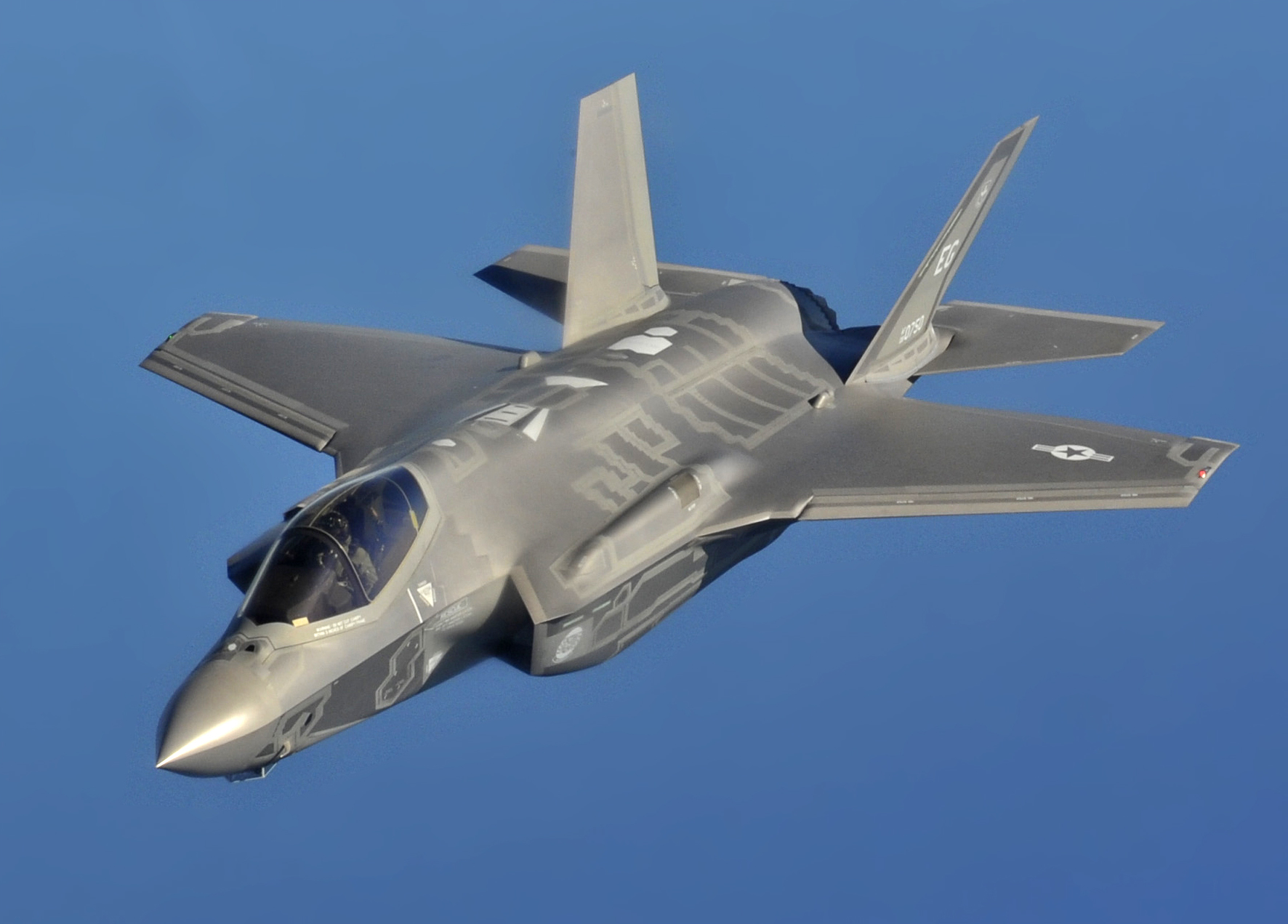
Watch the Fifth-Generation Fighter Reshaping Modern Naval Aviation
Modern naval power projection increasingly depends on dispersing expeditionary combat aviation across contested maritime environments like the Indo-Pacific. Operating fifth-generation stealth strike fighters without relying entirely on traditional supercarriers has forced military planners to rethink the tactical utility of smaller amphibious assault ships. This high-stakes operational mandate centers squarely on the Lockheed Martin ‘F-35B’ Lightning II, the world’s only operational supersonic short takeoff and vertical landing stealth fighter.
For decades, amphibious warfare groups relied on the subsonic ‘AV-8B Harrier II’ to provide close air support from flat-deck amphibious assault ships. While flexible, the aging platform suffered from limited payload capacity, short combat radius, high mishap rates, and zero low-observable protection against advanced surface-to-air missile batteries like the Russian ‘S-400’. Transitioning to a stealth platform required naval aviation to bridge an engineering divide that had defeated aeronautical designers since the beginning of the jet age.
The United States Department of Defense launched the Joint Strike Fighter competition in the 1990s to replace aging fleets of the ‘F-16’, ‘F/A-18 Hornet’, and ‘AV-8B Harrier II’ with three variants built around a shared architecture. While Boeing proposed a direct-lift design with the ‘X-32’, Lockheed Martin and its Skunk Works division leveraged research pioneered by engineer Paul Bevilaqua to develop the winning ‘X-35’. The resulting concept solved the fundamental challenge of vertical flight by divorcing hover thrust generation from pure engine exhaust.
At the core of the production ‘F-35B’ sits the Pratt & Whitney ‘F135-PW-600’ turbofan, capable of generating 43,000 pounds of thrust in conventional flight to push the 25-ton airframe past Mach 1.6. When transitioning to hover mode, the engine utilizes a three-bearing swivel module (‘3BSM’) that rotates the rear exhaust nozzle downward 95 degrees in just 2.5 seconds. Instead of traditional flammable hydraulic fluids, the aircraft employs a specialized fuel-draulic system pressurized to 3,500 pounds per square inch to actuate the swiveling titanium segments under extreme thermal stress.
However, directing 18,000 pounds of hot exhaust downward at the tail would instantly flip the aircraft nose-first into the sea without counterbalancing forward force. Skunk Works solved this physics dilemma by integrating a two-stage counter-rotating Rolls-Royce ‘LiftFan’ directly behind the cockpit. Connected to the main engine via a drive shaft and a multi-disc carbon-carbon clutch, the mechanical fan siphons 29,000 horsepower to pump 20,000 pounds of cold, unheated ambient air straight down through the fuselage.
Two additional roll posts embedded in the wings siphon roughly 3,900 pounds of bypass air to provide lateral stability, bringing total vertical lift to 41,900 pounds. As naval aviation analysts at The War Zone explained, the aircraft achieves this balanced hover entirely without afterburner, mitigating deck erosion and thermal recycling into the engine intakes. Triple-redundant flight computers process thousands of sensor inputs each second, seamlessly articulating the nozzles so the pilot flies via intuitive flight-control stick commands rather than managing individual thrust vectors.
Integrating such mechanical machinery required aggressive weight management across the entire airframe, which uses carbon-fiber composites and bismaleimide resins for roughly 35 percent of its structural weight. The design also eliminated radar-reflective boundary layer diverters by employing a Diverterless Supersonic Inlet bump on each fuselage flank, which compresses air while scattering radar energy. Pilots navigate contested airspace using a $400,000 Gen III Helmet Mounted Display System fed by six Distributed Aperture System cameras that project a continuous 360-degree infrared view through the cockpit floor.
The strategic impact of this mechanical integration became clear when the U.S. Navy and Marine Corps tested the ‘Lightning Carrier’ concept aboard the amphibious assault ship USS Tripoli by embarking 20 ‘F-35B’ fighters simultaneously. Allied navies including the United Kingdom, Japan, and Italy have adopted similar operational doctrines to convert short-deck helicopter carriers into fifth-generation strike hubs. By turning short flat decks into survivable forward airbases, the aircraft has redefined how naval forces project combat power without needing a supercarrier nearby.