Drone Threat Shuts All Four Moscow Airports; Two Partly Reopen
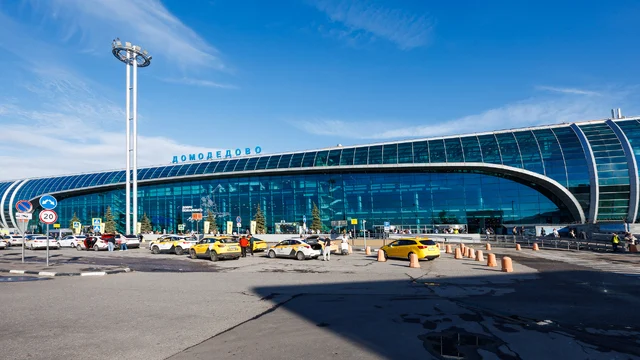
A drone threat stopped arrivals and departures at all four airports serving Moscow on October 23, 2026, temporarily removing normal flight capacity across the capital’s entire airport network. Russia’s civil aviation authority, Rosaviatsiya, later allowed Vnukovo and Domodedovo to resume clearance-based operations, but no corresponding reopening was reported at Sheremetyevo or Zhukovsky at that point.
The disruption developed in stages. Vnukovo and Domodedovo began requiring official clearance for flights at 12:55 and 13:00 Moscow time, respectively. Rosaviatsiya then published network-wide restrictions at 14:05, citing flight safety. Shortly before 15:00, Sheremetyevo declared an air raid alert, directed passengers toward safe areas and shelters, and restricted access to secure airside sections of its terminals.
Rosaviatsiya said additional terminal personnel were deployed and airlines were modifying schedules. At 16:43, the authority said Vnukovo and Domodedovo had resumed accepting and dispatching aircraft under the earlier clearance regime. The partial reopening restored some movement, but it did not return Moscow’s four-airport system to normal operation.
Why one threat affected an entire airport network
Airports operate as connected nodes rather than isolated runways. When several airports serving the same metropolitan area stop accepting and dispatching aircraft, airlines lose many of the alternatives normally used to absorb disruption. Aircraft can be held at their departure points, delayed before entering affected airspace or diverted, while crews, gates and passengers fall out of their planned sequence.
This makes recovery more complicated than lifting a single closure. Each airport needs an operating status compatible with the surrounding airspace, air traffic control clearances, airline schedules and conditions on the ground. Reopening two airports under a clearance regime therefore provided controlled capacity rather than an immediate reset.
That distinction is visible in the traffic figures. The Kyiv Independent, citing FlightRadar24, reported 85 cancellations and another 229 delays at Sheremetyevo over the day. Those figures apply to one airport, but they illustrate how quickly a safety restriction can propagate into hundreds of disrupted flight movements. Even after traffic starts moving again, displaced aircraft and crews can leave delays extending beyond the original alert period.
The shutdown also demonstrates why an external unmanned-aircraft threat can have a major aviation effect without confirmed physical damage to airport infrastructure. Civil aviation authorities must account for the aircraft in the air, protected airport areas and the activity of other agencies responding to the threat. The resulting safety buffer can remove runway and airspace capacity before any airport itself is struck.
The International Civil Aviation Organization describes unlawful drone incursions around airports as a growing concern requiring coordination among the organizations responsible for civil aviation infrastructure. Its public guidance on unmanned-aircraft intrusion protection emphasizes a comprehensive response involving relevant stakeholders. Moscow’s phased restrictions show the operational side of that coordination: airport status depends on more than whether a runway is physically usable.
Repeated alerts create readiness and capacity pressure
Reports indicate that Moscow’s four airports had faced frequent suspensions during October, with some closures reportedly lasting as long as nine hours. Repeated restrictions create a different burden from a single short interruption. Airports and airlines must repeatedly activate passenger-management procedures, revise schedules and maintain staff readiness while the duration of each alert remains uncertain.
The pressure is asymmetric at the network level. A drone alert does not need to disable a terminal or runway to consume substantial aviation capacity. The safety response itself can stop departures and arrivals across multiple facilities, while reopening requires airport-specific clearance. A relatively limited aerial threat can consequently impose a much broader scheduling and logistics burden on the civil system responding to it.
Reported drone totals require careful attribution. Moscow Mayor Sergei Sobyanin said nine approaching drones had been destroyed by 13:39. The Moscow Times later reported that he put the number at 21 over a two-hour period. The figures were issued at different times and remain official claims rather than independently verified totals. For airport operations, the firmly documented result is the restriction itself: all four airports stopped normal arrivals and departures.
Vnukovo and Domodedovo’s clearance-based return marked the first recovery step, not the end of the disruption. With Sheremetyevo and Zhukovsky lacking a reported status change at that stage, Moscow was still operating with an uneven airport network two facilities moving aircraft conditionally and two without an announced reopening.
| More aerospace and engineering stories, right in your MSN feed. Follow AMI on MSN |
By Stephen Wallace — Editor for AMI’s aerospace integration and unmanned mobility coverage, focused on drone manufacturing, VTOL systems, autonomous networks, and air-ground mobility links.