Reported Ukrainian Drone Attacks Disrupt 210-Plus Flights at Moscow Airports
More than 210 flights were delayed or canceled across Moscow’s airports by noon on October 24 amid drone attacks attributed to Ukraine, according to Russian outlet Ostorozhno, Novosti. The disruption reached multiple parts of the metropolitan airport network, leaving travelers with cancellations, an international diversion and, at Domodedovo, unavailable online flight information.

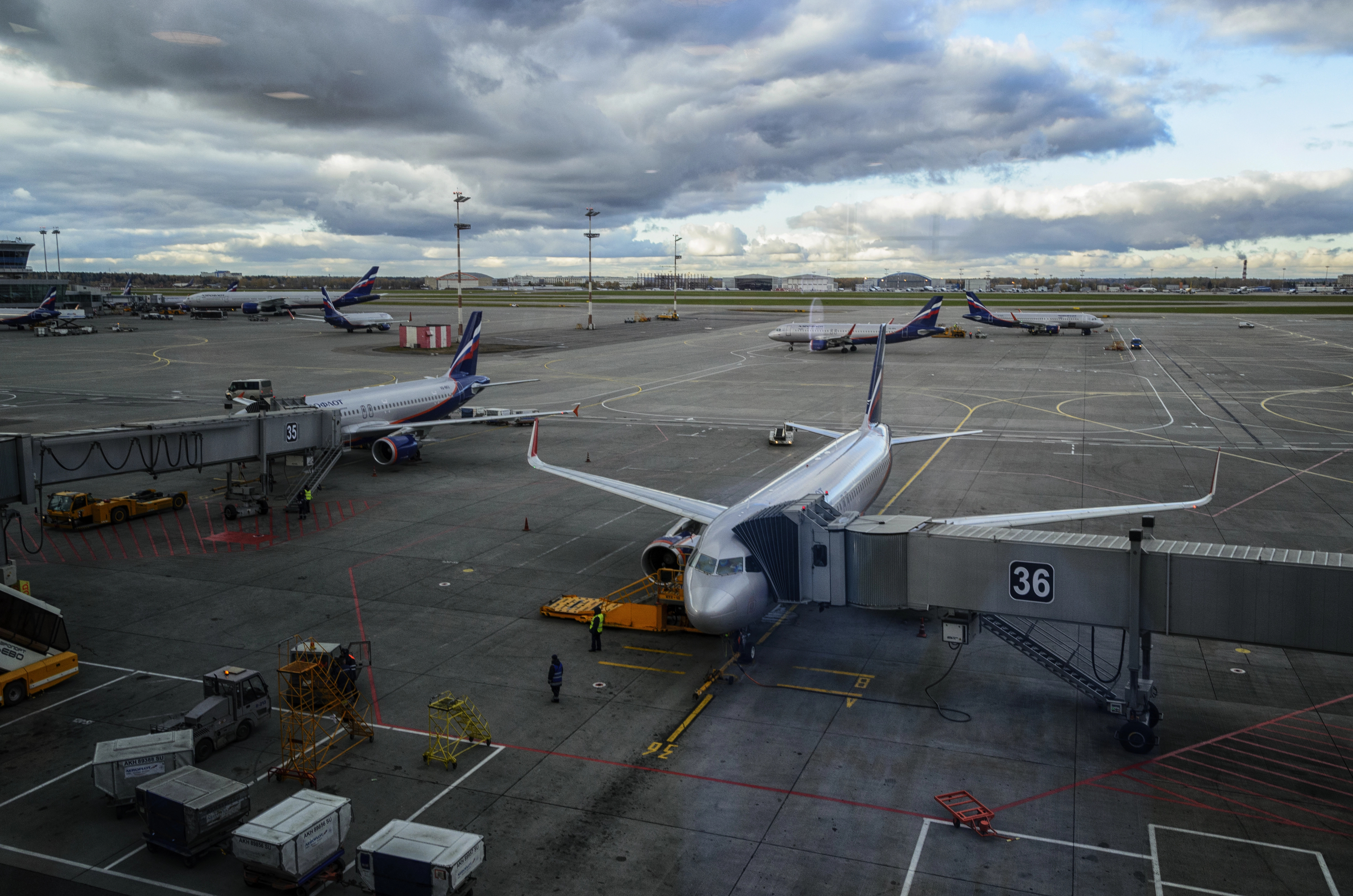
Sheremetyevo recorded the largest documented impact: 171 affected flights, including 65 departures. Its press service said the airport was operating on an adjusted schedule because of airspace restrictions in several Russian regions. No formal closure was announced, although passengers reported delays and cancellations beginning by at least 6 a.m.
The figures for the other airports were collected separately and should not be treated as one synchronized network count. About 40 flights were reported delayed or canceled at Vnukovo, while more than 25 were affected at Domodedovo based on flight-tracking data cited in the account. Domodedovo’s website and online flight-information board also became unavailable. A flight from Antalya to Moscow diverted to Yekaterinburg.
Why an adjusted schedule can still produce widespread disruption
An airport does not need to announce a complete closure to lose substantial operating capacity. Regional airspace restrictions can narrow or interrupt the routes available for arrivals and departures. Aircraft already on the ground may then wait for a usable departure window, while inbound services can be held, delayed, diverted or canceled.
At a large connecting airport such as Sheremetyevo, those constraints can spread beyond the initial restriction. A delayed arriving aircraft may be scheduled to operate another service later in the day. Gates and ground-handling resources remain occupied longer than planned, and revised departure sequences must compete for whatever capacity becomes available. The result can be a high disruption count even while some flights continue operating.
The international diversion illustrates another boundary of the network response. When a Moscow arrival cannot continue as planned, the effect is transferred to another airport rather than eliminated. The airline must accommodate the aircraft and passengers at the diversion point before it can restore the intended schedule.
Passenger information is another operational dependency. Domodedovo’s unavailable website and flight board removed two channels travelers normally use to verify changing departure times and cancellations. The available information does not identify why those systems went offline, but their loss compounded the disruption by making an already fluid schedule harder for passengers to follow.
Conflict-zone risk management reaches civilian schedules
The International Civil Aviation Organization says governments, airlines and air navigation service providers must exchange current risk information for operations over or near conflict zones. Its conflict-zone aviation guidance also notes that airlines commonly perform their own risk assessments, sometimes with third-party security monitoring. Those overlapping decisions can affect whether a flight departs, reroutes or remains on the ground.
For airport operators and air traffic managers, the central challenge is balancing continuity against a threat picture that may change faster than a normal airline schedule can absorb. Restrictions can be imposed across more than one region, so runway availability at the destination is only one part of the capacity equation. The usable airspace connecting an airport to the wider route network can become the limiting factor.
The October 24 disruption also followed a simultaneous temporary suspension at all four Moscow airports Sheremetyevo, Domodedovo, Vnukovo and Zhukovsky during a drone attack on October 23. Repeated interruptions increase readiness pressure because operators must keep reassessing airspace conditions while managing aircraft and passengers displaced by earlier schedule changes.
Ukraine’s Foreign Ministry said in September that it had warned ICAO about flights to Russia and urged airlines to avoid them. Ukrainian President Volodymyr Zelenskyy had also warned that Russian airspace was becoming dangerous for airlines, insurers and other international air-transport participants. Those statements establish Ukraine’s public position on the aviation risk; they do not independently verify every operational detail reported on October 24.
The clearest measure of the network’s reduced reliability is Sheremetyevo itself: 171 flights were affected without a formally announced closure. An airport can remain open in name while regional restrictions sharply reduce what its schedule can actually deliver.
| More aerospace and engineering stories, right in your MSN feed. Follow AMI on MSN |
By Stephen Wallace — Editor for AMI’s aerospace integration and unmanned mobility coverage, focused on drone manufacturing, VTOL systems, autonomous networks, and air-ground mobility links.