


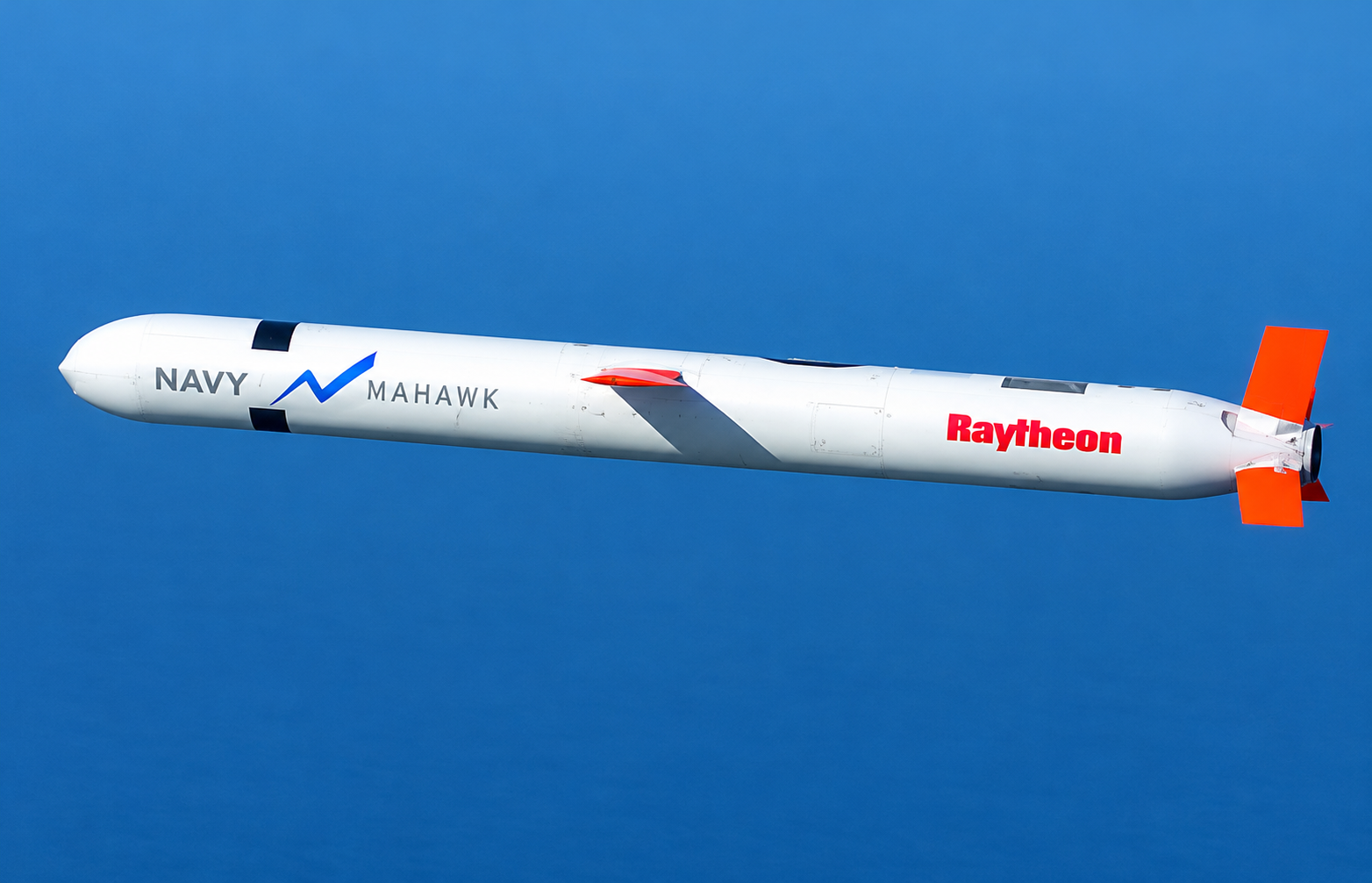
Navy’s $22.9 Billion Raytheon Deal Targets Sixteenfold Tomahawk Output Increase
Sixty missiles a year must become more than 1,000. That is the production gap behind the Navy’s seven-year, $22.9 billion contract with Raytheon, an RTX business. The award targets an increase of more than sixteenfold, but no public schedule identifies when the company must reach that annual rate.

The missing schedule is important because the contract establishes demand, not instant factory output. Raytheon said it delivered three times as many missiles in the first half of 2026 as during the same period in 2025, but it did not disclose the underlying totals. A large percentage increase from a low baseline may still leave a substantial distance to the Navy’s goal.
A long lead-time problem, not just a funding problem
A Project On Government Oversight analysis estimated that a Tomahawk takes 47 months to deliver after a contract is signed and identified manufacturing capacity, rather than funding alone, as the binding constraint. That estimate illustrates the central challenge for the Navy: appropriating billions can create predictable demand, but it cannot immediately produce trained workers, qualified equipment or additional output from specialized suppliers.
Raytheon President Phil Jasper said the company is investing in workforce, technology, supply-chain capacity and facilities. Tomahawk work is spread across Tucson, Arizona; Huntsville, Alabama; and Andover, Massachusetts, while a nationwide network supplies components. Every layer must increase throughput in step. Expanding final assembly accomplishes little if propulsion, electronics, mechanical hardware or other qualified parts continue arriving at the old rate.
L3Harris shows how far that network extends beyond the prime contractor. The company, which has supported Tomahawk production for more than 30 years, supplies the missile’s Mk 135 solid-propellant booster and blast-fragmentation warhead. It has signed a separate multiyear Navy agreement to expand manufacturing capacity for Tomahawk components, although neither the agreement’s value nor a specific production increase was disclosed.
Small components can impose equally large limits. Precision ball screws used in military systems are made by only a handful of U.S. companies, and existing suppliers are already near capacity. Such shortages can add months or years to missile production schedules. The example does not identify a Tomahawk-specific delay, but it demonstrates why a production network can remain constrained by an obscure part even after its prime contractor adds factory space.
What taxpayers are buying
The $22.9 billion award should be understood as a long-term attempt to purchase both missiles and the industrial capacity required to build them faster. Its seven-year duration gives Raytheon and suppliers greater confidence to hire workers, install machinery and expand facilities. Those investments carry lead times of their own, and new processes still must meet applicable production and quality requirements.
The public accountability test is therefore sustained delivery growth, not the contract’s headline value. The available information does not specify a year-by-year delivery plan, the date for exceeding 1,000 missiles annually or how much money is immediately obligated. Without those benchmarks, taxpayers cannot yet compare annual spending with planned increases in completed missiles.
The Navy is also paying to preserve missiles already in service. Raytheon received another $381 million in January to recertify and upgrade Tomahawks through an existing contract. New production and inventory modernization serve different needs, but both compete for engineering attention, skilled labor and supplier capacity.
A production race across multiple programs
The Tomahawk expansion is part of a wider effort involving Patriot, Terminal High Altitude Area Defense and Standard Missile production. That breadth creates a tradeoff: suppliers may receive stronger long-term demand, yet several programs can compete for the same limited manufacturing skills, materials and specialized components.
A Congressional Research Service assessment said the Defense Department inspector general had cited inventory shortfalls, industrial-base bottlenecks and the significant lead time needed to expand capacity. The Congressional Budget Office separately estimated that replacing certain expended missile interceptors would probably require at least five years even with higher production rates. That finding concerned interceptors rather than Tomahawks, but it provides a useful boundary for interpreting any multiyear missile award: higher funding and a higher target do not erase industrial lead times.
Raytheon now has seven years of demand visibility and a target above 1,000 Tomahawks annually. Reaching it means converting a production system measured in dozens into one measured in thousands and ensuring that workers, factories and outside suppliers all arrive at the new rate together.
| More aerospace and engineering stories, right in your MSN feed. Follow AMI on MSN |
By David Whitaker — Associate editor for AMI’s aerospace and drone systems desk, translating flight systems, aircraft programs, spaceflight, and UAV developments into accessible technical stories.



