


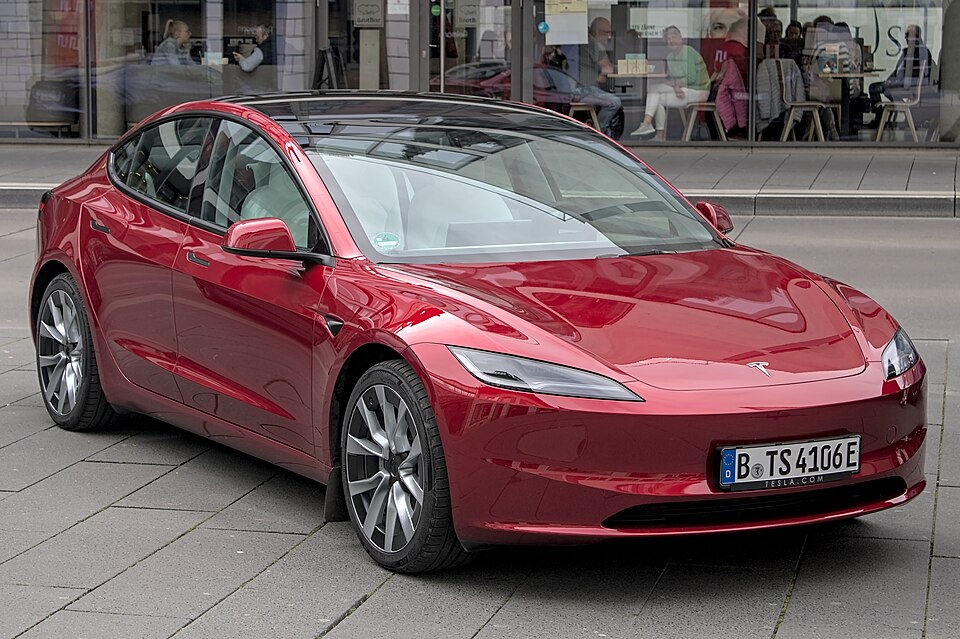
Tesla Model 3 Saves Buyers A$9,000 but Rides Rougher and Louder
Two Australian Tesla Model 3 variants share the same battery, rear motor and headline performance, yet one costs A$9,000 less. A completed road test found where Tesla recovered that money: the cheaper Model 3 was busier over urban bumps, generated more tire noise on coarse pavement and offered less cornering grip than the A$54,900 Premium RWD.

Priced at A$45,900 before on-road costs, the entry Model 3 RWD retains the 62.5-kWh lithium-iron-phosphate battery and 208-kW motor used by the Premium. Tesla lists 572 km of driving range under the WLTP test procedure 52 km more than the Premium and quotes a 6.2-second run from zero to 100 km/h, only one-tenth slower.
That makes this a different cost-reduction strategy from installing a smaller battery or detuning the propulsion system. Tesla has protected the specifications that dominate electric-car comparisons while reducing spending on the components that isolate occupants from the road.
Same electric platform, less chassis refinement
The base car runs on 18-inch steel wheels with aerodynamic covers and Giti 235/45 R18 efficiency-oriented tires. It also uses simpler dampers instead of the Premium model’s higher-grade frequency-selective units and goes without acoustic rear glass.
These substitutions affect several systems at once. Smaller wheels and low-rolling-resistance tires can support efficiency and help explain the longer official range, but the tested tires delivered less grip and less progressive behavior as they approached their limit. In a rear-wheel-drive electric car, immediate motor torque can make that difference apparent. Traction control contained slip during the test, although its intervention substantially reduced power.
The damper change was most noticeable at lower speeds. On urban roads, the entry car felt stiffer and busier over broken surfaces than the Premium. Its ride improved above 70 km/h on good pavement, so the comfort penalty varied with speed and road quality rather than remaining constant.
Noise followed a similar pattern. Without the Premium’s acoustic rear glass and with the less expensive tire package, tire roar became more prominent on coarse-chip roads. Electric propulsion removes much of the engine noise that would otherwise mask road and tire sound, making changes in the acoustic package especially noticeable inside the cabin.
Range and charging remain intact
The test car consumed 11.8 kWh per 100 km across motorway, rural and urban driving in 23-degree weather with the air conditioning running. That produced an indicated range of approximately 530 km. It was below the laboratory-derived 572-km rating but showed that the lower price had not eliminated the Model 3’s underlying efficiency.
Fast-charging capability is also preserved. The car accepts DC charging at up to 175 kW, with a claimed 10-to-80-percent time of about 25 minutes. Its 11-kW AC capability gives a stated empty-to-full charging time of roughly six hours under appropriate conditions.
Parked software functions can create a separate range cost. With Sentry Mode and Cabin Overheat Protection active, the tested car lost more than 100 km of indicated range over two days. That result reflects the test conditions and settings, but it demonstrates that auxiliary loads can be material even when propulsion efficiency is strong.
Equipment cuts stop short of the safety baseline
The cabin loses ventilated front seats, heated rear seats, the second-row display, ambient wraparound lighting, floor mats and auto-dimming side mirrors. The audio system drops from nine speakers to seven, while seat adjustment moves to the central touchscreen. Tesla retains the 16-inch display, panoramic glass roof, heated front seats and steering wheel, dual-zone climate control, heat pump, two wireless phone chargers and powered tailgate.
The cost-reduced RWD is covered by the existing five-star 2025 ANCAP rating, according to an independent Australian review of the variant. The assessed Model 3 recorded 90% for adult-occupant protection, 95% for child-occupant protection, 89% for vulnerable-road-user protection and 88% for safety assistance.
The A$9,000 saving therefore leaves the Model 3’s battery capacity, motor output, rated range, charging limits and assessed safety baseline in place. The price difference is felt primarily through the interface between car, road and occupants: simpler damping, lower-grip tires, reduced sound isolation and fewer comfort features. Buyers keep the headline electric specifications, but broken pavement and coarse highways reveal what was removed.
| More aerospace and engineering stories, right in your MSN feed. Follow AMI on MSN |
By Thomas Caldwell — AMI’s senior editor for mechanical and mobility engineering, covering vehicle electronics, systems integration, electrification, chassis systems, propulsion, and safety policy.




