


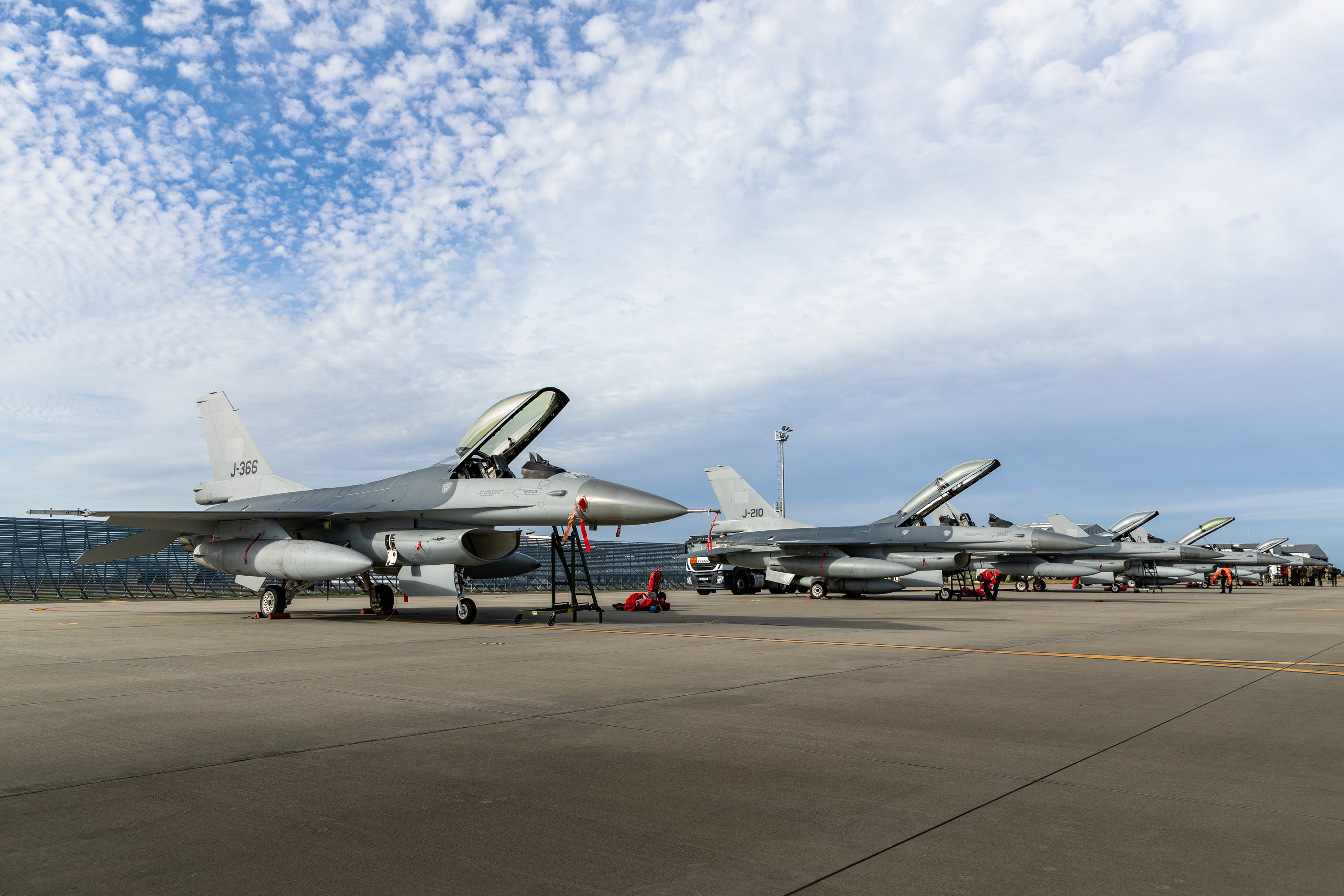
Sabena Plans to Service Six Ukrainian F-16s Monthly, Up From Four
Six aircraft per month is the target for Sabena Engineering’s Ukrainian F-16 maintenance operation, up from the four it currently services. Belgian Defense Minister Theo Francken disclosed the planned increase in an interview published by Ukrinform and reported by The New Voice of Ukraine. Moving from four monthly maintenance slots to six would represent a 50% increase in stated throughput.

That increase has not yet been achieved, and no implementation date was provided. Still, two additional slots each month could help return more fighters from European maintenance to Ukrainian service. Ukrainian President Volodymyr Zelensky has said that about half of the country’s F-16s have spent an extended period in Europe for repairs and maintenance, although no fleet total or independent availability data accompanied that claim.
The distinction between maintenance capacity and aircraft availability matters. A company can expand the number of jets entering or moving through its facilities, but the completion rate also depends on inspection findings, parts availability, repair complexity and external approvals. “Six per month” therefore describes a planned servicing volume, not a guarantee that six aircraft will return to Ukraine every month.
More hangar capacity cannot manufacture obsolete parts
Sabena Engineering is a Belgian maintenance, repair and overhaul provider within the international ORAXYS Group. Its workload includes civilian airliners, military transports and fighter aircraft operated by Belgium and other NATO countries. That experience gives it an established maintenance base, but Ukraine’s F-16s present a supply-chain problem familiar across aging military fleets: some components for early F-16 variants are no longer manufactured and are becoming harder to procure.
Discontinued components can turn a straightforward repair into a sourcing exercise. A required item may have to come from existing inventories, another retired aircraft or an approved repair process rather than a current production line. The constraint is not simply whether technicians and hangar space are available; it is whether the correct component, documentation and configuration support arrive when the aircraft reaches the relevant stage of work.
This is why the planned 50% throughput increase could ease one bottleneck without eliminating the broader delay. Added capacity can reduce queues and allow more inspections or repairs to proceed in parallel. It cannot by itself shorten every component lead time or resolve obsolescence across early-production aircraft.
The issue is not unique to Ukraine’s fleet. The U.S. Air Force has publicly described dismantling a retired F-16 to recover hard to find, discontinued components for other aircraft. That practice illustrates the sustainment economics of a mature fighter design: as production configurations change and suppliers leave older product lines, usable parts from inactive airframes can become a practical source of support.
Configuration control adds another layer
A separate Belgian transfer plan shows how aircraft configuration can affect timelines even when complete jets are available. Francken said Belgium intends to provide three F-16s to Ukraine, but their transfer requires French approval because the aircraft were upgraded with French radiation-warning technology. The additional agreement covers the onward transfer of that technology to a third country.
That approval is distinct from Sabena Engineering’s maintenance expansion, but it exposes another constraint in multinational fleet support. Older fighters can contain equipment, software and subsystems originating in several countries. A transfer may consequently involve not only logistics and physical preparation but also the permissions attached to installed technology.
For Ukraine, the immediate industrial gain would be measurable but bounded: Sabena Engineering plans to add two monthly servicing slots, taking its stated volume from four aircraft to six. Whether that translates into consistently faster returns will depend on what technicians find, how quickly scarce components can be sourced and how long configuration-specific work takes. Until a start date and achieved output are disclosed, six aircraft per month remains a capacity target rather than an operating result.
| More aerospace and engineering stories, right in your MSN feed. Follow AMI on MSN |
By David Whitaker — Associate editor for AMI’s aerospace and drone systems desk, translating flight systems, aircraft programs, spaceflight, and UAV developments into accessible technical stories.




