


Tesla Owner Says 1,857 Miles Cost $136, Plus $1,035 for Home Charging
$136 divided by 1,857 miles works out to approximately 7.3 cents per mile. That was one Tesla owner’s reported home-charging result over 31 days, based on information displayed in the Tesla app. The same app estimated that covering those miles with gasoline would have cost $235 more.
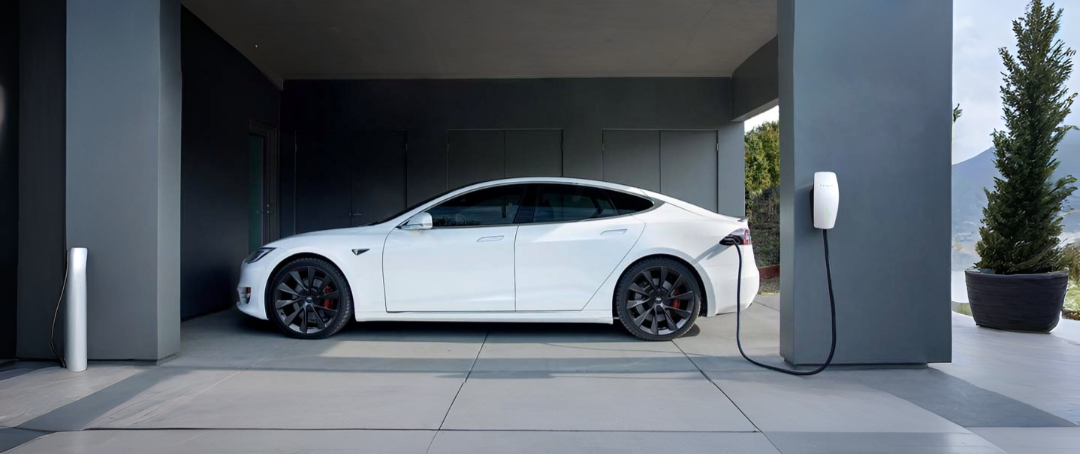
The monthly figure is striking, but it is not the complete cost comparison. The owner also reported spending $585 on a Tesla Wall Connector and $450 to connect it to the home’s breaker box. That brought the home-charging setup to $1,035 before the first month’s energy savings could begin offsetting the installation.
The app’s gasoline comparison implies a total fuel bill of approximately $371 for the same 1,857 miles: the $136 electricity cost plus the claimed $235 difference. That equals roughly 20 cents per mile, compared with the attributed charging cost of 7.3 cents per mile.
Those calculations accurately reflect the numbers reported, but the underlying comparison is incomplete. The Tesla model, electricity tariff, gasoline vehicle, fuel economy, regional fuel price, weather and charging losses were not identified. Without those inputs, the app’s $235 estimate cannot be treated as a controlled comparison or generalized to every Tesla owner.
High mileage shortens the simple payback period
The owner averaged about 59 miles per day. That level of use matters because a fixed installation expense is recovered more quickly when a vehicle travels and charges more frequently. A driver covering half as many miles under otherwise identical conditions would generally accumulate energy savings more slowly.
Using the claimed $235 monthly advantage, dividing the $1,035 charger-and-hookup expense by $235 produces a simple payback period of approximately 4.4 months. This calculation assumes the same mileage, charging cost and gasoline comparison continue each month. It also excludes financing costs and any changes in energy prices.
Simple payback should not be confused with total ownership-cost parity. The reported numbers do not include vehicle purchase price, taxes, depreciation, insurance, maintenance or repair expenses. Although the owner cited the reduced mechanical complexity of an electric drivetrain as a potential benefit, no repair-cost breakdown was provided. There is therefore no basis here for assigning a verified maintenance saving.
Electricity location and charging method can change the result
Home electricity prices vary substantially across the United States. The U.S. Energy Information Administration’s June 2026 electricity update put average residential revenue at 18.34 cents per kilowatt-hour nationally. State averages in the contiguous United States ranged from 8.96 cents in New Mexico to 28.50 cents in California. These are broad residential averages rather than the owner’s specific tariff, but the spread illustrates why identical cars can produce different charging bills.
Rate structure also matters. A household may face flat pricing, time-dependent rates or other utility charges that alter the effective cost of charging. Vehicle efficiency, ambient temperature and energy lost between the electrical panel and battery can further affect how much purchased electricity is needed for each mile.
The result also depends on home charging. AAA reported a national public-charging average of 42 cents per kilowatt-hour in September 2026, substantially above the EIA’s national residential average. The two figures come from different datasets and cannot reconstruct this owner’s bill, but they show why replacing regular home charging with paid public charging could materially weaken the per-mile advantage.
Insurance remains another unresolved variable. Premiums depend on the driver, location, model, coverage and insurer, so an energy-cost result cannot establish whether the vehicle costs less to own overall. The reported month establishes a narrower point: under this owner’s conditions, 1,857 miles required $136 in home electricity.
For a high-mileage driver, that recurring figure can recover a four-figure charging installation relatively quickly if the app’s comparison holds. For anyone with higher electricity rates, lower annual mileage, expensive public charging or different insurance and depreciation costs, the same $1,035 setup may take much longer to justify.
| More aerospace and engineering stories, right in your MSN feed. Follow AMI on MSN |
By Thomas Caldwell — AMI’s senior editor for mechanical and mobility engineering, covering vehicle electronics, systems integration, electrification, chassis systems, propulsion, and safety policy.



