Blue Origin Plans $550 Million, 1.3-Million-Square-Foot Texas Satellite Factory
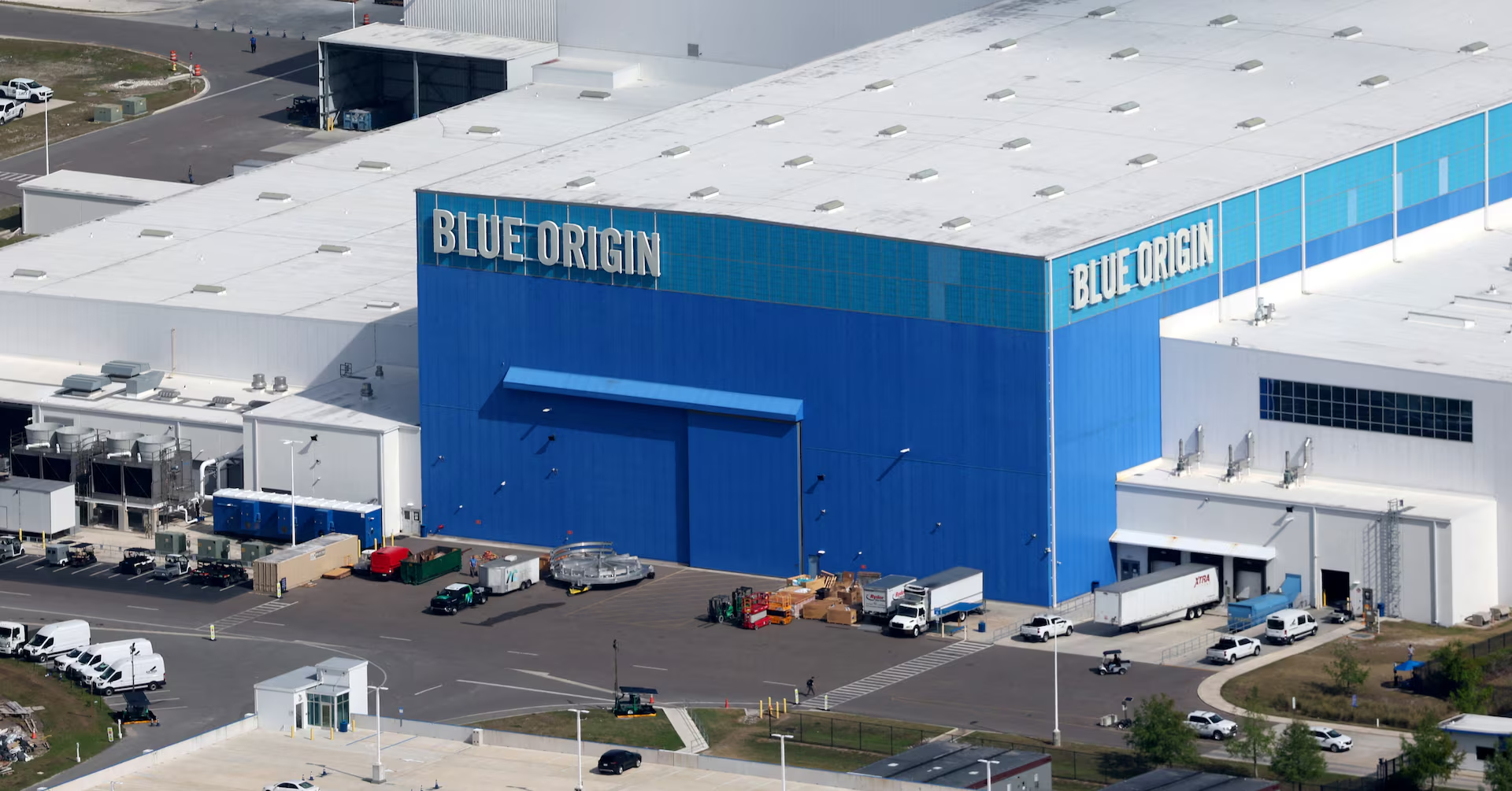
$550 million is Blue Origin’s planned commitment for a satellite-manufacturing complex large enough to change the scale of its spacecraft business. The company announced Constellation Park on October 8, describing a 1.3-million-square-foot campus in Hutto, Texas, that would eventually support more than 2,000 manufacturing and related jobs.
The figures are substantial, but they remain targets. Construction is scheduled to begin in early 2027, while primary assembly lines are intended to support initial launches for Blue Origin’s TeraWave satellite network late that year. Neither the factory, its projected workforce nor its production capacity is operational yet.
A factory built around production flow
Constellation Park is planned as more than an assembly hall. Its cleanrooms, environmental-test chambers and automated lines would bring spacecraft assembly, qualification testing and selected ground-hardware production onto one campus. Blue Origin also plans to manufacture satellite subsystems there, including solar arrays, avionics and telecommunications hardware.
That consolidation matters because a large constellation imposes a different industrial problem from building a small number of specialized spacecraft. Hardware must move repeatedly through assembly, inspection, testing and acceptance without allowing one delayed component or test station to stall the broader production flow. Automated equipment can improve repeatability, but environmental qualification and quality control remain necessary before flight hardware can leave the factory.
Blue Origin says the vertically integrated arrangement could shorten satellite assembly cycles and streamline deliveries to its New Glenn heavy-lift rocket. That is the intended advantage: fewer handoffs between separate sites and a closer connection between spacecraft production and launch planning. The practical result, however, will depend on whether the company can commission the equipment, qualify its processes and bring both satellite and rocket operations up to the required cadence.
Two networks would use the Texas campus
The largest planned workload comes from TeraWave, a proposed network of 5,408 satellites in low and medium Earth orbit. Blue Origin describes it as an optically interconnected communications system for enterprise, data-center, government and defense customers, with as much as 6 terabits per second of symmetrical backbone connectivity.
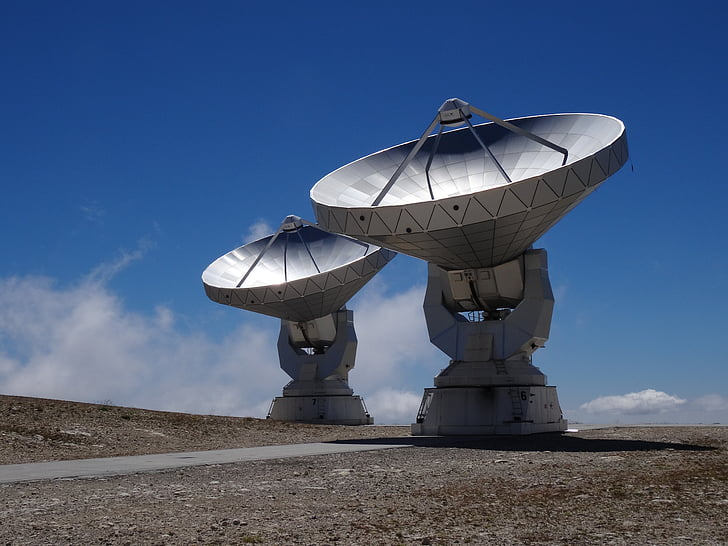
Constellation Park would also produce tracking antennas and related equipment for Quartz, Blue Origin’s ground communications network. That gives the campus a broader role than producing spacecraft alone: it would supply parts of both the orbital network and the ground infrastructure required to communicate with satellites.
Manufacturing those product lines together could simplify coordination among satellite, antenna and communications-hardware teams. It also concentrates execution risk. A delay in completing the campus, validating an automated line or qualifying a subsystem could affect several parts of Blue Origin’s communications plans rather than one isolated program.
Jobs and financing are also forward-looking
Local development plans project as many as 2,000 advanced manufacturing and engineering jobs during a 10-year scale-up. Blue Origin already employs more than 550 people in Texas, where it has maintained a presence since establishing Launch Site One in 2006. The new employment figure should nonetheless be read as the upper end of a long-term plan, not an immediate hiring total.
The factory announcement followed founder Jeff Bezos’s October 7 confirmation that Blue Origin had opened a $10 billion primary equity round to outside institutional investors. That financing provides context for the capital required to expand from development programs into sustained production. Bezos said a possible public offering could still be possibly several years from now, leaving the near-term industrial buildout as the more concrete development.
For now, Constellation Park is a statement of intended scale: 1.3 million square feet, thousands of planned spacecraft, ground equipment and as many as 2,000 jobs. The first decisive milestone is more basic starting construction in early 2027 and turning that footprint into qualified production lines in time for the targeted late-2027 launch support window.
| More aerospace and engineering stories, right in your MSN feed. Follow AMI on MSN |
By David Whitaker — Associate editor for AMI’s aerospace and drone systems desk, translating flight systems, aircraft programs, spaceflight, and UAV developments into accessible technical stories.