


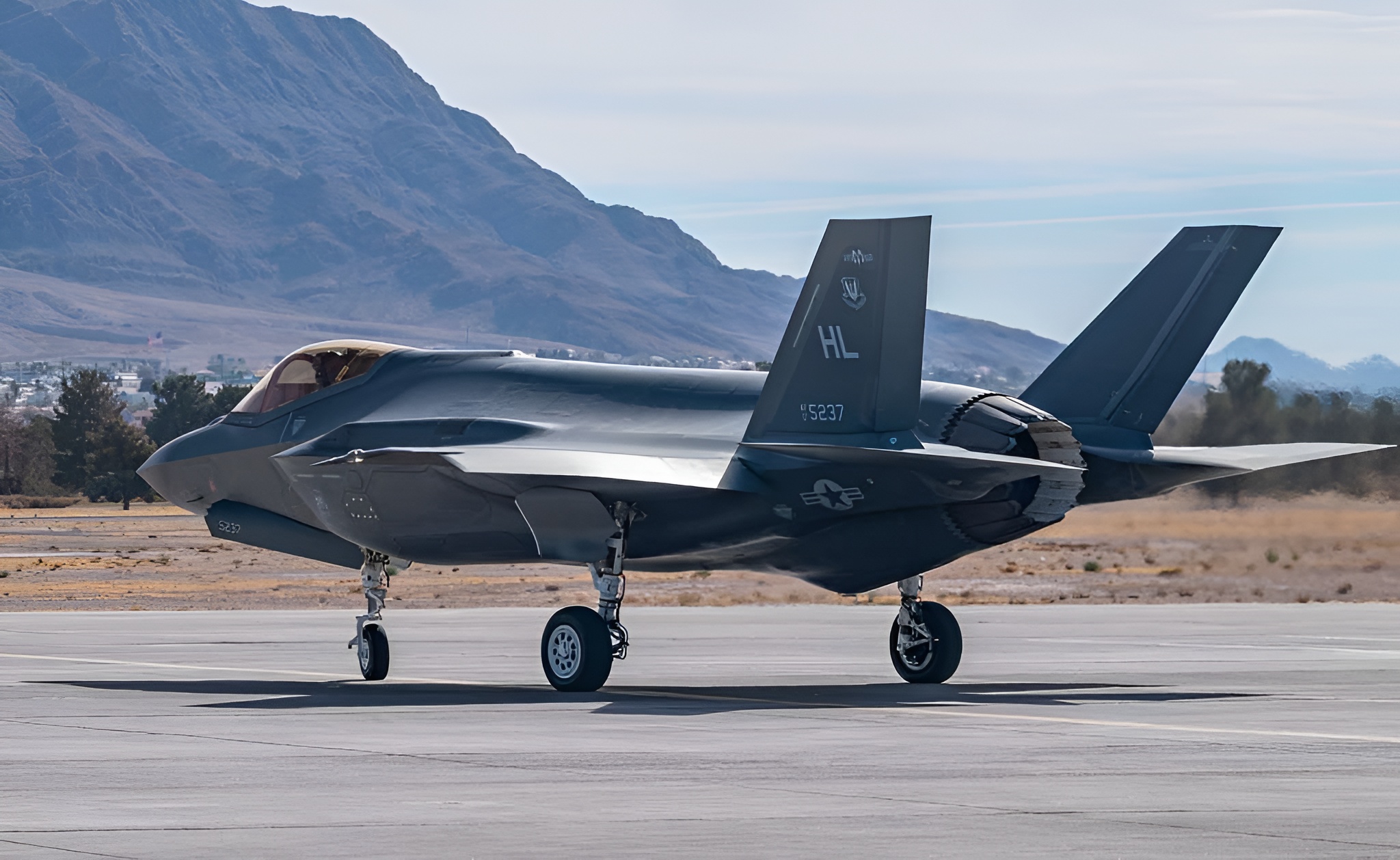
U.S. Approves Possible $24.3 Billion Saudi Package for 48 F-35 Fighters
$24.3 billion is the estimated ceiling for a possible package covering 48 Lockheed Martin F-35A fighters and related equipment for Saudi Arabia. The U.S. State Department approved the potential Foreign Military Sale on September 17, 2026, moving it into congressional review but not establishing a completed purchase.

That distinction is central to understanding both the number and the program impact. Saudi Arabia has not been shown to have signed a final contract, spent the estimated amount or received an aircraft. Prices and quantities can change during negotiations, and Congress has a 30-day review period in which it can attempt to block the transfer, according to details reported with the approval notice.
The package price is not an aircraft unit price
Dividing $24.3 billion by 48 produces a figure above $500 million per aircraft, but that would be a misleading description of the F-35A’s price. The proposed total is a package estimate rather than a flyaway cost for 48 bare aircraft.
The approval covers related equipment and support in addition to the fighters. Reported package details include 49 Pratt & Whitney F135 engines, support equipment and training. Those elements matter because introducing a new combat-aircraft type requires much more than delivering airframes: personnel must be trained, ground-support resources established and a continuing support structure arranged.
None of that work should be treated as finalized here. The available approval does not specify a delivery schedule, final configuration, basing plan or completed training and sustainment arrangement. It also does not announce a production-rate increase. Those would require later decisions and more detailed agreements if the procurement proceeds.
A regional first remains conditional
A completed acquisition would make Saudi Arabia the first Middle Eastern country other than Israel to procure the F-35. That would be a significant expansion of the fighter’s regional customer base, but approval alone does not make Saudi Arabia an F-35 operator.
The distinction has an industrial consequence as well. A firm 48-aircraft order could create years of demand not only for Lockheed Martin’s assembly operation but also for engines, training, spares and long-term support across the F-35 supply network. At this stage, however, that demand remains prospective. Suppliers cannot treat the package ceiling as booked production or guaranteed revenue without a completed agreement and subsequent orders.
For Saudi defense planners, the proposed acquisition would also mean taking on the institutional cost of operating a fifth-generation stealth aircraft. The F-35A is the conventional-takeoff-and-landing version of the fighter, but buying the aircraft is only one part of fielding it. Training, maintenance capacity, support equipment and continuing access to approved parts and services all shape how a fleet can be sustained over its service life.
Approval does not end the policy review
The State Department said the proposed transfer would not alter the regional military balance. That is the U.S. government’s stated assessment, not a demonstrated result of an acquisition that has yet to occur.
The proposal is also receiving scrutiny over protection of sensitive F-35 technology and the longstanding U.S. policy of preserving Israel’s military advantage in the region. Those policy questions are separate from the engineering question of whether 48 aircraft can be produced and supported. They can still affect whether the approved possibility advances into a negotiated sale.
For U.S. authorities, the tradeoff is therefore broader than the package’s headline value. Approval opens a route to a major new export customer and associated industrial work, while congressional review and any subsequent negotiations must address technology protection, regional policy and the eventual terms of support. For Saudi Arabia, the same decision would involve committing not just to aircraft procurement but to the infrastructure and recurring support obligations of an entirely new fleet.
The next decisive milestone is not an announced delivery date or production increase. It is whether the approved possible sale survives review and negotiations and becomes a completed Saudi procurement.
| More aerospace and engineering stories, right in your MSN feed. Follow AMI on MSN |
By David Whitaker — Associate editor for AMI’s aerospace and drone systems desk, translating flight systems, aircraft programs, spaceflight, and UAV developments into accessible technical stories.



