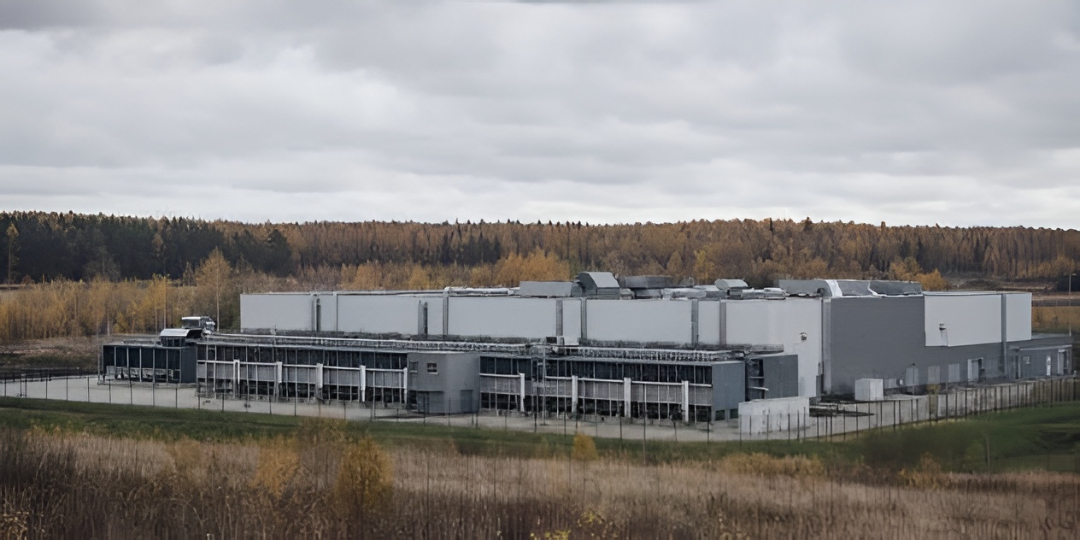
Reported Ukrainian Drone Strike Near Moscow Shuts Third Yandex Data Center
Yandex completely suspended operations at its data center in Russia’s Vladimir region after a reported Ukrainian drone strike damaged the facility on October 11. The shutdown, confirmed by the company and reported by Reuters, marked the third reported attack on a Yandex data center in one week. No one was injured, but some services became unavailable while crews worked to restore connectivity.
The latest disruption followed shutdowns at Yandex facilities in Sasovo on Thursday and Kaluga on Friday. Yandex operates five data centers, meaning three facilities in that network were reportedly hit within days. The company said it was struggling to maintain services and that it was “very difficult to predict” when the affected sites would return to operation.
Three shutdowns create a continuity problem
A data-center network is intended to prevent the loss of one building from becoming the loss of an entire service. Workloads can be distributed across facilities, while duplicated computing, storage and networking resources can preserve availability when equipment fails or a site must be taken offline. Yandex said after the earlier Sasovo disruption that it had moved workloads to other facilities, although some restrictions remained.
That principle becomes harder to sustain when several sites are disrupted in close succession. Moving workloads does not create unlimited replacement capacity: the receiving facilities must have sufficient computing resources, storage, electrical supply and network connectivity to absorb the displaced demand. Recovery teams must also restore damaged infrastructure while continuing to operate the sites carrying additional workloads.
The reported loss of three facilities therefore raises a significant continuity question, but it does not answer it. Yandex has not publicly detailed its redundancy architecture, the division of workloads among the five data centers or the amount of unused capacity available elsewhere. It is consequently not possible to conclude that the company has lost most of its total computing capacity simply because three of five locations stopped operating.
Nor is every outage necessarily equivalent. A complete operating suspension at a building can result from damage to supporting infrastructure without establishing that all servers inside were destroyed or permanently lost. The available information does not quantify the physical damage at Vladimir, identify the individual services that became unavailable or provide a restoration schedule.
User outages show that redundancy has limits
The confirmed user-facing disruption is nevertheless important. Yandex supplies cloud services and widely used consumer applications, including taxi and food-ordering platforms serving tens of millions of people. Even partial unavailability can spread beyond the company itself when outside organizations depend on its computing, storage or software infrastructure.
Following the earlier Sasovo incident, Yandex warned that the ability to create new cloud resources could be limited and advised customers to move workloads elsewhere. That illustrates a distinction between keeping existing services online and retaining enough reserve capacity to accept new demand. A network may continue operating while offering reduced flexibility, slower recovery or restrictions on customers.
Repeated disruption also changes the restoration burden. A single recovery can be handled as an isolated maintenance and continuity event. Three overlapping recoveries can compete for specialized personnel, replacement equipment and available capacity. This is an analytical consequence of concurrent shutdowns, not a confirmed finding that Yandex has exhausted those resources.
Attribution and total damage remain uncertain
The incidents have been described as Ukrainian drone attacks, although the degree of public confirmation differs by site. Yandex acknowledged the Sasovo power outage but did not initially attribute it publicly to a drone strike. Ukraine’s military had not publicly commented on that reported attack, and it remained unclear whether the data center or another facility at the location was the intended target.
Kyiv has said more broadly that it targets infrastructure supporting Russian war revenue and argues that repeated attacks can force resources into protection and repairs. That is an attributed Ukrainian claim rather than an independently established result for the Yandex incidents. No public information provided by Yandex establishes how protection or repair resources have been allocated.
What is confirmed is narrower but consequential: Yandex’s Vladimir operation stopped completely, some users lost access to services and restoration work began while two other company data centers were already out of operation. Until Yandex discloses which workloads have been recovered and when the three facilities can return, the central uncertainty is whether its remaining network can preserve service while supporting three recoveries at once.
| More aerospace and engineering stories, right in your MSN feed. Follow AMI on MSN |
By Stephen Wallace — Editor for AMI’s aerospace integration and unmanned mobility coverage, focused on drone manufacturing, VTOL systems, autonomous networks, and air-ground mobility links.