


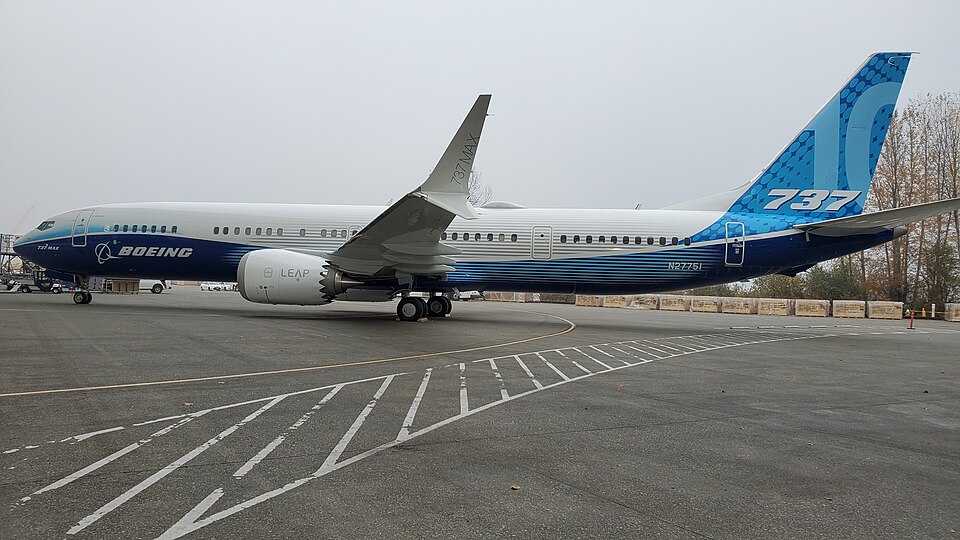
FAA Ruling Clears Last Software Obstacle to Boeing MAX 10 Certification
The Federal Aviation Administration determined on October 2 that a Boeing 737 MAX flight-management software anomaly does not pose a safety risk because pilots retain full control and receive clear, unambiguous cockpit indications. The finding removes a last-minute obstacle that had interrupted the MAX 10 approval schedule and could allow the long-delayed aircraft to receive certification within days, although Boeing must first implement the regulatory response and finish the remaining approval work.

The decision moves the MAX 10 through its post flight test regulatory reviews rather than sending it back into a prolonged software-development cycle. That distinguishes its position from Boeing’s larger 777-9, which remains in a broader airborne certification campaign and is expected to reach certification in 2027. For the MAX 10, the immediate questions are now when the FAA completes its review, how Boeing sequences deliveries and which airline becomes the first to carry passengers.
The anomaly involves versions 14 and 14.1 of flight-management computer software developed by GE Aerospace. Under a specific sequence following a missed approach, the aircraft’s vertical-navigation mode can disengage. That automated function normally manages the jet’s vertical flight path against programmed altitude constraints, so losing it can add tasks during a go-around, an already workload-intensive phase involving aircraft configuration, navigation and communication.
The FAA’s finding does not mean the software operates exactly as intended. It means the agency concluded that the anomaly, with pilots still able to command the aircraft and understand its state, did not cross the threshold into an unsafe condition. Simulator testing allowed FAA test pilots to experience the behavior directly before the agency’s Corrective Action Review Board reached its decision.
That distinction between an unwanted behavior and an unacceptable safety risk is central to aircraft certification. Automation can fail or revert without producing a loss of control, provided the system presents a clear condition, the crew can manage the resulting workload and approved procedures preserve an adequate safety margin. Boeing still must formalize the response, and the FAA has said it could reconsider its position if new information emerges.
The ruling also means certification need not wait for the cleaner software iteration expected in 2028. That avoids tying approval of an aircraft with more than 1,400 orders to a software-development schedule extending another two years. It does, however, leave airlines facing different configuration and acceptance decisions during the MAX 10’s introduction.
WestJet has the stronger contractual path to launch status. Aviation Capital Group expects to deliver the Canadian airline its first of 13 leased MAX 10s after type certification. WestJet separately has 101 MAX 10s on order and already operates MAX aircraft using the affected software. Its pilots discovered the anomaly during a 2024 entry into service validation flight and supplied supporting data to Boeing, according to a memo reported by Reuters.
WestJet has reported no occurrences during normal line operations and says it has procedures and training in place. Its familiarity with the software could reduce one integration variable, but a contractual delivery pathway alone does not establish when the first aircraft will be accepted or enter passenger service.
Alaska Airlines has the clearer public schedule. It expects its first MAX 10 in spring 2027 and is targeting passenger service between April and mid-May. The carrier anticipates 22 deliveries during 2027 and another 30 in 2028, following an order that includes 105 MAX 10s and purchase rights for 35 more.
Alaska’s timeline still contains an airline-specific dependency: additional approval work for its head-up display configuration is expected after the aircraft receives its type certificate and could take several months. Alaska also does not currently use the software versions under review. United Airlines, which has 167 MAX 10s on order, has gone further by asking Boeing not to deliver aircraft equipped with that software and suspending acceptance of aircraft carrying it.
These different fleet policies show why type certification, first delivery and first passenger flight are separate milestones. FAA approval establishes that the aircraft’s certified design meets applicable requirements. Boeing must then deliver the right configuration, each airline must accept its aircraft, and crews, maintenance organizations and operating approvals must be ready. Software compatibility and optional cockpit equipment can alter that sequence even after the underlying model is certified.
WestJet therefore holds the more direct contractual route to receiving an early aircraft, while Alaska has committed to the more specific passenger-service window. Until the FAA issues certification and Boeing establishes the delivery sequence, passengers still cannot know which airline will put the MAX 10 into service first or precisely when its more than 1,400-aircraft backlog will begin moving into airline fleets.
| More aerospace and engineering stories, right in your MSN feed. Follow AMI on MSN |
By Thomas Caldwell — AMI’s senior editor for mechanical and mobility engineering, covering vehicle electronics, systems integration, electrification, chassis systems, propulsion, and safety policy.




