


Anduril’s $3.7 Billion Submarine Expansion Will Not Open Until 2030
Anduril Industries plans to invest $3.7 billion in Arsenal-2, a Maryland manufacturing complex designed to increase Virginia-class submarine production capacity by about 15%. The central constraint is time: Initial manufacturing is not expected to begin until 2030, leaving the Navy to manage its existing production shortfall for several more years.

That start date also falls after the scheduled retirement window for the Navy’s Ohio-class guided-missile submarines. Arsenal-2 therefore cannot materially accelerate production of their smaller Virginia-class replacements before the Ohio boats leave service, deepening a near-term mismatch between retiring missile capacity and the pace at which replacement submarines can be delivered.
Announced on October 6, Arsenal-2 would occupy 187 acres at Sparrows Point in Baltimore County. The planned complex would cover more than two million square feet and create about 3,100 permanent jobs, according to the State of Maryland’s project announcement. Permitting and site preparation are expected to precede construction, with production then increasing progressively after the 2030 opening.
A $6.6 billion ceiling, not guaranteed spending
The financial structure is more conditional than the largest number suggests. Anduril’s planned $3.7 billion contribution is private capital. A separate Navy production contract could provide as much as $2.9 billion, but payments are tied to demonstrated manufacturing results. The widely cited $6.6 billion figure is consequently a potential combined ceiling, not money already spent or guaranteed to be paid.
That arrangement places substantial execution pressure on the years before production. Anduril must move through approvals, construction, equipment installation, process qualification and workforce development before the Maryland operation can contribute at scale. Maryland and Baltimore County have also committed incentives worth up to 13% of the anticipated private investment through existing programs and proposed appropriations, some of which still require state or county approval.
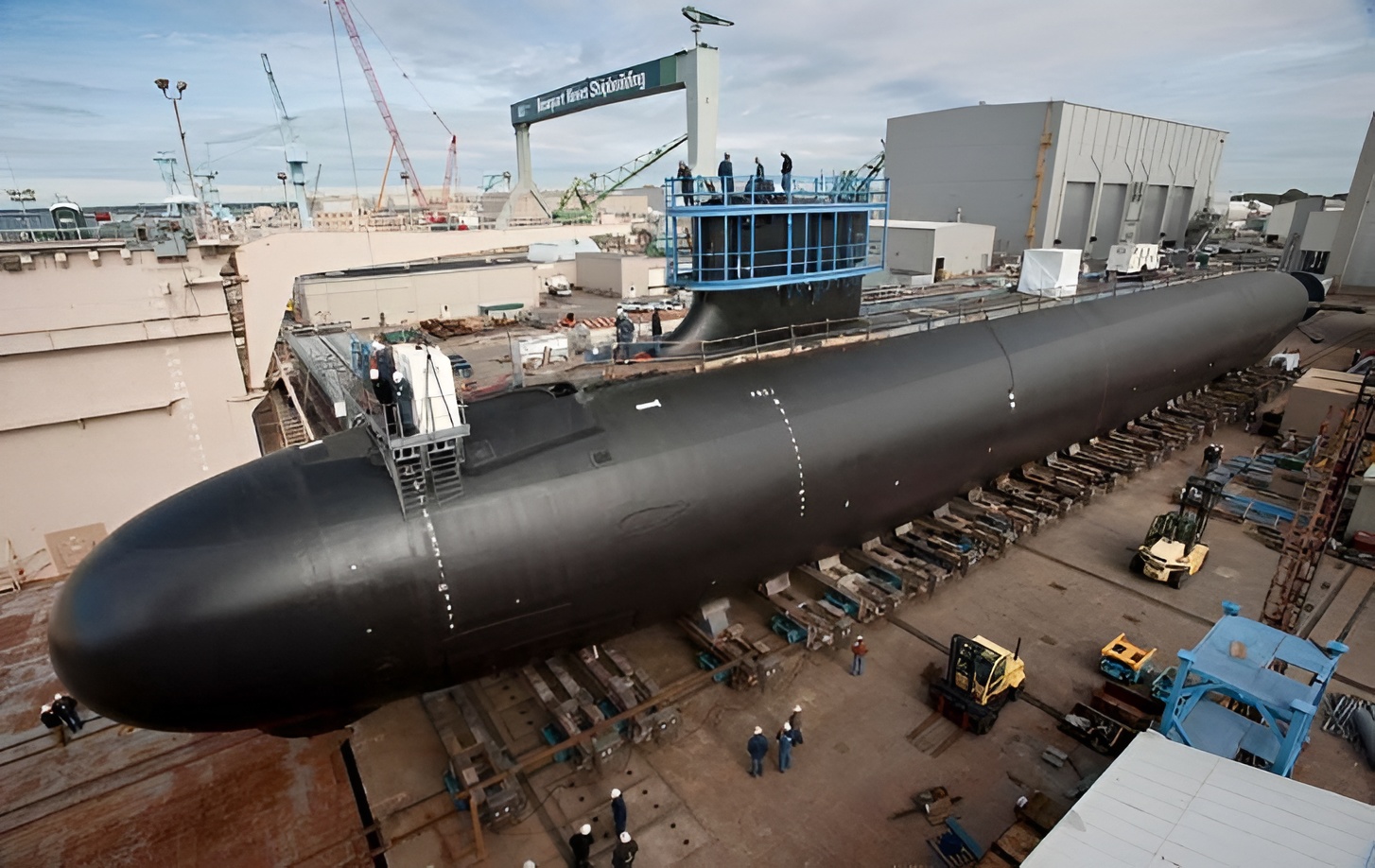
Arsenal-2 will not assemble complete submarines. Its job is to manufacture complex components and large assemblies for delivery to General Dynamics Electric Boat and HII Newport News Shipbuilding, the two yards responsible for final Virginia-class construction. Torpedo tubes are among the initial products contemplated, with larger modules and potentially major hull sections following as the operation matures.
This supplier role matters because it could shift labor-intensive component work away from the final assembly yards and allow more work to proceed in parallel. The Maryland site is expected to contribute approximately nine million industrial labor hours annually. Figures presented with the project characterize that addition as roughly 15% more Virginia-class production capacity, although capacity does not automatically translate into completed submarines on the same schedule.
Qualification comes before scale
Anduril plans to establish a smaller, 160,000-square-foot facility in Orange County, California, before Arsenal-2 opens. That operation is intended to qualify manufacturing processes, train an initial workforce and produce test hardware and maritime components. It effectively gives the company a proving ground for production methods and quality systems before those processes are transferred to a much larger Maryland plant.
The staged approach reflects the difficulty of entering nuclear-submarine manufacturing. Added floor space and labor hours have value only when workers, tooling, documentation and inspection systems can repeatedly produce accepted hardware. Specialized materials, limited suppliers and demanding qualification requirements can constrain output well before final assembly begins.
The broader production gap explains the scale of the proposal. The United States generally funds two Virginia-class submarines per year, but recent industrial output has remained around 1.1 to 1.2 boats annually. Longer-term requirements have been assessed at approximately 2.33 per year as the Navy replaces aging Los Angeles-class submarines and prepares for the expected transfer of three to five Virginia-class boats to Australia under the AUKUS partnership.
Arsenal-2 is a substantial attempt to add parallel manufacturing capacity, but it is not an immediate fleet remedy. Its decisive milestones come before the first Maryland component ships: securing approvals, qualifying processes, building a skilled workforce and demonstrating enough production performance to unlock the Navy contract. Until those steps are completed, the project’s nine million annual labor hours and 15% capacity increase remain planned output arriving no earlier than 2030.
| More aerospace and engineering stories, right in your MSN feed. Follow AMI on MSN |
By David Whitaker — Associate editor for AMI’s aerospace and drone systems desk, translating flight systems, aircraft programs, spaceflight, and UAV developments into accessible technical stories.



