


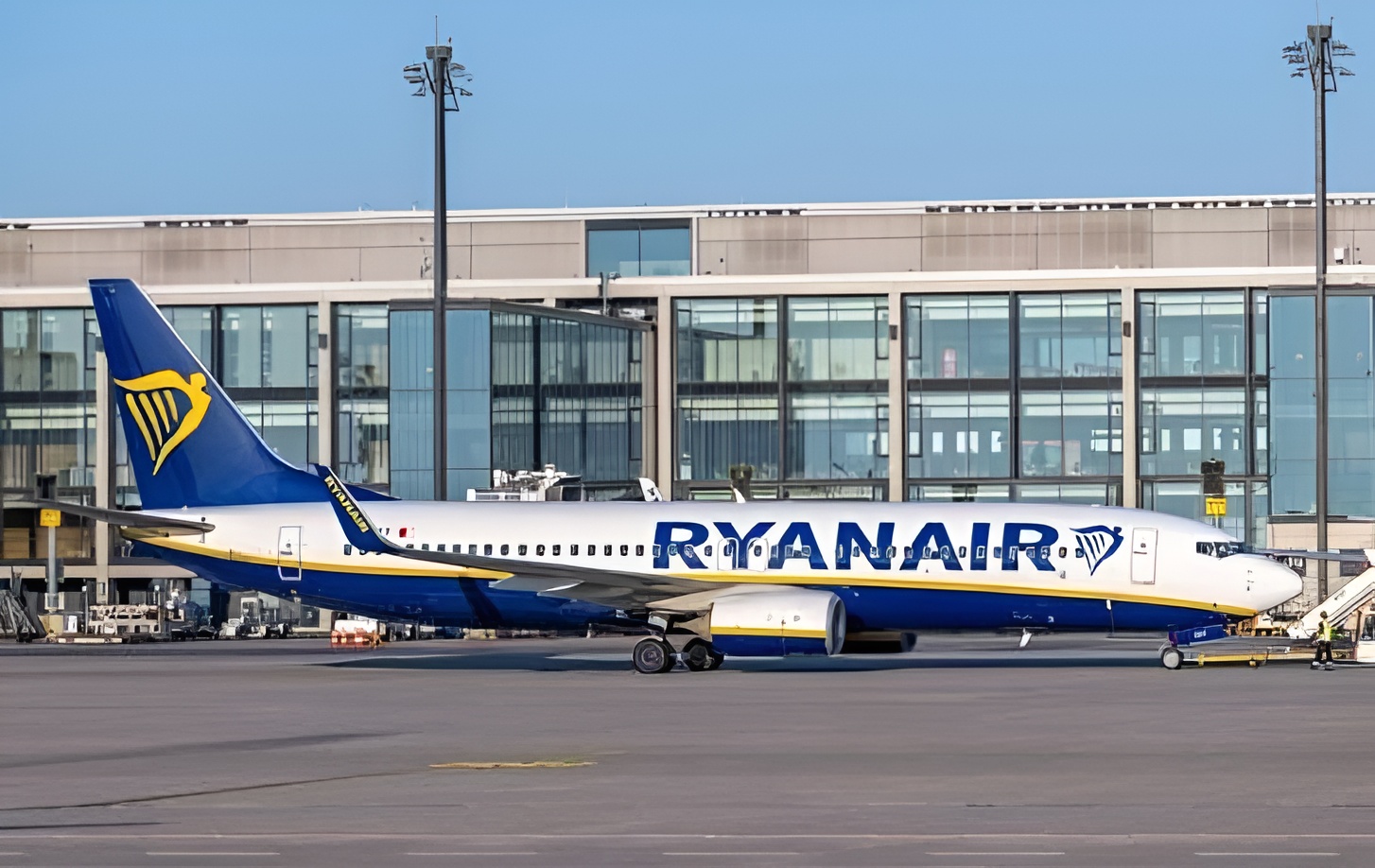
Ryanair Cuts 700,000 German Winter Seats, Closes Berlin Base and Leaves Bremen
Ryanair plans to remove approximately 700,000 seats from its German network in winter 2026/27, close its Berlin Brandenburg Airport base and withdraw completely from Bremen. Announced on October 8, the restructuring will reduce the airline’s German winter capacity by around 10% compared with the previous winter.
The first major change comes on October 24, 2026, when Ryanair plans to close its Berlin base and relocate its seven aircraft to other European Union countries. Available Ryanair seat capacity at Berlin is expected to fall by approximately 50%, although the base closure will not end every Ryanair flight serving the German capital.
For passengers, the immediate effect is the loss of 12 Berlin connections. Ryanair plans to discontinue routes from Berlin to Bologna, Fuerteventura, Gran Canaria, Lanzarote, Marseille, Palermo, Pisa, Reggio Calabria, Tallinn, Thessaloniki, Trieste and Vilnius.
Moving the seven aircraft matters because a based aircraft is not simply a machine parked overnight. Its placement supports a package of departures, crews and schedules. Relocating that equipment allows Ryanair to transfer capacity to markets where it believes the same aircraft can produce better operating results. At Berlin, the decision therefore translates directly into fewer seats and destinations rather than only an administrative change in base status.
The airport expects the consequences to extend beyond Ryanair’s schedule. Berlin Brandenburg chief executive Aletta von Massenbach said the reduction amounts to around 2.5 million fewer seats annually and called it a “heavy blow.” According to the airport’s projections, passenger traffic is expected to decline from 26.1 million in 2025 to 25.7 million in 2026 and between 25 million and 25.2 million in 2027. Other airlines are expected to replace some, but not all, of the lost traffic. The airport is also reviewing costs and delaying investments in response, according to the reported operational update.
The next stage arrives in April 2027, when Ryanair intends to end all service at Bremen after nearly two decades there. The withdrawal will eliminate approximately 500,000 seats annually and all five routes currently operated from the airport. Those services connect Bremen with Alicante, London Stansted, Malaga, Palma de Mallorca and Zadar.
Bremen’s case illustrates the sharper consequence of an airline-airport cost dispute. A reduced base can leave some service in place, as Berlin will demonstrate, but a full withdrawal removes the airline’s entire local network. Bremen officials are seeking replacement connections, but no equivalent restoration is confirmed.
Hamburg will also receive an approximately 5% Ryanair capacity reduction during winter 2026/27. The restructuring is not a uniform retreat from Germany, however. Ryanair says it will increase capacity by about 12% at Memmingen and 10% at Cologne, while introducing its first winter services at Friedrichshafen and Saarbrücken.
That uneven allocation is important. It shows the airline choosing among German airports rather than treating the country as a single operating market. Aircraft can be reassigned across the network, allowing cuts at airports considered less attractive while selected locations gain service.
Ryanair attributes the reductions primarily to Germany’s air passenger tax and to airport, security and air traffic control costs. It says Berlin Brandenburg charges have increased by more than 50% since 2019 and that another 10% rise has been announced for 2027 through 2029. These are the airline’s stated reasons, not an independently established finding that taxes and charges alone caused the network decisions.
The carrier also says eliminating the passenger tax and halving access costs could support 30 additional Germany-based aircraft, 34 million passengers annually and more than 1,000 jobs. Those figures describe a conditional company scenario, not committed aircraft placements, traffic or employment.
Germany’s largest airports remain below their 2019 passenger totals, but that comparison does not establish a single cause. Frankfurt handled approximately 63.2 million passengers in 2025, down from around 70.6 million in 2019. Munich recorded about 43.4 million, compared with roughly 48 million in 2019, while Berlin Brandenburg handled approximately 26 million in 2025.
What is already concrete is the fleet-allocation decision: seven aircraft are leaving the Berlin base, 12 Berlin routes are scheduled to end, and Bremen is set to lose every Ryanair flight from April 2027. At the same time, selected German airports will gain capacity a clear demonstration of how quickly movable aircraft can turn a dispute over operating costs into different travel options for passengers.
| More aerospace and engineering stories, right in your MSN feed. Follow AMI on MSN |
By Thomas Caldwell — AMI’s senior editor for mechanical and mobility engineering, covering vehicle electronics, systems integration, electrification, chassis systems, propulsion, and safety policy.



