


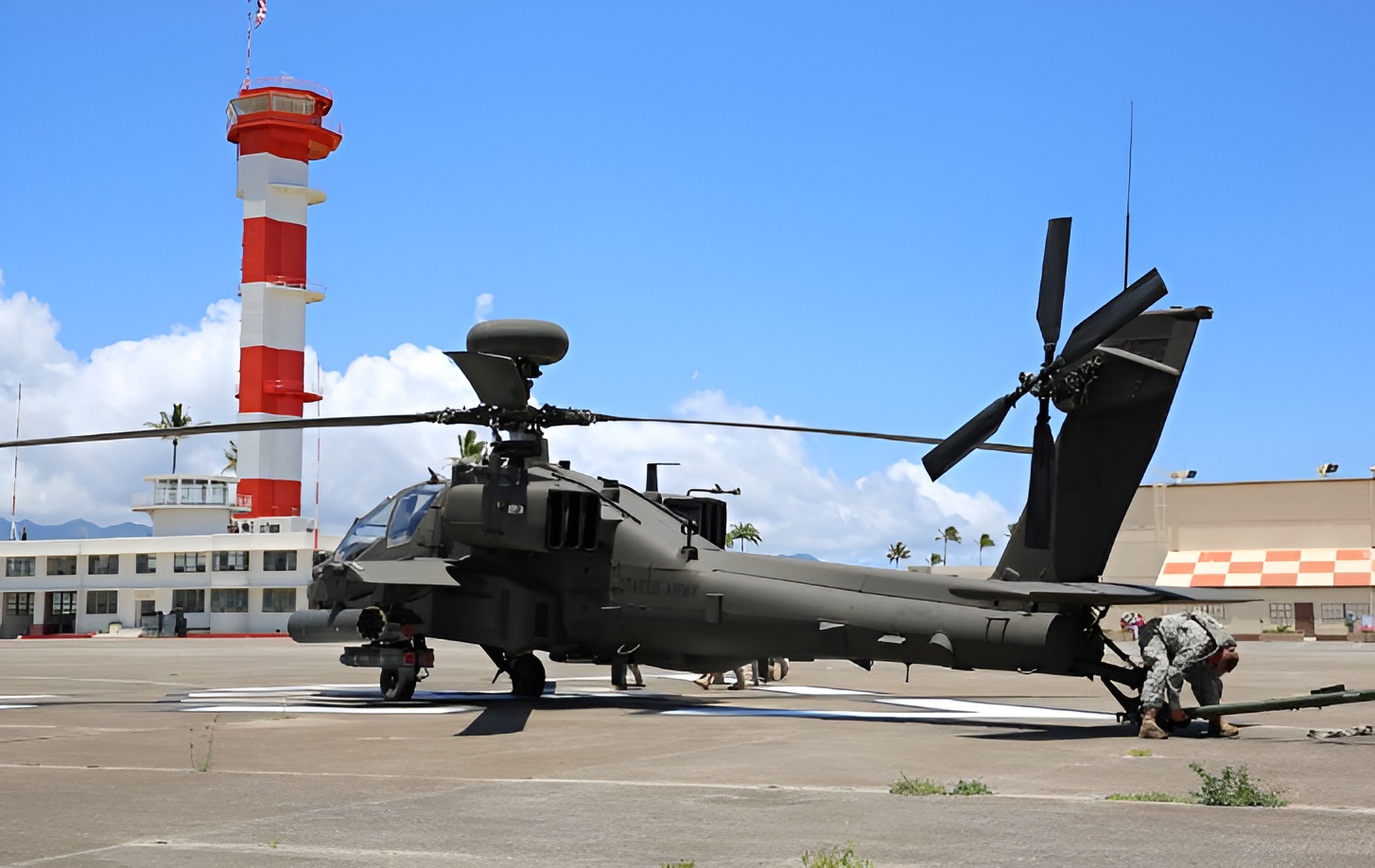
Army Halted Apache Training After Crash Killed Two Pilots
The U.S. Army halted AH-64 Apache training flights after an AH-64E crashed during a maintenance test flight near Salado, Texas, killing both pilots. When the stand-down was announced on August 14, two days after the accident, the Army gave no date for restarting training and said flights would remain suspended until it better understood the root cause.

The pilots were Chief Warrant Officer 2 Deontre T. Huey, 34, and Warrant Officer Seth L. Olmstead, 25. Both served with Bravo Company, 1st Battalion, 227th Aviation Regiment, 1st Air Cavalry Brigade, 1st Cavalry Division. The helicopter went down at approximately 1:40 p.m. on August 12.
A safety team from the U.S. Army Combat Readiness Center at Fort Rucker, Alabama, arrived the following day and took the lead in the investigation. No cause had been released when the training suspension was announced. A later account reported that the August stand-down lasted one week, resolving the immediate scheduling question but not establishing why the aircraft crashed.
A maintenance test flight is context, not a cause
The description of the flight matters because maintenance test flights have a defined purpose: evaluating an aircraft after specified work or checking its condition before it returns to normal operations. That does not, by itself, indicate that maintenance caused the accident or that a mechanical problem existed.
Investigators must separate the reason for the flight from the reason for the crash. Their work can include examining the aircraft, its records, the work that preceded the flight, crew qualifications and the available operational data. The Army maintains dedicated crash-response and investigation resources for aviation units and emergency personnel, including material specific to the AH-64.
Until that process produces findings, several possible categories remain just that possibilities. Nothing released at the time established a maintenance error, mechanical defect, pilot action or fleet-wide problem. Treating the maintenance-test-flight label as an explanation would move beyond the confirmed facts.
Why a training stand-down matters
A stand-down is an operational control, not an investigative finding. It temporarily prevents training flights while commanders and safety personnel assess whether crews need immediate guidance, inspections or other corrective measures. In this case, the Army tied the suspension directly to gaining a better understanding of the accident’s root cause.
That wording left the scope of any eventual response open. An investigation could determine that corrective action is required in maintenance, training, procedures or an aircraft system, but it could also reach a conclusion that does not justify a broader fleet change. No such determination was available when the pause began.
The absence of an initial restart date created a real constraint for Apache units because flight training depends on aircraft availability, qualified crews and scheduled training time. Even so, the available information does not quantify missed sorties, affected units or any readiness loss. It therefore cannot support claims about how much operational capacity the Army lost during the one-week pause.
The crash also became a large ground emergency
The impact ignited the Dove Hollow Fire, which burned approximately 155 acres before authorities reported full containment. The helicopter did not strike a structure. Firefighters saved five threatened homes and nine outbuildings, while one other outbuilding was destroyed.
More than 200 firefighters from 22 agencies responded, joined by approximately 100 law-enforcement personnel from nine agencies. That response illustrates how an aviation accident away from an airfield can quickly expand beyond aircraft recovery and investigation, particularly when fire threatens nearby property.
The decisive unanswered question remains the accident’s cause. The one-week training pause showed the Army was willing to interrupt Apache operations while it conducted an initial safety assessment, but the suspension itself proved nothing about the helicopter, its maintenance or its crew. Only the Combat Readiness Center’s findings can establish whether the crash requires a lasting change to the aircraft or the way Army units operate it.
| More aerospace and engineering stories, right in your MSN feed. Follow AMI on MSN |
By David Whitaker — Associate editor for AMI’s aerospace and drone systems desk, translating flight systems, aircraft programs, spaceflight, and UAV developments into accessible technical stories.




