


Luxor’s 2027 Eclipse Lasts Six Minutes, but Overhead Sun Limits Landmark Photos
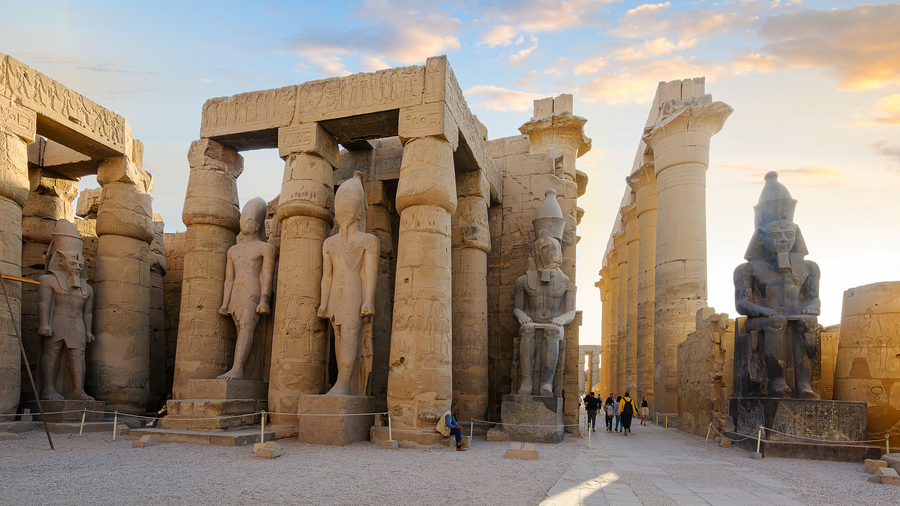
Luxor offers the headline number for the August 2, 2027 total solar eclipse: up to six minutes and 22 seconds of totality. But the same geometry that gives the Egyptian city such a long view will put the Sun approximately 82 degrees above the horizon, nearly overhead. For photographers hoping to frame the eclipse beside a landmark, landscape or person, that steep angle creates a consequential tradeoff.
The 2027 eclipse map from the National Solar Observatory places the maximum duration near Luxor and identifies it as the second-longest total solar eclipse of the 21st century. A comparable duration is not expected again until 2114. That makes Luxor an exceptional observing location, but duration alone does not determine which site offers the most flexible photographs.
Six minutes versus a lower Sun
In Luxor, a close view of the corona will require a camera pointed almost vertically. That is manageable for a tight composition centered on the eclipsed Sun, but considerably less convenient when the goal is to include architecture or terrain. A foreground subject normally occupies the lower part of a frame; an object 82 degrees above the horizon sits close to the top of the sky.
Tangier, Morocco, presents nearly the opposite balance. Totality will be shorter, but the Sun is expected to stand approximately 39 degrees above the horizon. Gibraltar and parts of southern Spain will have similar solar altitudes. At roughly half Luxor’s angle, the eclipsed Sun can more readily share a conventional landscape-oriented frame with mountains, seascapes or historic structures.
The European alternatives surrender substantial observing time. Cadiz is expected to receive two minutes and 56 seconds of totality, less than half Luxor’s duration. Tarifa, closer to the centerline of the eclipse path, improves that figure to four minutes and 40 seconds. Those numbers still represent meaningful total phases, but a photographer choosing Tarifa over Luxor would exchange roughly one minute and 42 seconds of darkness for a much lower Sun.
That exchange matters differently depending on the intended image. Photographers using long lenses to isolate the corona may value every additional second of totality and have little need for a low solar altitude. Wider compositions depend more heavily on geometry: the Sun’s altitude and azimuth determine whether a selected foreground can fit naturally into the frame. Luxor is therefore not an inferior viewing site. It is a site optimized for a different priority.
The path boundary remains nonnegotiable
A lower Sun has value only from inside the path of 100% totality. Even a location experiencing an extremely deep partial eclipse will not show the fully covered Sun and exposed corona that define the total phase. Any composition plan must begin by confirming that both the camera position and intended foreground lie within the totality path, then checking the local altitude, azimuth and timing.
Oran in Algeria and Sfax in Tunisia also offer transport infrastructure and accommodation along the broader route. However, without matching local figures for duration and solar altitude here, they cannot be compared directly with Luxor, Tangier, Gibraltar, Cadiz or Tarifa on the same photographic basis. The useful planning variables remain specific to the exact observing position rather than the nearest well-known city.
Eye and equipment safety remain essential. Direct viewing requires proper eclipse glasses or solar filters before and after totality; ordinary sunglasses are not sufficient. Cameras, binoculars and telescopes likewise require appropriate solar filters while any bright portion of the Sun remains visible. Only during the brief total phase, when the Moon completely covers the Sun, can viewers within the path of totality look directly without those filters.
For the 2027 eclipse, the most time and the easiest landmark composition do not occur at the same place. Luxor supplies the extraordinary six minute plus total phase, while Morocco, Gibraltar and southern Spain put the Sun lower in the sky. The better location depends on whether the planned frame needs more totality or more Earth beneath it.
| More aerospace and engineering stories, right in your MSN feed. Follow AMI on MSN |
By David Whitaker — Associate editor for AMI’s aerospace and drone systems desk, translating flight systems, aircraft programs, spaceflight, and UAV developments into accessible technical stories.



