


Airtel and Starlink Connect Compatible Phones Beyond DRC Cell Towers
A conventional smartphone normally becomes far less useful once it leaves the cellular network. In the Democratic Republic of the Congo, Airtel Africa and Starlink have changed that boundary but only for certain phones and relatively light communications. Their commercial satellite-to-mobile service lets compatible handsets exchange messages and basic data outside terrestrial tower coverage, without a Starlink dish or dedicated satellite phone.
The DRC service went commercial on August 14, 2026, making it Africa’s first live, paying satellite-to-phone offering for ordinary smartphone users. A subsequent launch in Uganda on September 24 made that country the second African market with the service.
The practical appeal is straightforward: an Airtel customer traveling or working beyond the ground network may remain reachable using a compatible phone already in hand. The important limitation is equally clear. This is a coverage extension for messaging and basic data, not a substitute for a strong 4G or 5G connection.
How an ordinary phone reaches orbit
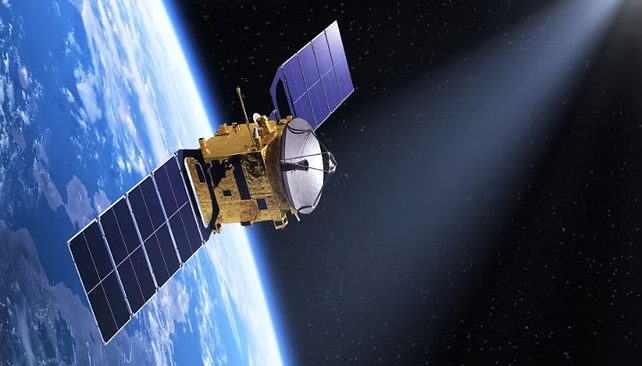
Starlink Direct to Cell uses satellites designed to communicate with compatible mobile handsets. When no terrestrial Airtel tower is available, an eligible phone can connect directly to the satellite network. The user needs a reasonably clear view of the sky, a condition that can make the service less dependable around substantial obstructions or when operating indoors.
No separate satellite terminal or bulky antenna is required. That removes one of the largest practical barriers associated with conventional satellite communications: users do not have to carry, power and maintain an additional device. They can keep using the same basic consumer form factor, provided their handset model is supported.
That compatibility qualification matters. The service currently works only with certain phones, so owning an ordinary smartphone does not automatically guarantee access. The available information does not establish when broader device support will arrive.
Coverage is the benefit; capacity is the constraint
The orbital connection currently supports messaging and basic-data functions. Its speed and capacity remain modest compared with a solid terrestrial 4G or 5G network, and it cannot carry high-definition video streaming. Users should therefore think of it as a narrow communications layer for coverage gaps rather than mobile broadband delivered from space.
That distinction follows from network architecture as much as marketing. A terrestrial cell site serves a defined local area with antennas, power and backhaul engineered for that location. A direct-to-phone satellite covers a much larger footprint while sharing available capacity among users below. The arrangement can extend service across sparsely populated territory without placing a tower in every gap, but it does not provide the same local capacity as dense ground infrastructure.
Satellite connectivity also does not eliminate the equipment behind a mobile network. Towers, fibre links, licensed spectrum and ground stations remain necessary. Conventional infrastructure will continue carrying traffic where it is available, while satellites provide a supplemental layer where the terrestrial signal ends. For Airtel, this creates a hybrid network rather than a replacement network.
A different tool for difficult coverage economics
Remote coverage presents an enduring engineering and commercial problem. A new tower needs power, communications backhaul, physical support and ongoing maintenance. In a sparsely populated region, the traffic generated by relatively few users may not justify that site-level investment.
Direct-to-phone satellites change the calculation by allowing one orbital system to serve coverage gaps across broad areas. That can make basic connectivity practical along remote travel routes or in communities where a conventional tower is difficult to support. Travelers, farmers, traders and field workers are among the people who could benefit when a message needs to pass beyond the edge of the cellular map.
Broader claims require restraint. The ability to exchange light data could eventually support basic transactions or logistics communications, but effects on mobile money, lending, insurance and rural commerce have not been demonstrated by the DRC launch. Availability alone does not establish adoption, affordability or economic impact.
Several commercial and operational questions also remain open, including pricing, regulatory treatment, total network capacity and the schedule for more advanced services. Those factors will determine whether satellite-to-phone connectivity becomes a routinely used coverage layer or a limited fallback for specific customers.
For now, the confirmed change is narrower but still consequential: compatible smartphones in the DRC can remain connected beyond Airtel’s towers without specialized satellite hardware. The next measure of progress will not be whether the system can imitate urban 5G, but whether it can reliably deliver basic communication in the places where building another tower remains impractical.
| More aerospace and engineering stories, right in your MSN feed. Follow AMI on MSN |
By David Whitaker — Associate editor for AMI’s aerospace and drone systems desk, translating flight systems, aircraft programs, spaceflight, and UAV developments into accessible technical stories.



