


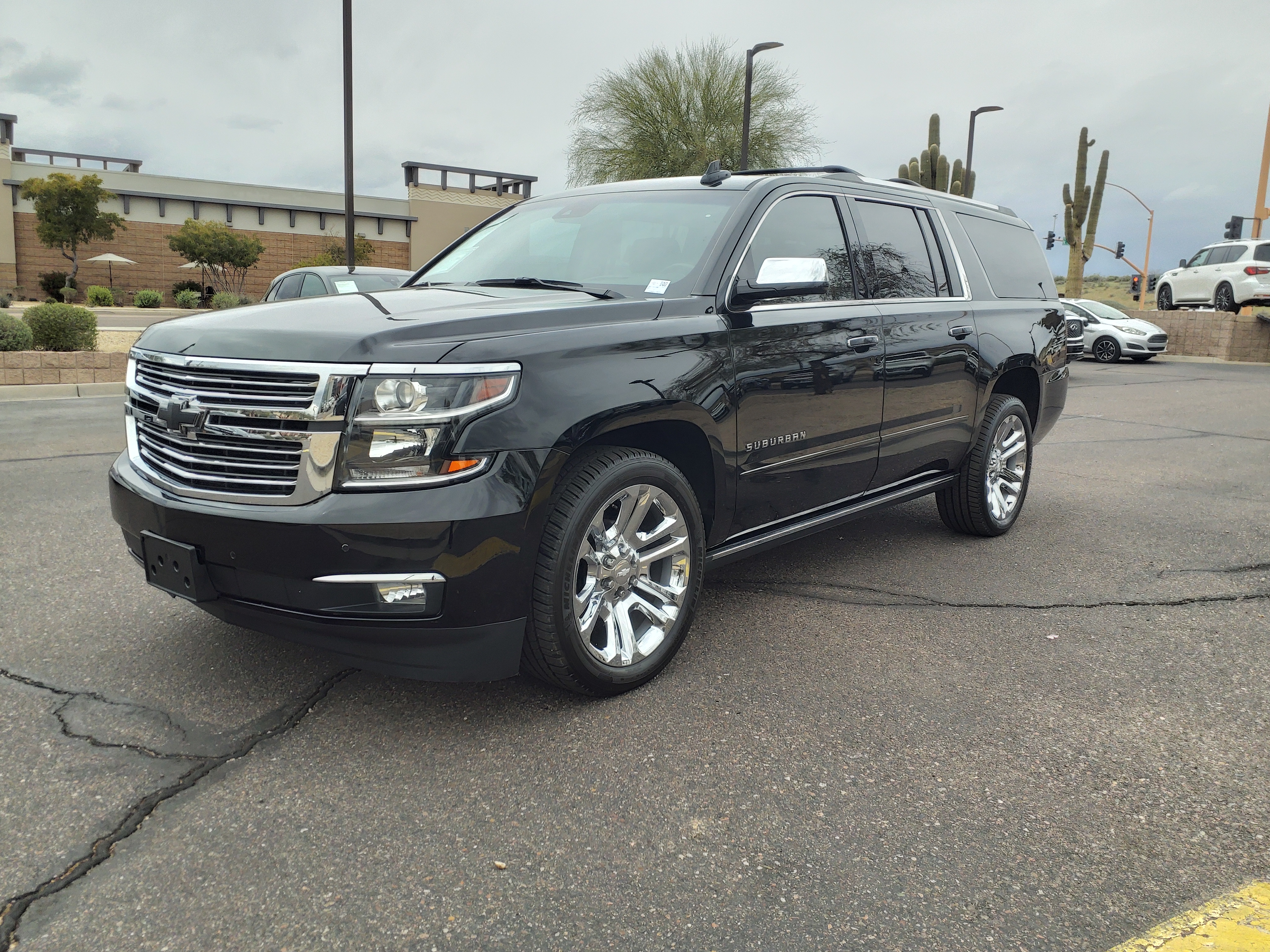
Chevy Suburban Owner Removes Two Seats With Just 20 Pounds to Spare
Twenty pounds separated a loaded 2024 Chevrolet Suburban from its reported maximum loaded-vehicle rating. The owner said the SUV weighed 7,680 pounds with its weight-distributing hitch engaged, against a gross vehicle weight rating of 7,700 pounds. In the owner’s words, that was “TOO CLOSE.”

The response was unusually tangible: both second-row seats came out for camping season. The owner estimated that each seat weighed about 75 pounds, then covered the exposed mounting points with two small pieces of 3/8-inch plywood. The seats were expected to go back into the Suburban in November.
That decision captures the practical tension in using a large SUV to tow a 27-foot Airstream Globetrotter. The Suburban reportedly had strong power and handled the trailer well, but its total vehicle weight and, on an earlier occasion, its rear-axle load left little room for the intended camping configuration. Even a full-size, V8-powered SUV cannot carry passengers, equipment and trailer-imposed load without running into finite limits.
Removing the seats creates only an estimated margin
If the seats really weighed 75 pounds each and everything else remained unchanged, removing 150 pounds would reduce the reported Suburban weight from 7,680 to roughly 7,530 pounds. That would create about 170 pounds of theoretical room below the 7,700-pound rating before accounting for the plywood.
Those figures are estimates, not a verified after-modification result. The owner did not provide a post-removal scale ticket or new axle readings. Changes in passengers, fuel, cargo, hitch loading or other equipment would also prevent a simple subtraction from representing the final travel configuration.
Gross vehicle weight rating, or GVWR, covers the loaded tow vehicle, including occupants, cargo and the load imposed through the hitch. It is not the same thing as advertised trailer-towing capacity, and an engine’s ability to accelerate the combination does not establish that the vehicle remains within every loading limit.
This distinction is what feeds the familiar debate over whether a big SUV can really pull a 27-foot Airstream. In this case, the owner’s answer on power and road behavior was favorable: “Tows great though. Tons of power. Handles well.” But pulling confidently and carrying the resulting load within the vehicle’s ratings are separate tests.
The rear axle remains the unanswered question
In a February discussion, the same owner identified the tow vehicle as a 2024 Suburban with a 6.2-liter gasoline V8 and said the rear axle was at its limit despite weight distribution and light packing. Some room reportedly remained below the vehicle’s overall GVWR at that time.
The February and April accounts describe different occasions, so their numbers cannot be assembled into one complete scale ticket. The later total of 7,680 pounds does not establish the later front- or rear-axle loads, while the earlier rear-axle observation does not prove the axle remained at its limit after the seats were removed.
A weight-distributing hitch does not erase that distinction. Chevrolet’s 2024 trailering guidance explains that this type of hitch transfers some hitch load forward to the tow vehicle’s front axle and rearward to the trailer axles. It changes where the load is carried, but it does not increase the Suburban’s GVWR or either axle rating.
That is why separate axle measurements matter. A vehicle can be below its total rating while one axle is already at its own limit. A practical guide to reading scale tickets illustrates the broader method: measure the front axle, rear axle and total load, then compare each result with the corresponding vehicle-specific rating. Chevrolet directs owners to the loading information on the driver-side doorjamb for those vehicle-specific limits.
Removing the seats clearly reduced some amount of vehicle weight and made the tradeoff visible: additional margin was worth giving up two passenger positions for the season. What remains unconfirmed is whether that change produced adequate rear-axle margin in the Suburban’s final, fully packed towing configuration. Only another weighing with separate axle readings can close that gap.
| More aerospace and engineering stories, right in your MSN feed. Follow AMI on MSN |
By Robert McKinney — Editor-in-Chief for AMI’s automotive and mobility coverage, with a mechanical engineering background and a decade reporting on powertrain systems, EV innovation, and global vehicle manufacturing.


