


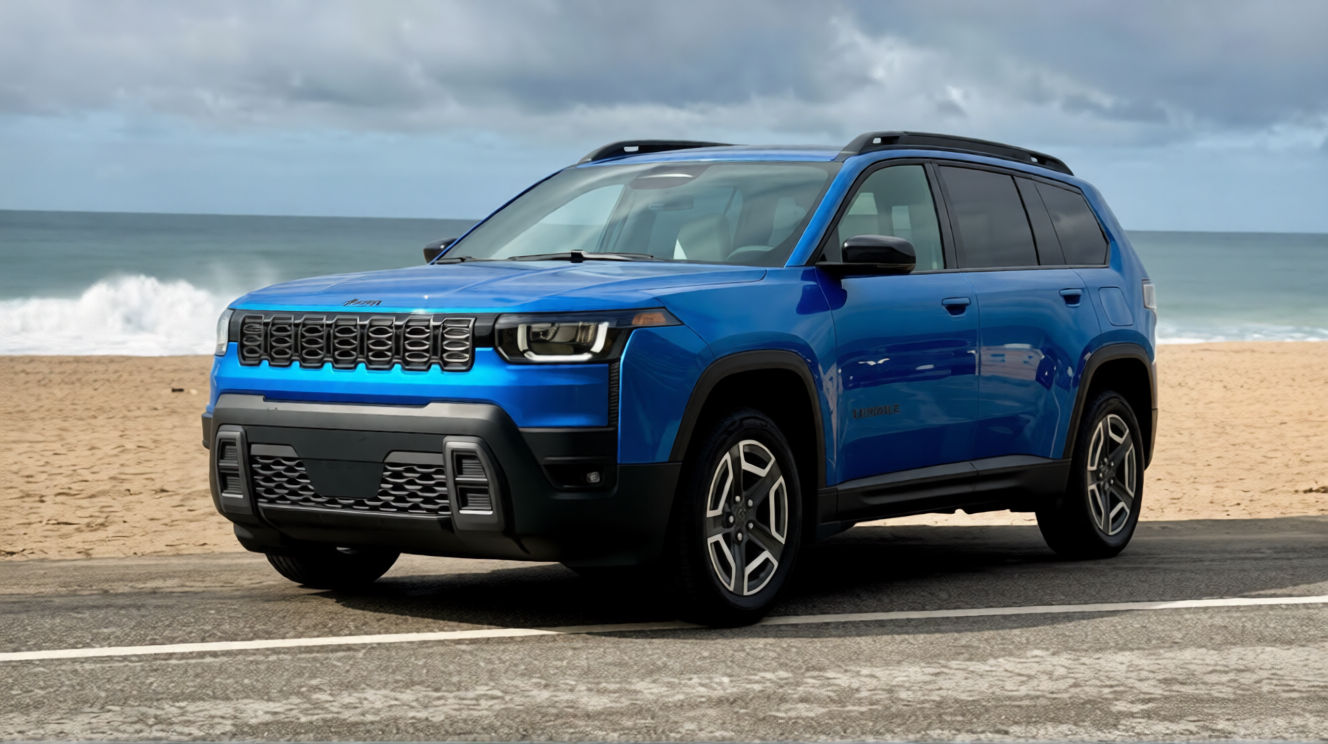
Hybrid-Only 2026 Jeep Cherokee Returns 36 MPG With Toyota-Linked System
The revived 2026 Jeep Cherokee uses two electric motors for three distinct jobs: starting its gasoline engine, moving the SUV and recovering energy during braking. That architecture helped the hybrid-only Cherokee return 36 mpg during a weeklong New York City road test, mostly on highways. In stop-and-go traffic, the evaluator observed electric propulsion handling about half the driving and sometimes more.
The hardware comes from Blue Nexus, a joint venture between Toyota suppliers Denso and Aisin. That connection helps explain why the Cherokee can feel like a Toyota hybrid in light-duty operation, but it does not make this a rebadged Toyota powertrain or establish Toyota-level durability. The system is new to the Cherokee, and long-term reliability remains unproven.
Two motors, a small battery and mechanical all-wheel drive
The powertrain combines a turbocharged 1.6-liter four-cylinder engine, two electric motors and a 1.03-kilowatt-hour lithium-ion battery. One motor serves as the engine starter and electrical generator. The second provides traction, assists the gasoline engine during acceleration and captures energy through regenerative braking.
Combined output is 210 horsepower and 230 pound-feet of torque. A continuously variable transmission and all-wheel drive are standard. The battery is far smaller than the packs used in plug-in hybrids, so the Cherokee is not designed for extended electric-only trips. Instead, its motors repeatedly shut down or assist the engine when operating conditions allow, reducing fuel use without requiring external charging.
The all-wheel-drive layout is an important departure from many Toyota hybrids. Rather than using a separate electric motor to power the rear wheels, the Cherokee retains a mechanical connection to the rear axle. That connection can disconnect when extra traction is unnecessary, reducing the losses associated with turning rear driveline components continuously. The arrangement preserves a direct mechanical path to all four wheels while adding the controls and hardware needed to disengage it during ordinary driving.
One efficiency result does not define every trip
The 36-mpg result is a useful real-world data point, not a universal expectation. Route, speed, weather, traffic and driving style materially affect hybrid efficiency. The test involved mostly highway travel, while the Cherokee’s electric contribution was particularly visible in slower traffic.
A separate instrumented Cherokee Overland test recorded 29 mpg overall. That evaluation also listed federal estimates of 39 mpg city, 35 mpg highway and 37 mpg combined. The spread between the two observed results illustrates why a single road test should be treated as an example of the system under a particular duty cycle, not a guarantee.
Efficiency also comes with performance and refinement boundaries. Under light throttle, the weeklong test found the hybrid system smooth and effective at low speeds. Harder acceleration exposed a sluggish response, coarse engine noise and the sustained droning often associated with continuously variable transmissions. The reviewer also reported soft body control, noticeable movement over uneven roads and numb steering.
Those observations were reinforced by the separate instrumented test, which measured 8.5 seconds from zero to 60 mph and identified an unsettled ride. Its tested Cherokee weighed 4,403 pounds more than 500 pounds above the Honda and Toyota hybrids used for comparison. That mass helps explain why a respectable combined power rating does not necessarily translate into quick acceleration or tightly controlled chassis behavior.
A larger Cherokee with a higher entry price
Jeep discontinued the previous Cherokee in 2023 and has returned the nameplate on a larger vehicle built on Stellantis’ STLA Large platform. The new SUV measures 188.1 inches long and rides on a 113-inch wheelbase. Its squared-off packaging provides 34 cubic feet of cargo room behind the rear seats and 68 cubic feet with them folded, according to the separate test.
The Cherokee starts at $36,995 including destination, while the vehicle used for the weeklong evaluation cost $43,590. The cabin includes a 10.25-inch instrument display and a 12.3-inch touchscreen, although the evaluator criticized the haptic climate controls and noted an air-conditioning-related whine in that particular vehicle.
Standard all-wheel drive, eight inches of ground clearance and a listed 3,500-pound towing capacity broaden the Cherokee’s specification sheet, but they do not prove off-road performance. The weeklong evaluation did not take the SUV off pavement. Jeep has confirmed a more capable Trailhawk variant, which will be the more relevant test of how the hybrid architecture works with hardware intended for rougher terrain.
Jeep supplied the test vehicle and paid for fuel and tolls. For now, the clearest measured result is narrower but still consequential: the Cherokee name has returned as a hybrid-only SUV, and its Toyota-linked two-motor system can deliver mid-30s fuel economy even as its acceleration, ride control and long-term durability remain areas to watch.
| More aerospace and engineering stories, right in your MSN feed. Follow AMI on MSN |
By Thomas Caldwell — AMI’s senior editor for mechanical and mobility engineering, covering vehicle electronics, systems integration, electrification, chassis systems, propulsion, and safety policy.



