Reported 493-Drone Threat Suspends Four Moscow Airports for Hours
A reported threat involving 493 drones suspended operations at all four airports serving Moscow, temporarily removing the Russian capital’s principal civilian airport network from service. The account published by Ukrinform said Vnukovo Airport remained closed for more than eight hours and passengers were removed from all flights there.

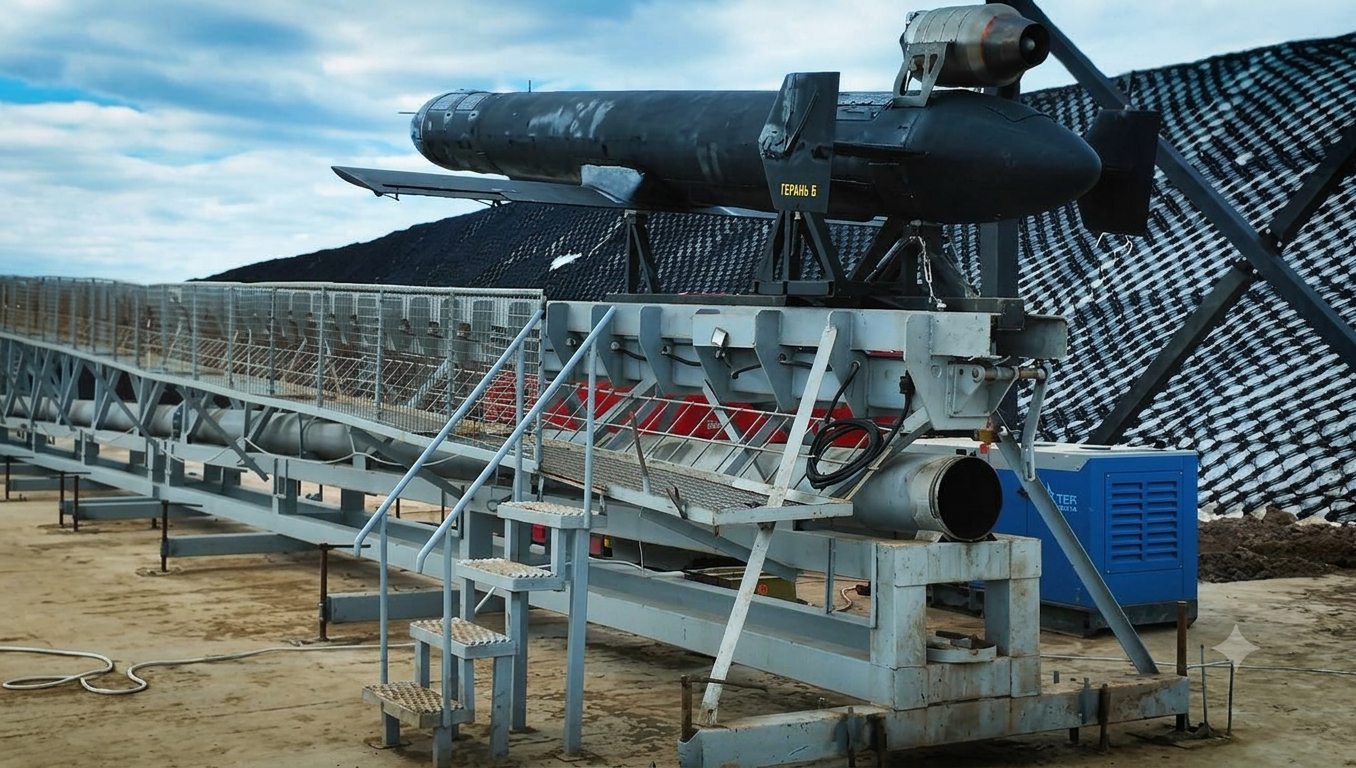
Sheremetyevo, Domodedovo, Vnukovo and Zhukovsky all suspended operations during the overnight threat beginning October 13. The scale remains an attributed claim rather than an independently verified total: Moscow Mayor Sergei Sobyanin said approximately 493 drones had been heading toward the capital and that 180 were destroyed while approaching it. Available reporting does not explain what happened to the remainder of the reported drones.
No physical damage to any of the four airports was confirmed. That distinction matters because the direct civilian consequence was produced by the airspace threat and resulting operating restrictions, not by a reported loss of runways, terminals or other airport infrastructure.
A network can lose capacity without sustaining damage
An airport does not have to be physically struck to become unavailable. When operations are suspended, its usable capacity effectively falls to zero for the duration of that restriction: departures cannot proceed normally, arrivals cannot be handled as scheduled, and passengers already aboard aircraft may have to return to the terminal. At Vnukovo, the reported removal of passengers from all flights shows that the interruption extended beyond an abstract airspace notice into aircraft and passenger handling.
The simultaneous nature of the suspensions is the most consequential element. Moscow is served by multiple airports, a structure that ordinarily distributes traffic across separate facilities. In this case, all four named airports were subject to operating interruptions during the same threat period. That meant the metropolitan network could not rely on one unaffected Moscow airport to preserve normal local service while another was closed.
The available information does not provide flight-cancellation, delay or passenger totals, so the wider schedule impact cannot be quantified. It also does not state whether each airport closed for the same period or when normal operations were fully restored. Vnukovo’s closure of more than eight hours is the only specific duration reported.
The reported drone count requires strict attribution
The figure of approximately 493 drones is striking, but it should not be treated as a confirmed count of aircraft that reached Moscow’s immediate airspace. It is Sobyanin’s description of drones said to have been heading toward the capital since the evening of October 13. His separate claim that 180 were destroyed on approach is also not independently verified in the available reporting.
Those gaps limit what can be concluded about drone production, launch capacity or the performance of defensive systems. A headline-scale number does not by itself establish how the aircraft were counted, over what geographic area they were tracked, whether individual reports overlapped or what proportion posed a direct threat to the airports. It therefore cannot support a reliable interception rate or a detailed assessment of the systems involved.
What can be assessed is the readiness burden imposed by the reported duration. Keeping Vnukovo closed for more than eight hours meant sustaining restrictions and managing passengers over an extended period rather than pausing operations only briefly. Across four airports, even suspensions of differing lengths require decisions about aircraft movement, passenger processing and the safe return to service.
The event also illustrates an important asymmetry in civilian aviation protection: authorities do not need confirmed airport damage before restricting operations. Uncertainty in the surrounding airspace can be enough to make scheduled service unavailable. That approach protects aircraft from an unresolved hazard, but it transfers the immediate cost to airport availability and passenger movement.
How large that cost became remains unknown. No authoritative total has been provided for affected flights or passengers, and no complete reopening timeline was reported. The firmest measure is therefore operational rather than physical: four airports suspended service, while one kept passengers grounded for more than eight hours despite no confirmed damage to airport infrastructure.
| More aerospace and engineering stories, right in your MSN feed. Follow AMI on MSN |
By Stephen Wallace — Editor for AMI’s aerospace integration and unmanned mobility coverage, focused on drone manufacturing, VTOL systems, autonomous networks, and air-ground mobility links.