


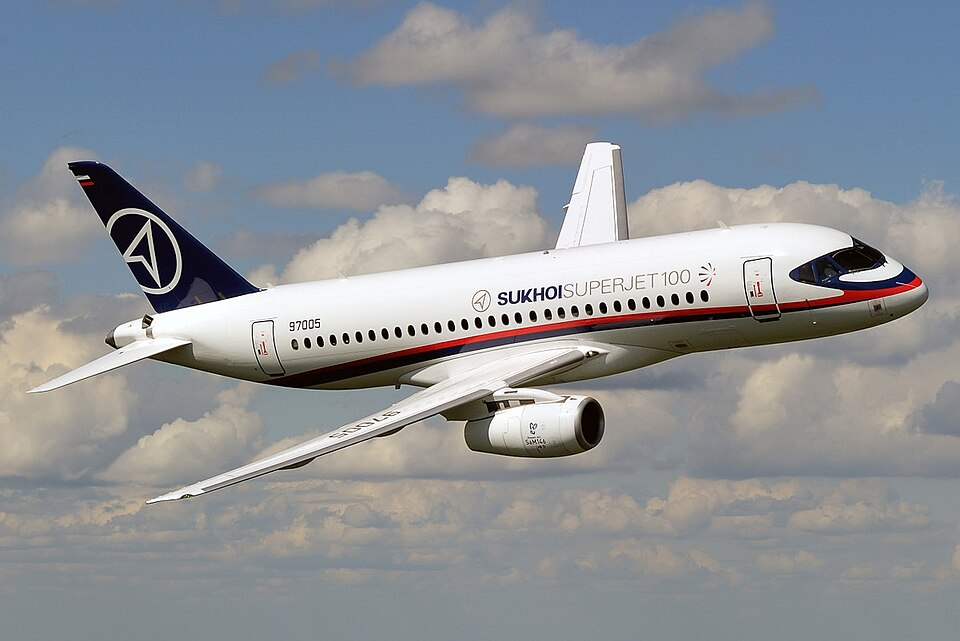
Russia Extends Superjet 100 Fleet Life as Replacement Awaits Certification
Russia’s original Superjet 100 now has permission to remain within its designated service life for up to 20 years instead of 15, buying more time for 154 aircraft in service while their domestically powered successor remains uncertified. The decision expands the fleet’s approved operating headroom, but it does not establish how many aircraft will reach the new limits or whether maintenance and engine support can sustain them that long.

Rosaviatsia, Russia’s federal aviation regulator, approved three related but distinct changes. Calendar life rises from 15 to 20 years, the maximum number of flight cycles increases from 15,000 to 20,000, and total approved flight time climbs from 25,000 to 40,000 hours. The extension covers baseline and long-range Superjet 100 variants, both powered by PowerJet SaM146 engines.
Those figures measure different forms of aircraft use. Calendar life counts elapsed years, including time when an aircraft is not flying. Flight hours measure time accumulated in operation. Cycles generally reflect repeated flights, with each pressurization and landing contributing to the structural usage that short-haul aircraft can accumulate quickly.
An aircraft therefore does not automatically gain five more usable years simply because its calendar limit has changed. A heavily utilized jet could approach its cycle or flight-hour ceiling first, while a lower-utilization aircraft may encounter the calendar boundary before exhausting either operating allowance. Individual condition, accumulated use and continuing maintenance requirements still govern how much practical service each aircraft can provide.
Structural approval is not the same as fleet availability
United Aircraft said the newly authorized limits equal 40% of the Superjet family’s design values. The company said extensions for major structural components are determined using engineering calculations, full-scale structural life tests and operational experience gathered by the developer.
That is the standard engineering logic behind progressive life extensions: approved limits can be raised in stages as analysis, test articles and service data provide support. It avoids granting the full design target before enough evidence has accumulated. Vladimir Lavrov, chief designer of the Superjet program, said the parameters confirm the aircraft’s design reliability and support airlines’ continued operation of the type.
These are company descriptions of the substantiation process, not independent findings presented with the decision. Rosaviatsia’s approval confirms the revised operating envelope, but it should not be read as a guarantee that every aircraft will remain economically or mechanically available until age 20.
Structural life is only one constraint on an airliner. Engines, replaceable components, scheduled inspections and access to maintenance resources also affect whether an aircraft can remain in revenue service. The available information does not show how many of the 154 in-service Superjets can exploit the entire extension, nor does it quantify fleet availability or the condition of individual aircraft.
It also does not establish that SaM146 engine support was completely cut off in 2022. Sanctions and engine-support questions are relevant to the fleet’s long-term outlook, but no firm conclusion about their practical effect can be drawn from this approval alone. Extending structural limits does not itself supply parts, complete maintenance work or resolve any external support constraints.
The replacement remains the central uncertainty
The first production Superjet 100 was delivered in 2011, making the calendar extension increasingly relevant as early aircraft approach the original 15-year boundary. Keeping those jets inside an approved life envelope could reduce immediate pressure to retire them while certification work continues on the successor SJ-100.
The new aircraft is intended to use Aviadvigatel PD-8 engines and a larger share of domestically produced components. It remains under certification, and no completion date is established here. Until that process is finished, the existing SaM146-powered fleet remains an important bridge but one whose usable length cannot be calculated from structural limits alone.
Rosaviatsia’s decision therefore buys operating headroom rather than completing the transition. The next decisive milestones are certification of the PD-8-powered SJ-100 and evidence that enough existing Superjets can be maintained and supported to use their newly approved time.
| More aerospace and engineering stories, right in your MSN feed. Follow AMI on MSN |
By David Whitaker — Associate editor for AMI’s aerospace and drone systems desk, translating flight systems, aircraft programs, spaceflight, and UAV developments into accessible technical stories.



