SpaceX Returns Flight 13 Starship for Direct Heat Shield and Engine Inspection
SpaceX has returned Ship 40, the Starship upper stage flown on Flight 13, to its Starbase facility in South Texas. The recovery gives engineers direct access to a spacecraft that endured launch, atmospheric reentry and an Indian Ocean splashdown hardware that can now be examined rather than assessed only through telemetry and imagery.
SpaceX said on Oct. 13 that Ship 40 would provide “first of its kind data” on a flown Starship heat shield, Raptor engines, avionics and other systems. The company has not disclosed findings from that examination, the detailed condition of the recovered vehicle or whether the results will change plans for later flights.
Ship 40 launched on July 24 atop Super Heavy Booster 20 for Starship’s 13th flight test. It completed its suborbital flight with a controlled splashdown in the Indian Ocean and, unlike previous Starship upper stages that were lost after reaching the water, remained largely intact and afloat.
That survival created an opportunity SpaceX had not expected to have. The company organized a recovery that included towing the 171-foot spacecraft through rough seas over 24 days, according to a detailed account of Ship 40’s return. The vehicle was eventually moved near Christmas Island, where engineers inspected it and collected heat-shield samples.
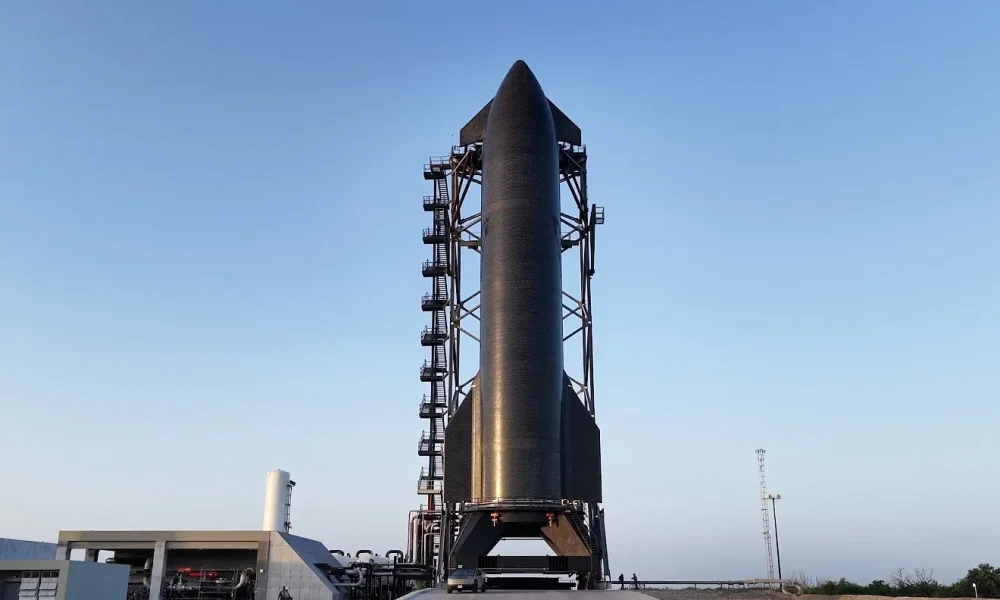
Ship 40 was then loaded onto a semi-submersible transport vessel for the voyage to Texas. It reached the Port of Brownsville on Oct. 7 before traveling over land to Starbase. SpaceX subsequently raised the upper stage vertically and moved it into the site’s Megabay alongside newer Starship vehicles under assembly.
Physical hardware can answer different questions
Flight telemetry can show engineers temperatures, pressures, loads and the status of monitored components during a mission. Images can reveal larger external changes. Neither provides the same access as a returned spacecraft that can be inspected across its structure and subsystems.
The heat shield is an especially important inspection target because it protects the stainless-steel vehicle during atmospheric reentry. Engineers can examine the condition of flown tiles and compare physical evidence with the temperatures and loads recorded during Flight 13. Ship 40 also offers access to its Raptor engines after flight and prolonged exposure following splashdown, while its avionics can be checked for their condition after the same sequence.
Those examinations do not, by themselves, establish that the upper stage is ready to fly again. Ship 40 was recovered from the ocean and transported over a long distance rather than returning directly to its launch site in an operational configuration. SpaceX has not said the vehicle will be reflown, nor has it released measurements showing how much service life remained in any recovered component.
The distinction matters because recovery is only one part of reusability. A reusable spacecraft must also be returned, inspected, serviced and prepared for another mission within acceptable time and maintenance demands. Ship 40 provides a rare physical reference for that work, but no disclosed result yet shows whether its hardware met those broader goals.
The inspection comes after the next Starship already flew
Starship development continued while Ship 40 made its long trip home. Ship 41 launched on Flight 14 before its predecessor reached Starbase. That mission placed Starship into orbit and deployed 26 next-generation Starlink satellites, but Ship 41 did not survive its Pacific Ocean splashdown.
SpaceX has previously returned three Super Heavy boosters using the mechanical arms on Starbase’s launch tower. It has not yet returned a Starship upper stage to the launch site under its own power. Elon Musk has said Flight 15 could include the first attempt to catch the upper stage with those arms if the spacecraft meets the conditions required for a safe return, although SpaceX has not announced an official launch date.
Ship 40 therefore occupies an intermediate position in the program: it is the first flown Starship upper stage brought back to Starbase, but it was recovered through an improvised maritime and transport operation rather than the rapid return method SpaceX ultimately intends to use. The hardware is finally in engineers’ hands; what it reveals about the heat shield, engines and avionics remains the unanswered part of Flight 13.
| More aerospace and engineering stories, right in your MSN feed. Follow AMI on MSN |
By David Whitaker — Associate editor for AMI’s aerospace and drone systems desk, translating flight systems, aircraft programs, spaceflight, and UAV developments into accessible technical stories.