


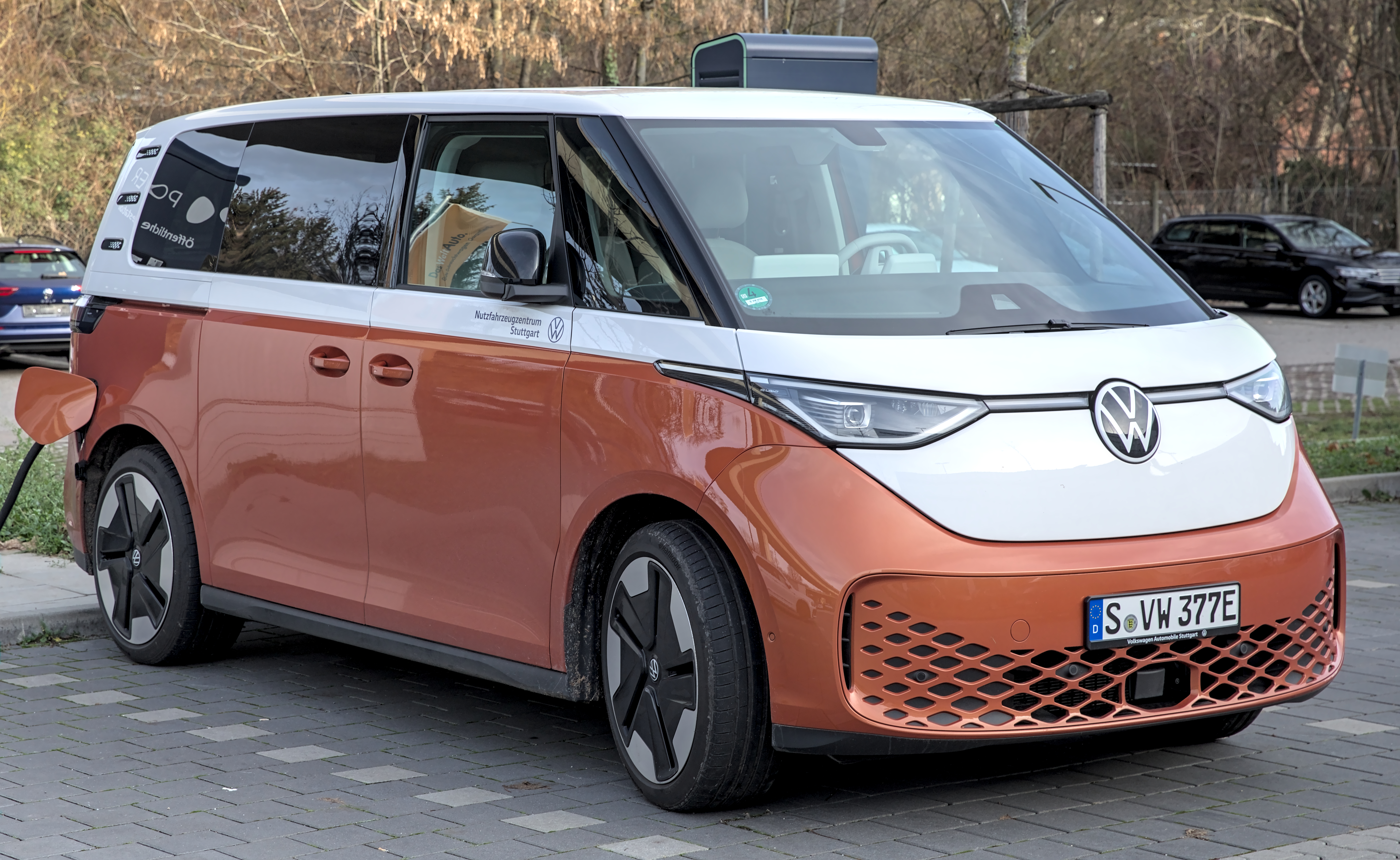
Volkswagen Plans Cheaper ID.Buzz After $61,545 Van Struggled
The Volkswagen ID.Buzz delivered the nostalgia buyers expected from an electric Microbus, but its $61,545 starting price became a major obstacle. Now Volkswagen says a second-generation ID.Buzz is planned for the United States and needs to be more affordable, giving people who liked the van but rejected its cost a reason to pay attention again.

The difficult part is quantifying that promise. Volkswagen CEO Thomas Schäfer confirmed the replacement in an interview with Auto Express, but the company has not disclosed its price, specifications, production schedule or expected savings. A cheaper next generation could make the electric van more realistic for families, but there is no supported target showing whether that means a modest reduction or a fundamental repositioning.
A shared platform is central to the cost plan
Volkswagen intends to move the next ID.Buzz from today’s dedicated electric-vehicle architecture to its Scalable Systems Platform. The group plans to use that common foundation across future electric and combustion-powered vehicles, allowing engineering and manufacturing costs to be distributed across a much larger product range.
That scale matters because a vehicle’s price is not determined by its battery alone. Electronics, software, motors, thermal systems, structural components and the tooling needed to assemble them all contribute to the cost base. Reusing more of those systems across multiple brands and body styles can reduce duplicated development work and simplify procurement. Schäfer suggested that the shared architecture could help lower the future van’s cost.
Volkswagen could also use lithium-iron-phosphate battery chemistry in the next ID.Buzz. Such batteries are less expensive to produce than the lithium-ion packs currently used in the van, making them another possible lever for reducing cost. However, Schäfer’s comments were an indication of what Volkswagen could do, not confirmation of a finalized battery specification.
The eventual retail benefit will depend on more than component costs. Battery size, equipment levels, manufacturing location and how much of the platform savings Volkswagen passes to customers will all influence the sticker price. None of those variables has been settled publicly for the second-generation model, so predicting a price would go beyond what the company has announced.
The 2028 return is a separate development
The future replacement should not be confused with the ID.Buzz already expected to return to American showrooms for the 2028 model year. Volkswagen introduced the van in the United States for 2025, skipped the 2026 model year and initially announced a 2027 version that included a Touring model. It then reversed that plan and pushed the U.S. return to the 2028 model year.
That returning vehicle is expected to gain revised software, vehicle-to-load capability and digital-key integration. Vehicle-to-load allows the van’s battery to power compatible external equipment, while the other changes address the connected features increasingly expected in new electric vehicles. Volkswagen has not established that this 2028 model is the second-generation ID.Buzz, however. Updates to the current van are expected before its eventual replacement, whose launch date remains unconfirmed.
The pause underscores the commercial problem Volkswagen is trying to solve. The ID.Buzz generated attention through its recognizable shape, useful passenger space and link to the original Microbus, yet enthusiasm did not translate into the sales volume the company wanted. Fans may welcome confirmation that the ID.Buzz will remain in the U.S. plan, while skeptics will reasonably wait to see whether Volkswagen can correct the affordability issue that held the current version back.
Even the successor’s appearance remains open. Volkswagen design chief Andreas Mindt has cautioned that buyers can tire of nostalgia-focused products, citing the Beetle, while promising that the next ID.Buzz will be “interesting” whether it retains familiar cues or changes direction. Styling can preserve the van’s identity, but platform sharing and battery selection will determine whether the next version can pair that identity with a meaningfully lower price. For now, Volkswagen has confirmed the objective not the number buyers need to judge whether it has succeeded.
| More aerospace and engineering stories, right in your MSN feed. Follow AMI on MSN |
By Robert McKinney — Editor-in-Chief for AMI’s automotive and mobility coverage, with a mechanical engineering background and a decade reporting on powertrain systems, EV innovation, and global vehicle manufacturing.


