


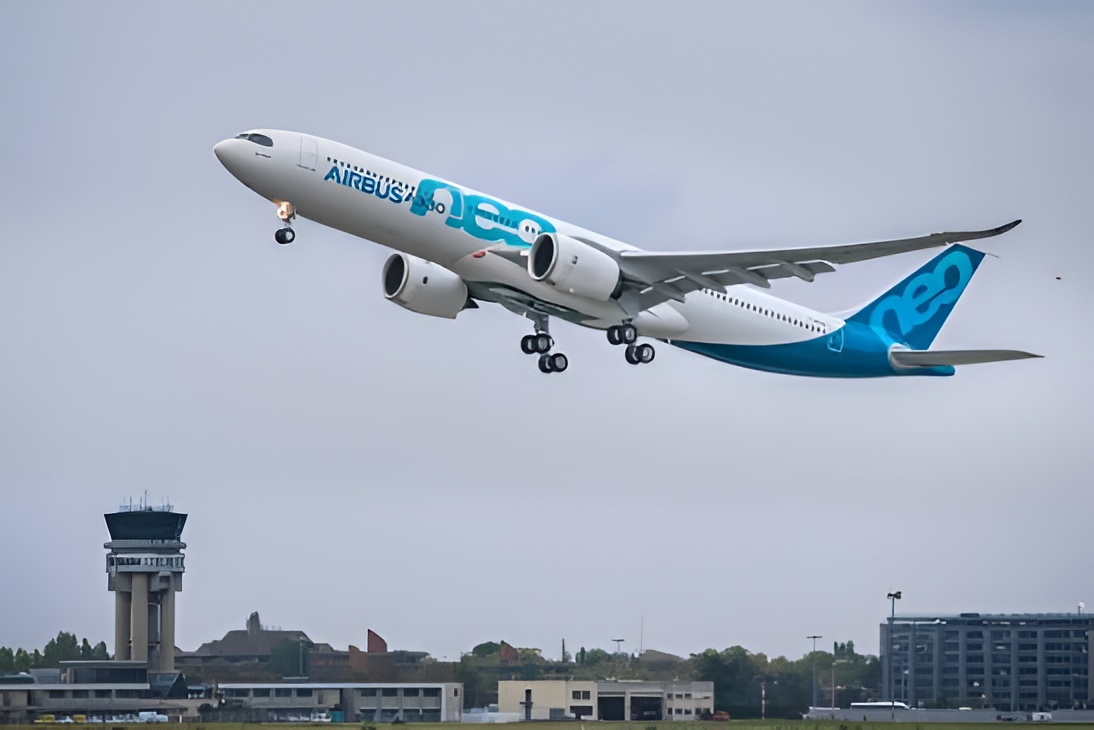
Airbus Recommends Tail Inspections for 139 A330neos After Tool Discovery
A tool was found inside the horizontal tail structure of a new Airbus A330neo, and the manufacturer now recommends additional inspections of 139 delivered jets. Airbus says the aircraft can continue flying safely while the checks proceed, creating an uncomfortable but important tension: equipment remained inside a structure associated with pitch control, yet the company reports no immediate safety concern.

The recommendation covers A330neos delivered from 2021 through the end of May 2026, including both the A330-800neo and larger A330-900neo. Airbus selected that broad window as a conservative precaution. It does not mean that tools or other foreign objects have been found in all 139 aircraft.
Why one tool prompted 139 inspections
The horizontal tail plane, also called the horizontal stabilizer, helps control an aircraft’s pitch. Airbus has not reported damage to the aircraft or an effect on its flight controls from the tool that was discovered during production.
For passengers, the immediate question is straightforward: If one tool was left behind, could other delivered aircraft contain similar items? Airbus does not currently have evidence establishing that they do. The inspections are intended to answer that question across the defined production population rather than assume one manufacturing escape was isolated.
This is fundamentally a tool-control and production-quality issue. Aircraft manufacturing and maintenance require tools to be tracked, recovered and accounted for before work is closed. A missing item can trigger a search and inspection because its consequences depend heavily on its size, material and location. An object enclosed in a structure is not automatically damaging, but leaving it there is outside the intended configuration and requires engineering review.
Airbus says it can demonstrate that an aircraft remains safe to operate even if a similar tool is present. In engineering terms, that statement indicates Airbus has assessed the relevant structural and operational conditions and found no immediate need to ground the affected fleet. It does not remove the need to locate any foreign object, inspect the surrounding area and determine whether corrective work is required.
The checks are being conducted during routine maintenance while Airbus and the European Union Aviation Safety Agency develop the final inspection approach. As of mid-October, Airbus had not announced a final deadline. Airbus and EASA were also determining whether inspections already completed would satisfy any further requirements. Possible mandatory action from the regulator had not been decided, with another update expected in mid-November.
Tool control depends on location and consequences
Previous events show why manufacturers and regulators take an unaccounted-for tool seriously without assuming that every discovery has caused damage. In a separate Airbus A380 event, a 1.25-meter nylon maintenance tool remained inside an engine for 34 flight cycles and 294 hours. The tool was deformed, but investigators observed no engine damage. The Australian Transport Safety Bureau said correct tool-control procedures are fundamental to limiting human error.
The A330neo case involves a different aircraft location and production circumstances, so that event does not predict the outcome here. It illustrates the central inspection logic: finding an object establishes a quality escape, while inspection and engineering analysis establish whether it produced damage or affected safe operation.
The disruption has already reached deliveries
The issue initially affected aircraft in production at Airbus facilities in Toulouse. A330neo deliveries stopped in June and July 2026, then resumed with one handover in August and two in September, according to AeroTime.
One aircraft for Condor, expected to carry the registration D-ANRR, has remained in Toulouse since July while undergoing additional production checks. Condor said its delivery was planned for the second half of November, subject to the latest schedule. The airline therefore remains without an aircraft it expected Airbus to hand over, turning the quality investigation into a direct fleet-planning delay.
Condor said routine maintenance inspections found no related abnormalities in its existing A330neo fleet. For the broader group of 139 aircraft, the next consequential step is the Airbus-EASA inspection plan: it will determine what checks operators must complete, whether earlier work counts and how quickly the delivered fleet can be cleared.
| More aerospace and engineering stories, right in your MSN feed. Follow AMI on MSN |
By David Whitaker — Associate editor for AMI’s aerospace and drone systems desk, translating flight systems, aircraft programs, spaceflight, and UAV developments into accessible technical stories.




