


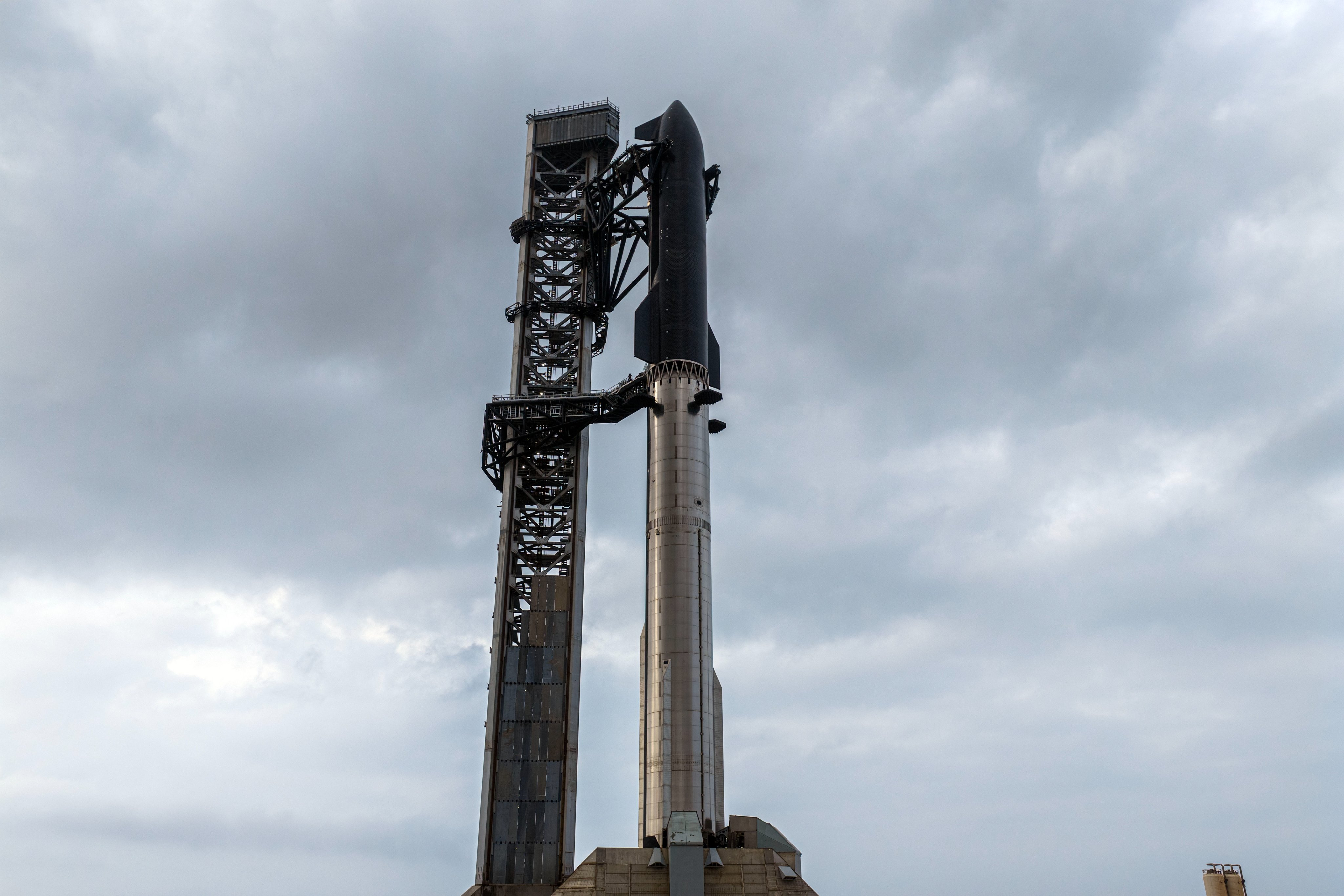
SpaceX Starship Reaches Orbit, Deploys 26 Satellites Despite Engine Shutdown
SpaceX’s Starship reached Earth orbit and delivered satellites there for the first time on September 28, turning its 14th integrated flight into both a test mission and an operational payload run. The uncrewed vehicle deployed 26 Starlink V3 satellites, and SpaceX reported making contact with all 26, according to a Reuters account of the mission.
The result came despite an upper-stage Raptor engine shutting down early during ascent. Mission controllers evaluated the remaining engines, continued the flight and used another engine burn to place Starship in orbit. That progression is central to the flight’s significance: Starship moved beyond the suborbital trajectories flown during its first 13 integrated tests and completed the basic job expected of an orbital launch system putting a payload where it could be released.
Contact with all 26 satellites is an encouraging deployment result, although initial communications alone do not establish that every spacecraft completed checkout or entered service. The confirmed accomplishment is narrower and still substantial: Starship carried the batch into orbit and released it, demonstrating a payload-delivery capability that had remained unproven through the earlier test campaign.
An engine shutdown changed the rest of the mission
Flight 14 began at Starbase, Texas. After stage separation, the Super Heavy booster returned to a planned splashdown in the Gulf of Mexico. The Starship upper stage continued toward orbit, where it released the satellites before SpaceX revised the remainder of the flight.
The mission had been planned to last nearly 10 hours. Following the early Raptor shutdown, SpaceX shortened it to roughly three hours and directed Starship toward a controlled splashdown in the Pacific Ocean. Neither the booster nor the upper stage was intended to be recovered during this test, so their ocean descents were planned mission endings rather than failed recovery attempts.
The engine anomaly therefore produced a mixed but clearly bounded outcome. It did not prevent orbital insertion or satellite deployment, but it reduced the time available for the longer-duration orbital work originally planned. Without additional findings, the shutdown’s cause and its implications for later flights remain unresolved.
Payload delivery is only one part of the architecture
Reaching orbit with useful payload moves Starship closer to the role SpaceX has assigned it within the Starlink system. Larger Starlink V3 spacecraft are intended to use the launch capacity of Starship rather than relying exclusively on the company’s operational Falcon 9 fleet. Flight 14 established that the new launch system can perform an orbital deployment, but repeating that performance will be necessary before it becomes routine transportation.
The flight did not test several capabilities needed for Starship’s broader ambitions. It did not complete the planned long-duration operation, recover either stage for reuse or transfer propellant between separate spacecraft in orbit. Full reuse depends on bringing both major stages back in condition for subsequent flights, not merely guiding them to controlled ocean splashdowns.
Orbital refueling presents a different engineering challenge. Starship’s proposed role as a human landing system for NASA’s lunar program depends on operations involving multiple spacecraft and the transfer of cryogenic propellant in space. A NASA technology project described large-scale orbital liquid-oxygen transfer and cryogenic-fluid management as key enablers for reusable space transportation. Managing tank pressure, fluid behavior and temperature during storage and transfer becomes especially demanding when propellants must remain usable over extended missions.
A previous Starship flight demonstrated movement of liquid oxygen between tanks within one vehicle. Transfer between independent spacecraft, however, has not yet been demonstrated. That leaves a major gap between an orbital satellite launcher and the multi-vehicle architecture envisioned for lunar missions.
Flight 14 nevertheless changed Starship’s demonstrated capability in a concrete way. The system has now reached orbit, released 26 satellites and completed a controlled deorbit after losing an upper-stage engine. Its next tests must show that this result can be repeated while extending orbital endurance and eventually recovering, refueling and reusing the hardware that is supposed to make Starship fundamentally different from an expendable heavy-lift rocket.
| More aerospace and engineering stories, right in your MSN feed. Follow AMI on MSN |
By David Whitaker — Associate editor for AMI’s aerospace and drone systems desk, translating flight systems, aircraft programs, spaceflight, and UAV developments into accessible technical stories.



