


Tesla Says Driver Assist Was Engaged Before Fatal New Jersey Median Crash
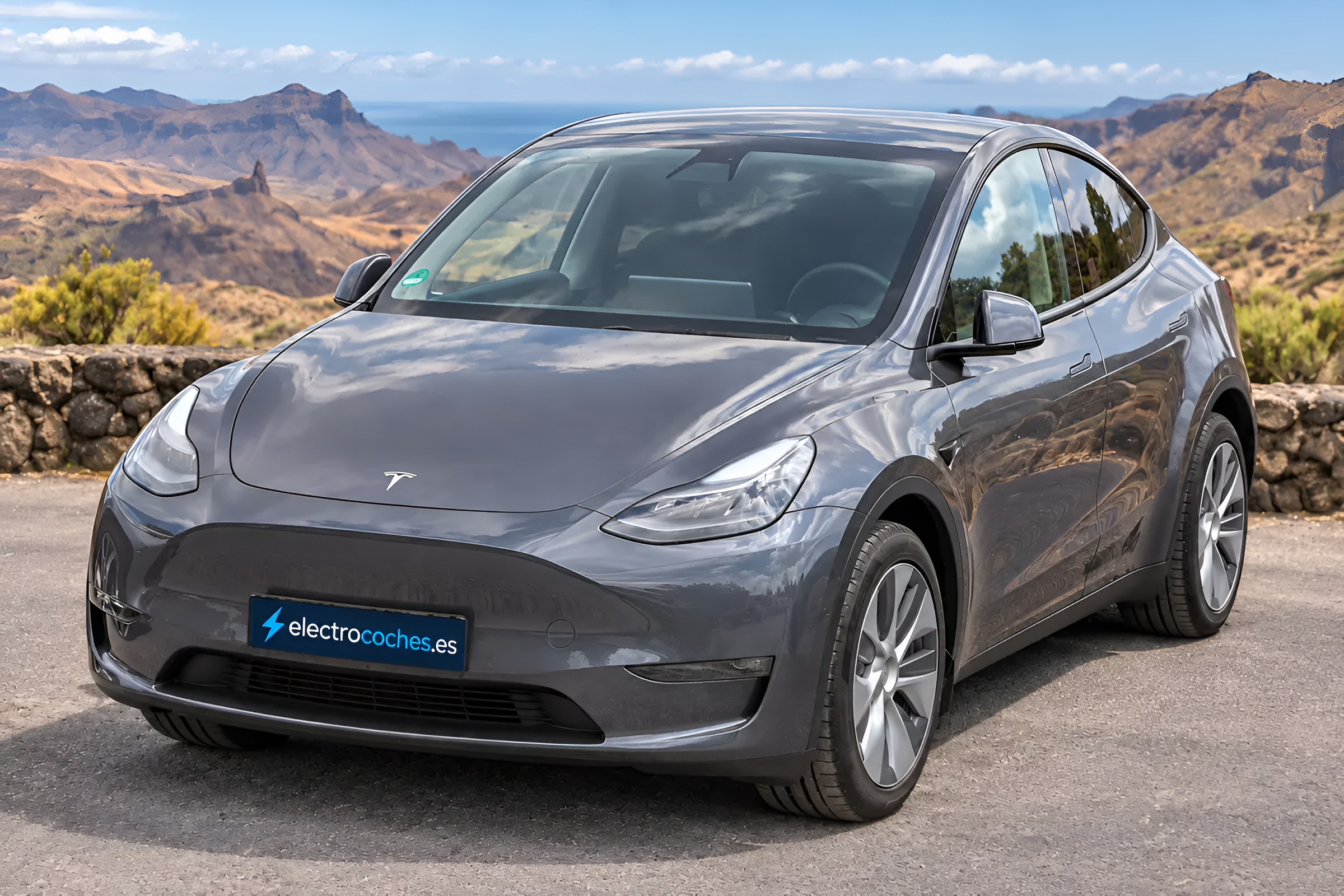
Tesla told federal regulators that driver assistance was engaged shortly before a 2021 Model Y crossed the median of Route 55 in New Jersey and struck an SUV head-on, killing its 68-year-old driver. The later filing adds a significant fact absent from the initial police account, but redactions leave unresolved what the software and driver were doing as the Tesla left the highway.

The crash occurred at about 8:31 a.m. on August 22, 2026, near milepost 34.6 in Vineland. New Jersey State Police said the southbound Tesla left the road after its driver “lost control,” crossed the grass median, hit a tree and continued into the northbound lanes, where it collided with a Chevrolet SUV.
The Chevrolet’s driver, Phillip “Phil” Eastman of Springfield, Pennsylvania, was killed. Eastman had recently been sworn in as a Springfield School District board member and had coached youth and high school ice hockey for nearly three decades, including 17 years as Springfield High School’s varsity head coach. The Tesla driver and a Chevrolet passenger were hospitalized with moderate injuries.
How the federal filing was connected to the crash
The driver-assistance detail emerged nearly two months after the initial police description through a separate federal reporting process. Tesla’s filing with the National Highway Traffic Safety Administration identifies the vehicle as a 2021 Model Y and lists its automation engagement status as “Verified Engaged.” Tesla used its own telematics to confirm that status.
The federal record was matched to the publicly reported collision through the disclosed state, location, vehicle, fatality, month and incident time. Tesla logged the event at 12:29 UTC, or about 8:29 a.m. locally two minutes before the time reported by police. Those overlapping details connect the filing to the Route 55 crash even though identifying fields were limited.
The filing says Tesla learned about the collision through media coverage and names New Jersey State Police as the investigating agency. The available record does not give a specific reason the driver-assistance information was not public earlier. In practice, the initial police account and the federal automation filing followed different paths, and the latter had to be matched to the crash through its remaining unredacted details. Tesla is also under NHTSA investigation concerning how it reports these crashes.
What “Verified Engaged” establishes and what it leaves open
The reporting requirement covers certain serious crashes in which a Level 2 driver-assistance system was engaged within 30 seconds of impact. Tesla’s telematics therefore establish recent engagement inside that reporting window. They do not reveal whether the system was actively steering when the Model Y crossed the median, whether the driver was overriding it or whether driver assistance contributed to the departure from the road.
Tesla redacted the crash narrative, software version and whether the highway was within the system’s approved operating area, labeling the withheld fields “confidential business information.” Consequently, the public filing does not identify whether the Model Y was running basic Autopilot or Full Self-Driving. Despite their names, both are partial-driving-automation systems that require an attentive human driver.
That shared-control arrangement makes responsibility dependent on details the filing does not contain. A useful reconstruction would need to distinguish commands from the system, steering or pedal inputs from the driver, the timing of any alerts and the vehicle’s path before it entered the median. Engagement alone cannot allocate responsibility between driver behavior, system behavior or another factor.
The Insurance Institute for Highway Safety’s partial-automation framework illustrates why investigators examine more than whether assistance was switched on. Its ratings consider driver monitoring, attention reminders, escalating alerts and emergency procedures. These safeguards are intended to keep a driver engaged while lane-centering and adaptive-cruise functions operate; they do not make the vehicle self-driving.
A speed figure without a complete motion record
Tesla listed a pre-crash speed of 37 mph, but the public material does not establish that this was the Model Y’s speed when it left the roadway. It may represent one telematics snapshot rather than a continuous account of the vehicle’s motion. Treating it as the median-crossing speed would therefore go beyond what the filing shows.
The report indicates that Tesla possessed telematics, but not event-data-recorder information or video. A request has been made to New Jersey State Police for the crash report and vehicle data, including clarification on whether investigators received raw Tesla telemetry or Tesla’s interpretation of it.
For Eastman’s family and the wider public, the central question is direct: who or what controlled the Model Y as it crossed the median? Tesla has confirmed that driver assistance was recently active. The redacted filing still does not disclose the software version, control inputs or system behavior needed to answer that question.
| More aerospace and engineering stories, right in your MSN feed. Follow AMI on MSN |
By Robert McKinney — Editor-in-Chief for AMI’s automotive and mobility coverage, with a mechanical engineering background and a decade reporting on powertrain systems, EV innovation, and global vehicle manufacturing.


