


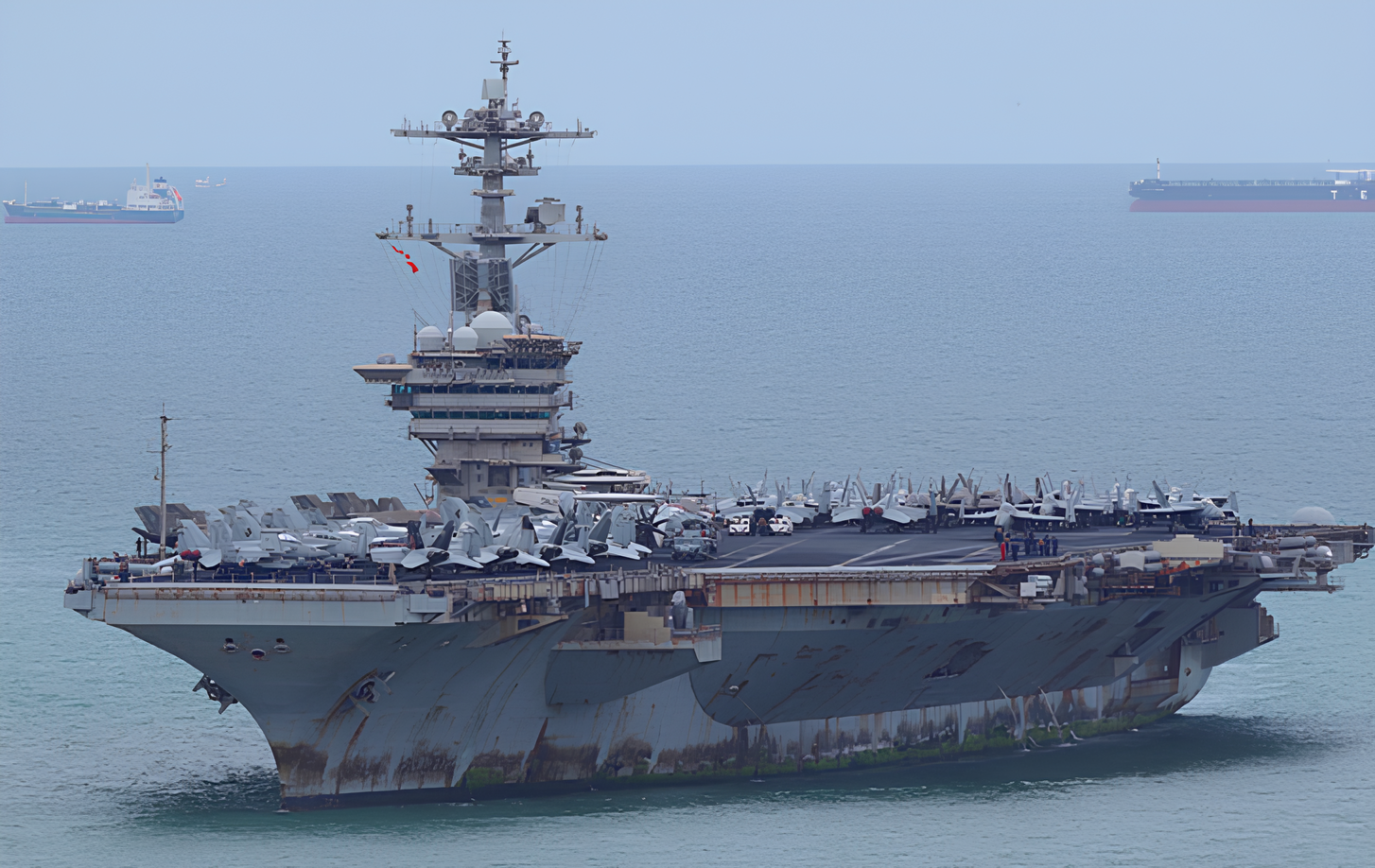
USS Abraham Lincoln Returns With Waterline Rust After 286 Days at Sea
USS Abraham Lincoln has returned home with extensive rust streaking around its waterline after completing a 321-day deployment that included 286 consecutive days without a port call. The carrier’s weathered hull looks alarming, but the visible corrosion alone does not establish structural damage or reduced operating capability. It shows the maintenance limits imposed when a steel ship remains underway for months and waves keep its most exposed surfaces beyond the reach of full preservation work.
The distinction between the total deployment and the uninterrupted stretch at sea is important. Lincoln left San Diego in November 2025 and ultimately spent 321 days deployed. During that period, the carrier went 286 consecutive days without entering port and relied on 72 replenishments at sea. Those figures describe an unusually demanding operating cycle rather than 286 days as the deployment’s final length.
The scale becomes clearer in comparison with other recent carrier operations. At a Guam logistics stop in September, Lincoln had reached 302 deployment days and ranked as the second-longest U.S. carrier deployment since the Cold War, according to the USNI News carrier deployment database. USS Gerald R. Ford had completed a 326-day deployment earlier in 2026, while Lincoln’s own 2019-2020 deployment lasted 294 days.
Why the waterline takes the worst exposure
A ship’s coating system separates its steel structure from seawater. When that protective layer is worn, chipped or otherwise opened, saltwater can reach the steel and corrosion can begin. Continued exposure allows rust to spread until crews remove it, prepare the surface and restore the protective barrier.
The waterline is especially difficult because it repeatedly shifts between wet and comparatively dry conditions as the ship moves. The bow and forward hull also encounter sustained wave action. Sailors can preserve accessible exterior areas while underway, but safely removing corrosion and properly preparing a wave-washed surface is a different problem. New coating applied without adequate surface preparation would not provide the same durable protection.
Port access changes that maintenance boundary. With the ship stationary and crews able to reach the affected zone under more controlled conditions, preservation can proceed as a complete process: remove corrosion, inspect the exposed area, prepare the steel and renew the coating system. It is more involved than covering the stains with another coat of paint.
Visible rust is a warning, not a structural finding
Retired U.S. Navy Capt. Carl Shuster told CNN that rust along the waterline is not unusual after 60 days or more of continuous operations at sea. Lincoln’s 286-day port-free stretch exceeded that reference by a wide margin, making the amount of visible staining less surprising even if its appearance remains severe.
Corrosion can weaken steel when allowed to progress, so the rust still requires removal and inspection. However, no official Navy finding associated with Lincoln’s return has identified structural damage or a loss of operating capability caused by the visible areas. Surface staining, coating failure and meaningful loss of steel thickness are different conditions; determining which work is necessary requires access and inspection rather than judgment from exterior appearance alone.
Shuster estimated that removing the visible rust and preserving the carrier could take about 30 days. That is an expert estimate based on the observed condition, not a confirmed Navy schedule. The actual duration depends on what crews find after cleaning and preparing the affected surfaces, as well as the scope of other work assigned during the port period.
Lincoln’s long deployment also demonstrates why corrosion control is tied to fleet scheduling and logistics. Replenishment ships can deliver fuel and supplies at sea, allowing a carrier to continue operating through 72 underway replenishments. They cannot reproduce the stable access needed to restore a wave-exposed hull coating. After 286 consecutive days without a port call, crews can finally reach the carrier’s waterline under conditions suited to doing the job properly.
| More aerospace and engineering stories, right in your MSN feed. Follow AMI on MSN |
By David Whitaker — Associate editor for AMI’s aerospace and drone systems desk, translating flight systems, aircraft programs, spaceflight, and UAV developments into accessible technical stories.



