Russia Reports 126 Ukrainian Drones Near St Petersburg as Pulkovo Restricts Flights
Russia reported intercepting 126 Ukrainian drones around St Petersburg on October 18 as Pulkovo Airport restricted operations for safety and departing flights were disrupted. The reported scale is significant because an aerial threat does not need to strike an airport to interfere with civilian aviation: uncertainty in nearby airspace can be enough to limit departures and impose delays.
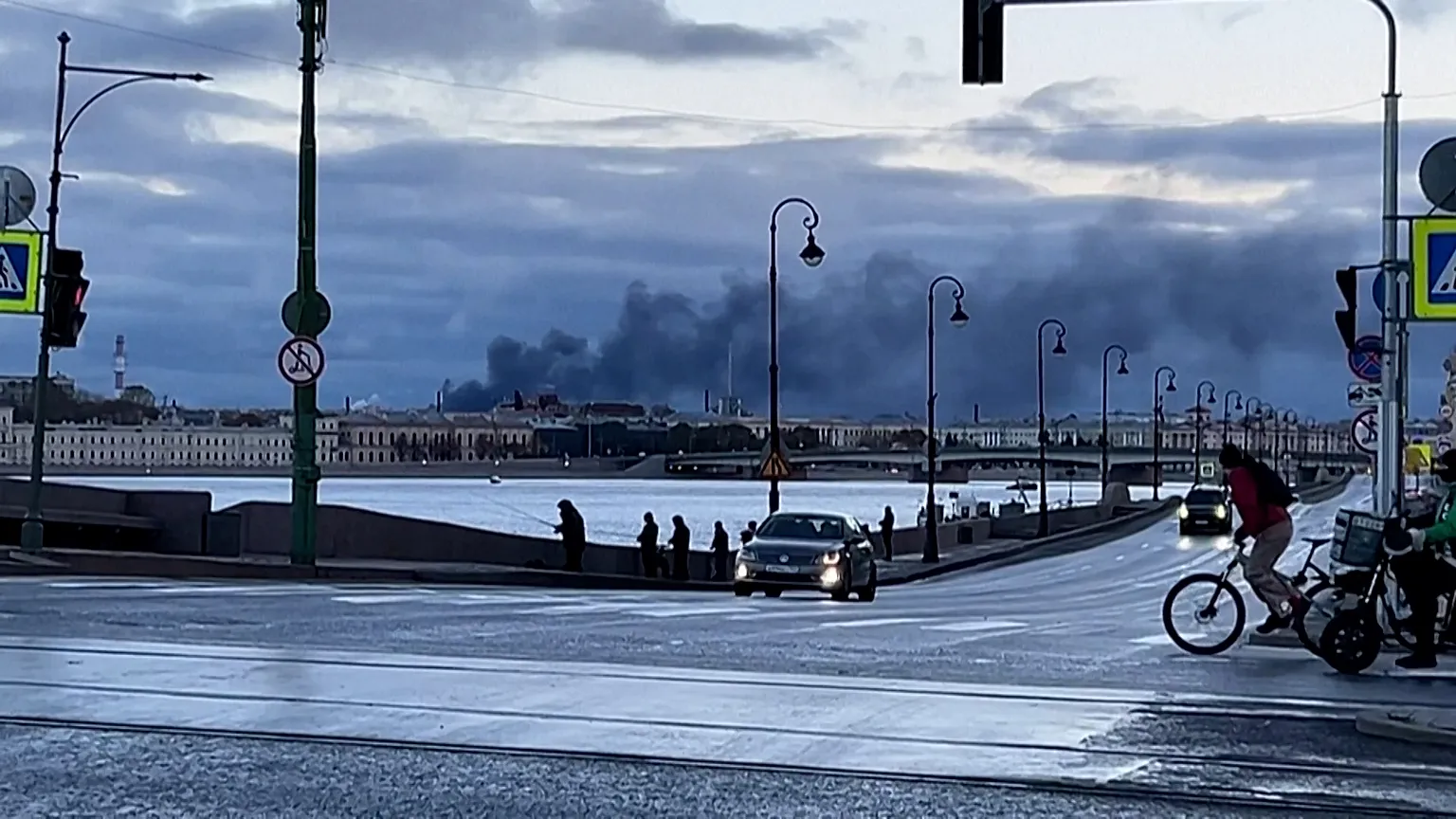
Leningrad region Governor Alexander Drozdenko said the attack was still being repelled. He reported that falling debris damaged homes, cars and power lines, briefly interrupting electricity, but reported no injuries. St Petersburg Governor Alexander Beglov attributed a fire at the St Petersburg Oil Terminal to the attack. The fire’s wider effect on the terminal, fuel handling or energy supplies was not immediately clear.
For Pulkovo, the central issue was the safety of shared airspace. Aircraft departures depend on usable routes, reliable navigation and communication, and confidence that the surrounding airspace can be managed without exposing civil traffic to military activity or debris. Restricting operations is therefore a risk-control measure, even when no strike on the airport itself has been reported.
The International Civil Aviation Organization says governments, airlines and air-navigation service providers need current conflict-risk information to protect civilian flights. Its conflict-zone guidance also notes that airlines conduct their own risk assessments, often using third-party security monitoring. That means a government restriction is only one layer of the response; carriers and flight planners can make additional operational decisions as conditions change.
A large drone alert adds complexity because authorities must manage several hazards at once. Air-defense activity, unmanned aircraft and falling debris can all affect the risk picture around an airport. Civil controllers and military authorities also need timely coordination so commercial aircraft are not routed into uncertain airspace. ICAO has called for faster threat-information sharing, stronger risk assessments and closer military-civil coordination as drones, missiles and navigation interference increasingly affect aviation near conflict zones.
The reported count of 126 also represents a readiness burden rather than a complete measure of attack effectiveness. If accurate, that number describes the volume Russian authorities said they intercepted, but it does not independently establish how many drones were launched, how many reached the region or whether every engagement produced a successful interception. Debris damage and the reported terminal fire show that claims of interception do not automatically mean all secondary effects were prevented.
Scale can pressure several parts of an emergency system simultaneously. Air-defense crews must sustain detection and response, airport managers must make time-sensitive operating decisions, utilities must address local damage, and emergency services must assess fires and debris. The episode reportedly affected power lines, residential property, vehicles, an oil facility and airport departures during the same period. VK also said a regional data center was targeted but remained operational.
Those effects illustrate the difference between physical damage and operational disruption. An airport can lose departure capacity temporarily without suffering a direct hit. A utility can experience brief outages even if repairs are limited. An oil-terminal fire can require an emergency response while leaving its production or supply consequences unresolved. Each system reacts according to its own safety margins and recovery procedures, so the visible fire alone cannot establish the terminal’s broader energy impact.
The industrial implications are similarly bounded. A reported wave of this size indicates the capacity to generate a broad alert and force multiple defensive and civil agencies to respond. It does not reveal production rates, launch methods or the long-term sustainability of such operations. Those questions require corroborated information beyond a single official count.
The event also unfolded amid a communications dispute. U.S. Secretary of State Marco Rubio denied that the White House had ordered SpaceX’s commercial Starlink service slowed to prevent Ukrainian drone operations inside Russia. He said Starshield is a separate, government-controlled military product, that Ukraine did not currently have access to it and that discussions about possible use were continuing. Those statements do not resolve the interception or damage claims around St Petersburg.
The clearest documented civilian consequence remains Pulkovo’s operating restriction. The terminal fire and scattered infrastructure damage broadened the emergency, but their lasting effects were still uncertain while regional authorities said the aerial attack was continuing to be repelled.
| More aerospace and engineering stories, right in your MSN feed. Follow AMI on MSN |
By Stephen Wallace — Editor for AMI’s aerospace integration and unmanned mobility coverage, focused on drone manufacturing, VTOL systems, autonomous networks, and air-ground mobility links.