


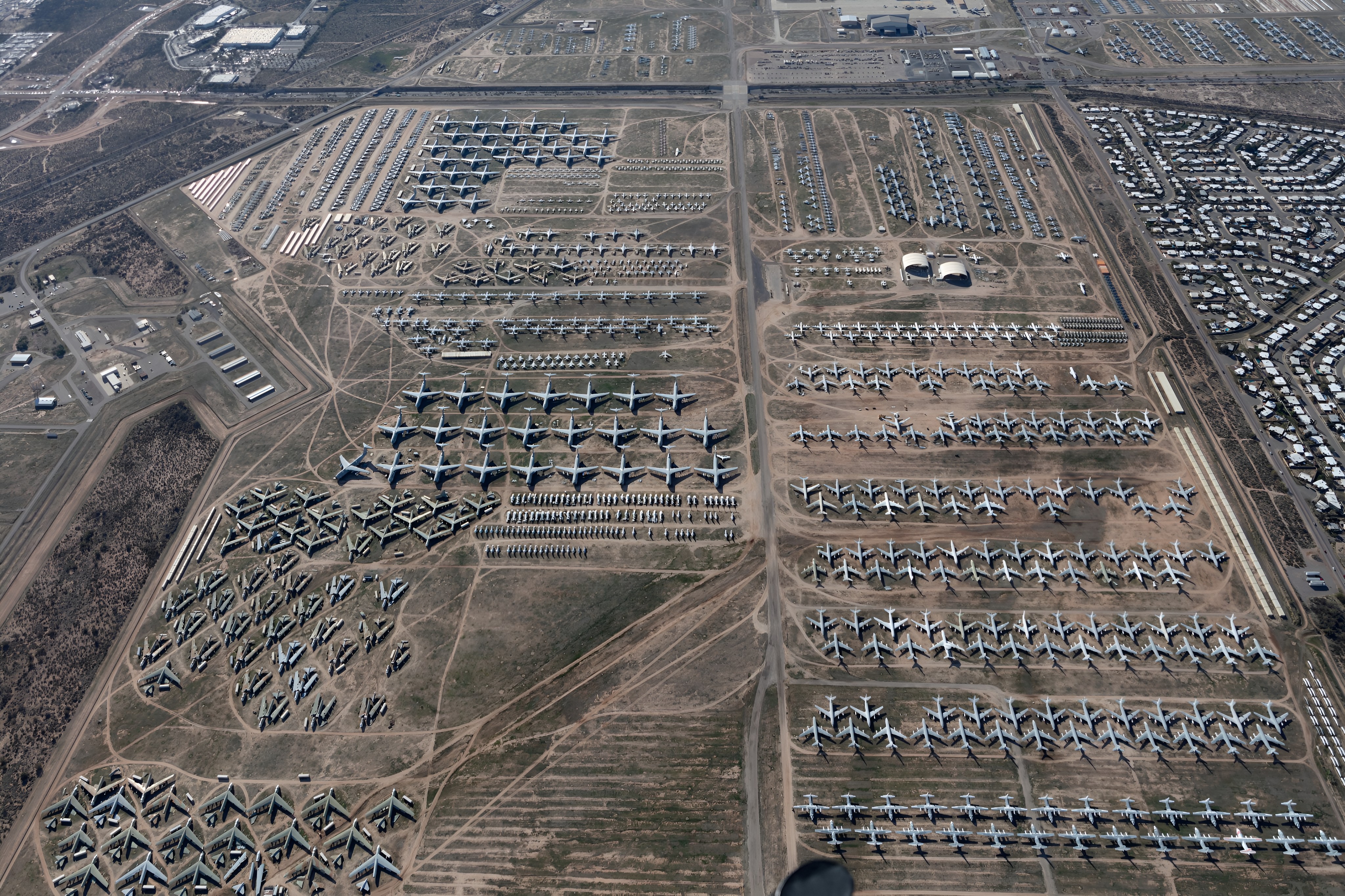
309th Aircraft Boneyard Preserves 3,000 Planes for Parts or Flight
Before an aircraft joins the long desert rows at Davis-Monthan Air Force Base, mechanics remove its fuel, introduce preservative oil and run each engine for about five minutes. The aircraft is then washed, sealed and coated before being towed into storage. This methodical process is how the 309th Aerospace Maintenance and Regeneration Group keeps more than 3,000 aircraft useful as parts sources, maintenance assets or candidates for an eventual return to flight.

The scale can make the 2,600-acre Arizona site look like a final parking place for retired military hardware. Operationally, it is closer to a distributed warehouse and maintenance depot built out of complete airplanes. More than 800 mechanics preserve and repurpose aircraft representing almost 80 years of aviation history, supporting military services, NASA and other government operators.
Preservation starts with contamination control
Storage in a dry climate slows corrosion, but the desert cannot preserve an aircraft by itself. Washing removes contaminants accumulated in service, especially from airplanes exposed to humid tropical conditions or salt-laden carrier environments. Cleaning a large aircraft can take two days.
Crews then seal openings against insects, birds, dust and weather. A black sealing layer is covered with a reflective white coating intended to keep the aircraft within 15 degrees of ambient temperature. That thermal control reduces the temperature extremes imposed on the sealed structure and internal spaces while the removable coating protects entry points.
The location adds two passive advantages. Arizona’s dry environment limits corrosion, while the hard caliche soil can support large aircraft without requiring every storage position to be paved. Those benefits reduce infrastructure and preservation burdens, but they do not eliminate recurring maintenance or careful preparation.
Each airplane can become a parts warehouse
Many stored aircraft are not expected to fly again. They can still carry components that are difficult, slow or impossible to obtain through normal production. Rather than stocking every item in a conventional building, the 309th uses designated airframes as airplane-shaped warehouses. Technicians remove requested components under work orders and technical manuals, then return them to an operating fleet or the supply system.
The role becomes particularly important as aircraft remain in service long after their original production lines close. An EB-57 Canberra at the site supplies components for NASA’s WB-57 aircraft. Stored B-52G bombers can also provide compatible parts for B-52H aircraft that continue to operate.
A March 2025 Defense Department account of the operation said approximately 10,000 parts valued at around $500 million had been supplied during the preceding year. Some of those components were no longer manufactured. The group’s own longer-term figures put typical reclamation at 5,000 to 6,000 parts annually, illustrating that demand and workload can vary.
Storage can end with regeneration
Preservation also retains options at the aircraft level. Returning an airplane to service requires much more than removing its white coating: technicians must inspect its condition, restore systems and complete the maintenance directed by the organization that owns it. The 309th does not own the stored assets; it performs storage, reclamation, regeneration, disposal and limited depot-level work for military services, government agencies and allied customers.
Completed projects show what that reserve can provide. The Marine Corps announced plans in 2016 to refurbish 23 stored F/A-18 Hornets amid an aircraft shortage. A 55-year-old B-52 returned to flying status in 2020 after nearly a year of restoration, while a B-1 was regenerated in 64 days in 2023. The facility also upgrades some older aircraft, including F-16s receiving newer hardware and software.
Not every preserved airplane remains eligible for recovery. More than 90 B-52s are present, primarily G models, and some B-52Gs were cut into sections under strategic-arms agreements so satellites could verify that they could not fly again. That irreversible step did not make every component useless: compatible parts could still support operating B-52Hs.
Aircraft and parts that no longer have an assigned need can ultimately be prepared for disposal, with useful metals recovered during dismantling. Until owners make that decision, preservation buys time and keeps options open. The 309th says its technicians regenerate, or prepare for regeneration, about 100 aircraft in an average year evidence that the desert rows remain an active industrial system rather than a static aviation graveyard.
| More aerospace and engineering stories, right in your MSN feed. Follow AMI on MSN |
By David Whitaker — Associate editor for AMI’s aerospace and drone systems desk, translating flight systems, aircraft programs, spaceflight, and UAV developments into accessible technical stories.




