


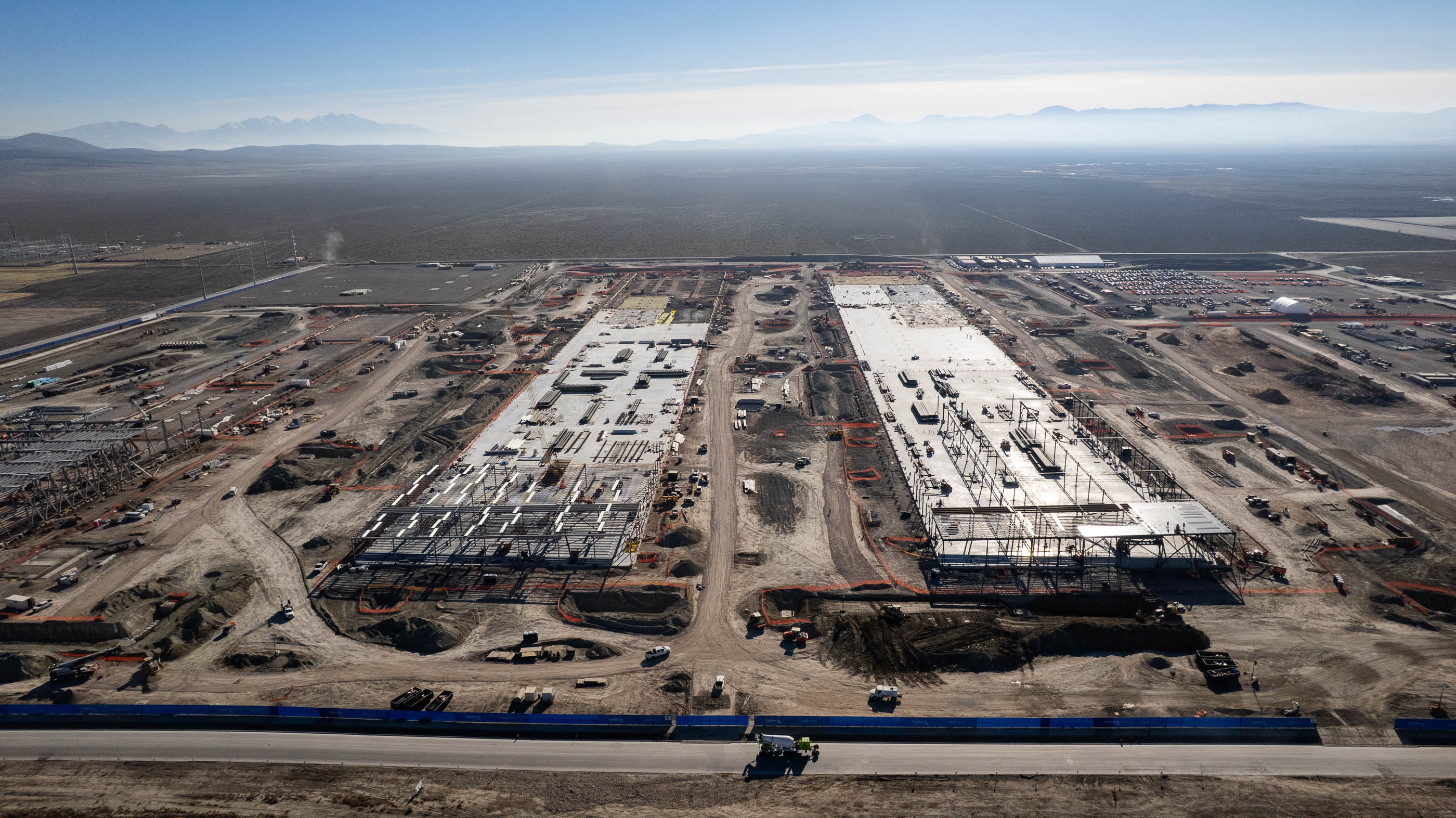
Creekstone Says Utah Data Center Has 3 Gigawatts, Could Reach 10
Creekstone Energy is pairing an unusually large power buildout in Utah with a water-recovery system whose projected output has yet to be demonstrated commercially. The company says its Delta Gigasite currently has around 3 gigawatts of on-site generation and is designed to scale toward 10 gigawatts, but its estimate of more than 4,000 acre-feet of recovered water per year remains a result from an engineering model.
The contrast captures the central infrastructure challenge facing the largest planned artificial-intelligence campuses. Their electrical requirements can approach the scale of a major city, while cooling, water, emissions and utility connections must all be engineered as parts of one system. University of California, Santa Barbara professor Eric Masanet estimated that a 3-gigawatt campus would require around half of Los Angeles’ recorded peak power capacity.
Generation capacity is not computing demand
Creekstone CEO Ray Conley said all generation for the site southeast of Delta would be built on the property and located behind the meter. In that arrangement, generation and the principal load sit on the same customer side of the utility meter, reducing the amount of power that must be delivered through the ordinary utility network. Conley said this would avoid an impact on utility rates for Utah families and businesses.
That 3-gigawatt generation figure should not be treated as proof that 3 gigawatts of computing equipment are operating at the campus. Data Center Index lists the project as under construction, with expected completion in 2027, while Creekstone’s statement describes the generation available at the site and its long-term scaling design.
Independent researcher Jonathan Koomey noted that data-center capacity figures typically describe the maximum planned information-technology load after a facility is fully built and equipped. A campus can take months or years to fill, may never reach its design maximum and may operate below that level. Its total electrical requirement can also exceed the stated IT load once cooling equipment, fans, pumps and power-distribution losses are included.
The historical comparison is still striking. Masanet said sites above 100 megawatts were considered very large before the AI expansion. Three gigawatts is 30 times that benchmark, although he cautioned that campuses of this scale do not represent most data centers, which remain considerably smaller.
Water recovery addresses a second constraint
Creekstone says the campus is designed for minimal water use and has developed patent-pending technology intended to capture water vapor from its on-site natural-gas generation and convert it into usable water. Its engineering model projects annual recovery above 4,000 acre-feet.
Conley characterized that figure as a modeled estimate rather than commercial-scale operating data. He said the University of Utah’s Energy & Geoscience Institute was independently testing the model. Until that work and full-scale operation produce measured results, the estimate describes a design objective rather than established annual output.
The proposed system also links water performance to the campus power architecture. Its output will depend on how the generation plant and recovery equipment perform together, so maximum modeled water production cannot be separated from the plant’s actual operating profile. Conley said the natural-gas plant would operate under a Utah Division of Air Quality permit with enforceable emissions limits.
On-site power changes, but does not erase, the planning problem
Locating generation beside a large computing load can shorten the electrical path between supply and demand. That is significant because concentrated data-center growth can strain substations and transmission corridors even when a wider region has enough generation. The U.S. Department of Energy has identified data centers as an important contributor to near-term electricity-demand growth and cites an estimate that they could consume as much as 9% of U.S. electricity generation annually by 2030, up from 4% in 2023.
Creekstone is not the only developer planning at city-scale levels. Data Center Index lists four U.S. campuses under construction above 3 gigawatts, including projects in Ohio, Texas and Louisiana as well as Utah. The index’s estimates reach 8 gigawatts for the PORTS-Pike Technology Campus in Ohio, 7.7 gigawatts for a Nexus Data Centers campus in Texas and 5 gigawatts for Meta’s Hyperion project in Louisiana; confirmation from those operators was still pending.
For Delta, the next meaningful engineering evidence will come from measured operation: how much computing load is installed, how consistently the on-site plant supplies it, and how much usable water the recovery equipment produces at commercial scale. The proposed 10-gigawatt ceiling describes the campus’s intended destination, while its real infrastructure impact will be set by the capacity that is actually built, occupied and operated.
| More aerospace and engineering stories, right in your MSN feed. Follow AMI on MSN |
By Thomas Caldwell — AMI’s senior editor for mechanical and mobility engineering, covering vehicle electronics, systems integration, electrification, chassis systems, propulsion, and safety policy.



