


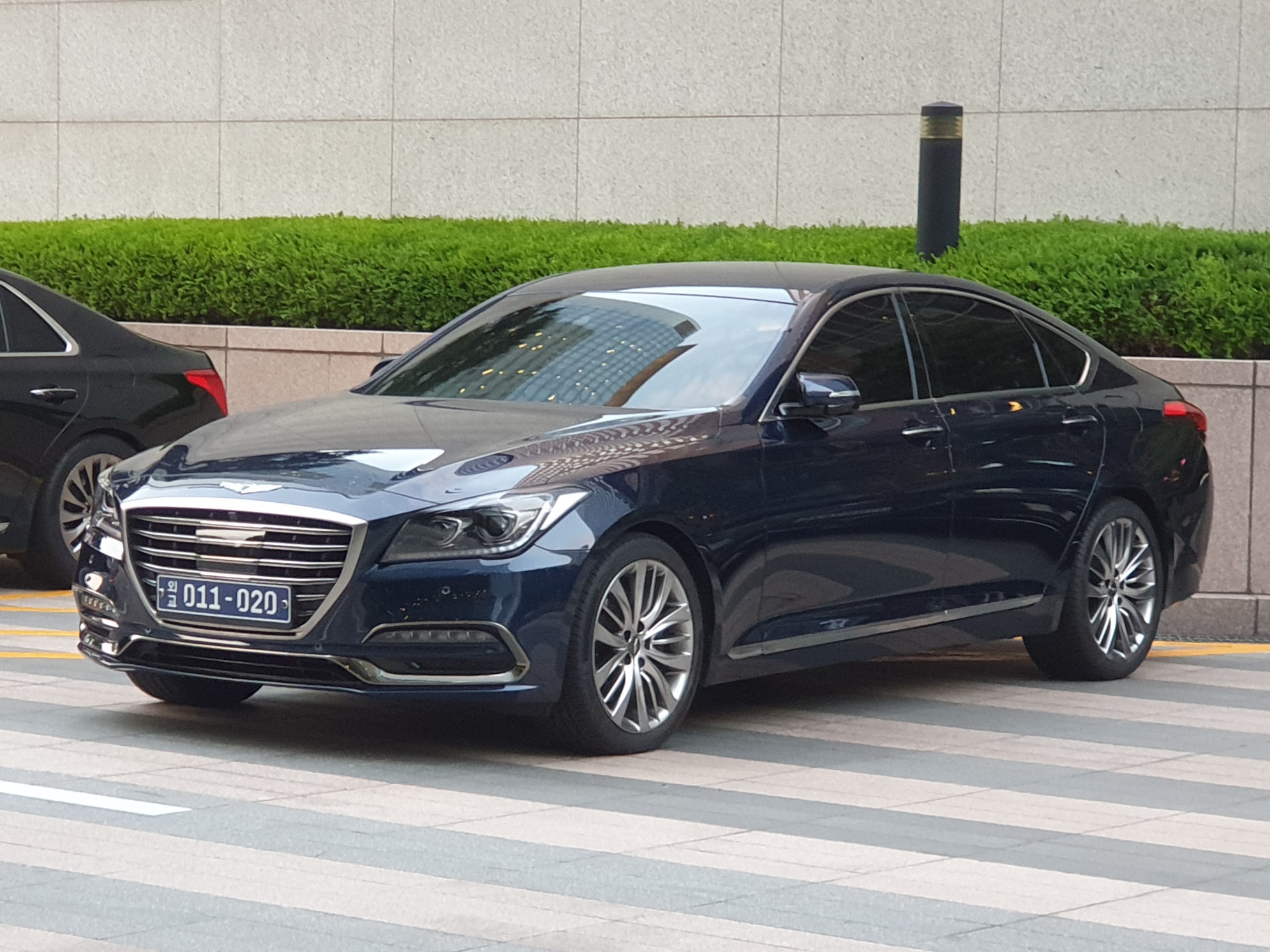
Hyundai Tells Nearly 95,000 Genesis Owners to Park Outside Over Fire Risk
A front-seat adjustment switch is supposed to stop powering its motor when the occupant releases the control. In 94,622 recalled Hyundai Genesis and Genesis G80 cars, however, a damaged or dislodged switch can remain electrically engaged. The motor may then continue running after everyone has left the vehicle, potentially overheating and starting a fire while the car is parked.

Hyundai is telling affected owners to park outdoors and away from vehicles and structures until a free repair is available. The company issued the recall on October 1, but the remedy remains under development. Owners can enter their 17-character vehicle identification number into the National Highway Traffic Safety Administration recall checker to determine whether their car has an unrepaired recall.
Which Genesis cars are covered
The recall applies to certain model-year 2015–2016 Hyundai Genesis sedans and model-year 2017–2020 Genesis G80 sedans. The earlier cars were sold before Genesis became Hyundai’s separate luxury brand.
The affected Hyundai Genesis vehicles were built from February 21, 2014, through February 24, 2016. The Genesis G80 production range runs from March 17, 2016, through November 7, 2019.
The defect is associated with the adjustment controls on front power seats without memory presets. It involves the switch used to move a seat forward or backward and adjust its height. Hyundai estimates that approximately 1% of the recalled population has the defect, but identifying the individual cars with a damaged or displaced switch is the practical problem behind the broad recall and parking instruction.
How a seat switch can keep the motor running
The failure path begins with impact damage or displacement of the seat switch. Instead of returning to its neutral position when released, the switch can remain engaged and continue sending power to the adjustment motor. Continuous motor operation can generate enough heat to create a fire risk while the vehicle is parked or being driven.
This mechanism makes the owner warning unusually consequential for a cabin convenience system. A seat that has already reached the requested position may provide no obvious visual indication that its motor remains energized. The risk also does not necessarily end when the ignition is turned off and occupants leave, which is why the interim instruction focuses on where the vehicle is parked rather than merely avoiding further seat adjustment.
Hyundai identifies two possible warning signs: a burning odor coming from the seat area or a seat-control switch that no longer operates. Those signs may indicate switch damage, but their absence does not remove a vehicle from the recall. Recall status is determined by the vehicle identification number.
Two alleged fires and no reported injuries
Hyundai says it knows of two alleged fires in the United States associated with the issue. The company has received no reports of crashes or injuries.
Its chronology dates the first known case to December 2021, when a Speak Up For Safety report described an issue involving a 2018 Genesis G80. Hyundai learned of another case in August 2022 and determined that an external impact had damaged that vehicle’s seat switch. Information received from South Korea in July concerning alleged overheating events in that market led to further action and the October recall decision.
Repair work will be performed without charge regardless of whether an affected car remains under its original warranty. Owner notification letters are planned for early December, but checking the VIN can identify an open recall without waiting for a mailed notice.
Until Hyundai finalizes and performs the remedy, the parking restriction remains the principal risk-control measure. For owners, that means a small interior switch can dictate where an entire vehicle is safely stored and the free permanent fix is not yet ready.
| More aerospace and engineering stories, right in your MSN feed. Follow AMI on MSN |
By Thomas Caldwell — AMI’s senior editor for mechanical and mobility engineering, covering vehicle electronics, systems integration, electrification, chassis systems, propulsion, and safety policy.




