Toyota Tundra Keeps Estimated 72% of Value Despite Engine Recalls
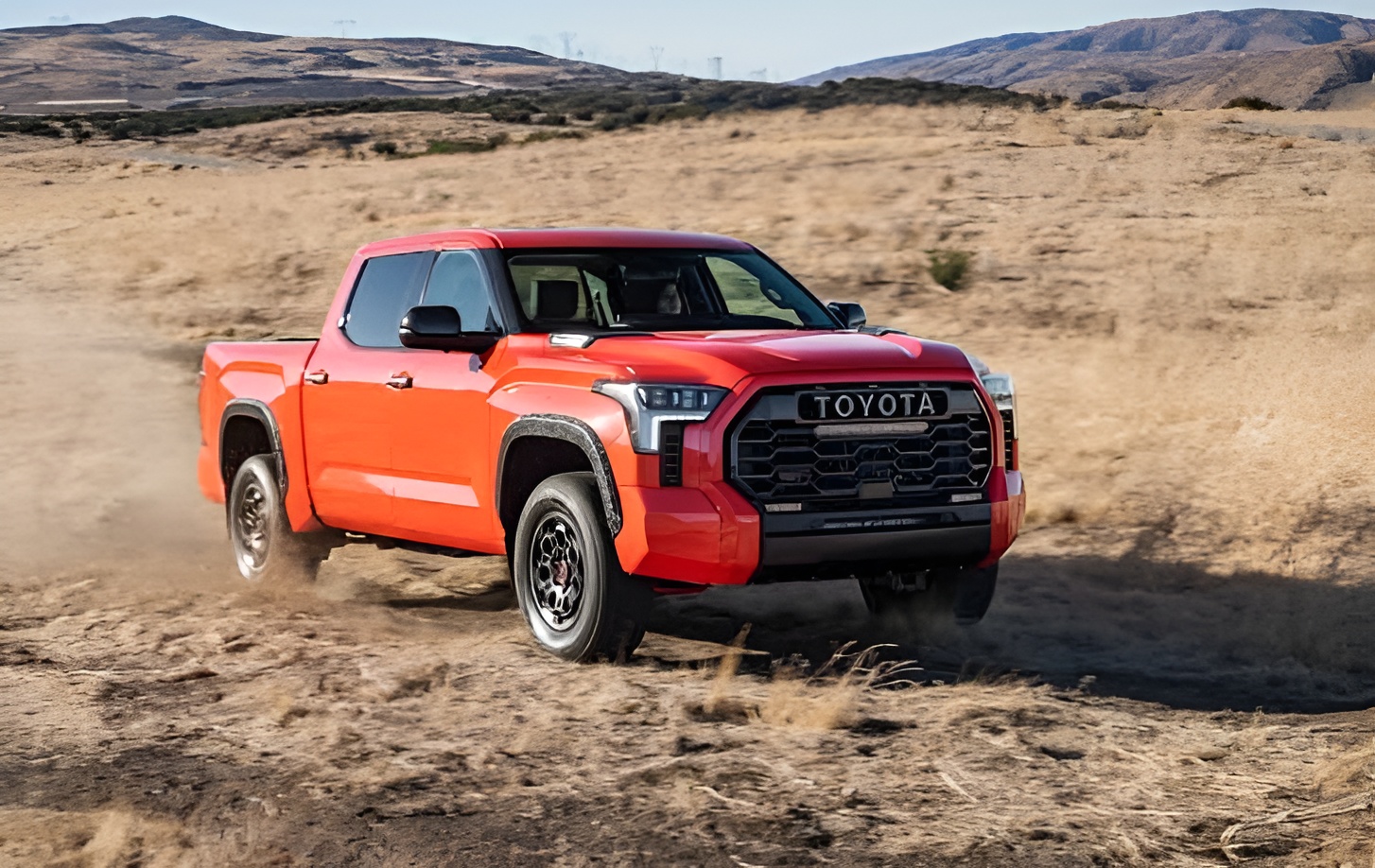
The redesigned Toyota Tundra presents an unusual resale-value tension: its platform has faced engine recalls, yet a controlled comparison estimates that a 2022 Tundra SR5 still retained about 72% of its original suggested retail price after 60,000 miles. That translates to roughly 28% depreciation less than three comparable full-size pickups in the same analysis.
The comparison, reported by Tim Esterdahl of Pickup Truck + SUV Talk, used Kelley Blue Book private-party estimates for four-wheel-drive crew-cab trucks in good condition in the Dallas market. The Ford F-150 XLT showed estimated depreciation of 34%, compared with 40% for the Chevrolet Silverado LT and 41% for the Ram 1500 Big Horn. On that consistent basis, the Tundra had the smallest estimated loss.
That result is meaningful for ownership costs, but it does not measure the recalls’ effect by itself. Kelley Blue Book values are market estimates rather than records of what these particular trucks received in completed private sales or dealer trade-ins. Nor does the comparison separate recall status from equipment, incentives, condition, local demand and other variables that can change a used truck’s value.
Why the estimate is useful and limited
Kelley Blue Book explains that its values incorporate substantial market data, including actual sales and auction transactions, and are adjusted for local conditions and market trends. Its private-party value represents what a buyer might pay an individual seller, assuming an as-is sale. The final price can vary with the specific vehicle’s condition and its local market.
That methodology makes the four-truck comparison more informative than an arbitrary depreciation formula. Holding the body style, drivetrain, mileage, condition category and geographic market broadly consistent reduces some obvious distortions. It still cannot reproduce the history of each individual vehicle, including options, maintenance, damage, title status or completed recall work.
The distinction between estimated value and realized price is particularly important when a major powertrain recall is involved. Two otherwise similar Tundras may not be viewed identically if one has documented completion of the required engine work and the other has an open campaign. The comparison supplies no completed-sale dataset separating those groups, so the 72% figure cannot show whether the recall reduced prices, had little effect or was outweighed by other demand factors.
The older Tundra adds another complication
The cited values also put a 2021 Tundra SR5 at $39,270, versus $34,540 for the redesigned 2022 twin-turbo V6 truck. Measured against their respective original suggested retail prices, the older truck’s estimated depreciation was about 9%.
That gap does not establish that the older V8 powertrain caused the stronger estimate. The two model years belong to different generations and can differ in original pricing, configuration, buyer demand and market supply. The useful conclusion is narrower: under the assumptions used, the older model received a substantially higher estimated value than the redesigned truck. Explaining the entire difference would require transaction-level data and closer control of equipment and vehicle histories.
Kelley Blue Book separately named the Tundra its 2026 resale-value winner among full-size pickups. That award uses projected value after five years and 75,000 miles. It reinforces the broader expectation of strong Tundra residual value, but it remains a projection and does not reveal what owners of recalled trucks received after engine replacements.
Recall status follows the individual truck
For a used buyer, the practical issue is not the model’s average estimate but the status of the specific vehicle. Open-recall information is tied to the vehicle identification number, and documentation can establish whether prescribed work has been completed. Kelley Blue Book’s recall guidance directs consumers to check the federal recall database or contact a brand dealer.
The comparison therefore supports a precise conclusion: a 2022 Tundra SR5 retained an estimated 72% of its original price at 60,000 miles under one standardized market scenario, outperforming three named rivals despite recalls affecting the platform. The unanswered part is equally consequential for an actual transaction whether the individual truck’s recall work is complete and what a buyer will ultimately pay.
| More aerospace and engineering stories, right in your MSN feed. Follow AMI on MSN |
By Thomas Caldwell — AMI’s senior editor for mechanical and mobility engineering, covering vehicle electronics, systems integration, electrification, chassis systems, propulsion, and safety policy.