


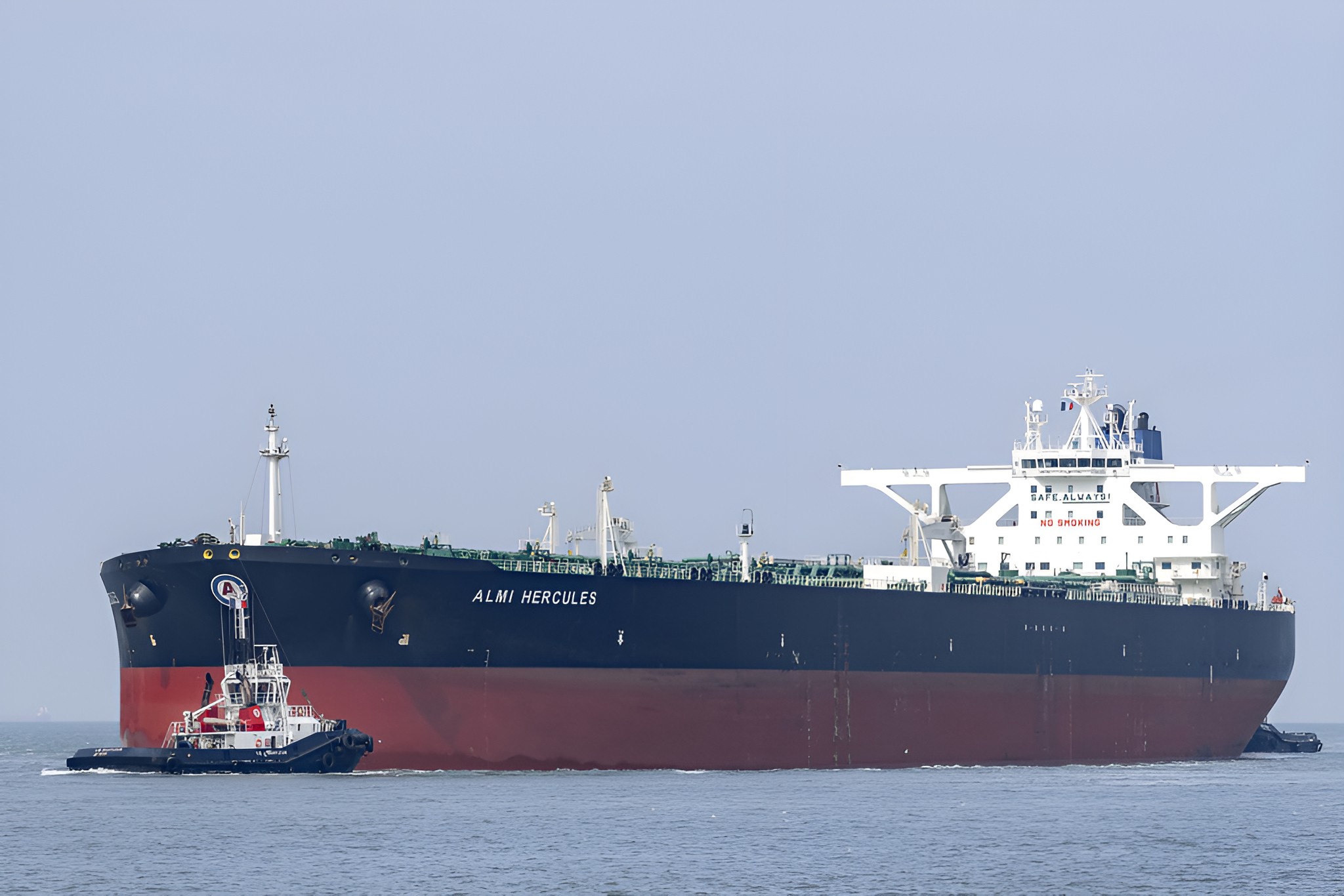
Hormuz Oil Recovery Falters as Tanker Costs Reach $1.4 Million Daily
Gulf oil exports recovered sharply in September, but the transport system behind that rebound remains costly, variable and dangerous. Crude exports reached 13.9 million barrels per day during the month, yet tracked shipments through the Strait of Hormuz fell to 2.9 million barrels on October 11. At the same time, the cited charter cost for a very large crude carrier reached $1.4 million per day.

The figures describe two different time scales rather than a direct contradiction. September’s total shows how much capacity tanker operators, ports and pipeline owners managed to reconstruct over a month. The October 11 reading captures the instability that can appear on an individual day. Cargoes often move in clusters, and tracking services do not all measure the same combination of passages, loading events and cargo volumes. Even so, refiners cannot treat a network with such large daily swings as equivalent to an unrestricted shipping lane.
The International Energy Agency’s October Oil Market Report found that Gulf crude exports rose by 4.4 million barrels per day in September to 13.9 million, more than 75% of their prewar level. Flows through Hormuz increased by 3.7 million barrels per day to 10.9 million, while bypass exports rose by 970,000 barrels per day to 5.6 million.
Much of the recovered capacity came from a distributed logistics system rather than a return to conventional voyages. Shuttle tankers carry crude through Hormuz and transfer it to other vessels in the Gulf of Oman for onward delivery. More than 70% of the crude that crossed Hormuz in August reportedly changed tankers off Oman or the United Arab Emirates.
That arrangement keeps cargo moving, but every transfer adds another scheduling and handling interface. Two ships must be available at the same place, transfer equipment and receiving capacity must be ready, and sea conditions must remain suitable. The extra handoff also occupies tanker capacity that would otherwise be available for direct voyages. A disruption involving one vessel can therefore affect another ship and its subsequent schedule.
Bypass pipelines relieve some pressure, although their rated pumping capacity is only one part of the export chain. Saudi Arabia’s East-West pipeline has a nominal capacity of 7 million barrels per day, but it was being restored toward roughly 4 million barrels per day after damage, with full recovery expected to take six to eight weeks. Yanbu’s sustainable loading capacity was separately estimated at about 4.5 million to 5 million barrels per day. Storage, terminal equipment and available ships can consequently limit exports before the pipeline reaches its theoretical ceiling.
The cost of scarce tanker capacity shows how heavily the workaround is loading the shipping system. Alongside the cited $1.4 million daily rate, a very large crude carrier loading in the Gulf of Oman was reported fixed at $1.162 million per day for a voyage to South Korea. Other recent Gulf of Oman fixtures had ranged from $719,000 to $864,000 per day. The Gulf of Oman was rated at a lower threat level than Hormuz, yet its charter costs had approached levels previously associated with strait crossings.
Those prices incorporate more than fuel and vessel availability. The U.S. Navy-led Joint Maritime Information Center continued to classify the threat to merchant shipping in Hormuz as severe. International Maritime Organization figures cited in reporting recorded at least 24 seafarer deaths in attacks since the conflict began on February 28. Exceptional compensation may attract crews and ships, but it cannot create the predictable operating conditions on which a high-throughput transport network normally depends.
The crude rebound also has not produced an equivalent recovery in finished fuels. Middle Eastern refined-product exports reached 1.9 million barrels per day in September, against 4.7 million before the conflict. Liquefied petroleum gas shipments were 670,000 barrels per day, compared with 1.5 million previously. Both remained below half their prewar levels.
That imbalance matters because crude aboard a tanker cannot immediately replace diesel near farms, factories or freight hubs. Refineries need the right feedstock, operating capacity and delivery windows, while elevated crude and freight costs can make processing less economical. The IEA reported that global observed oil inventories ended September 509 million barrels below their end February level and expects constrained diesel and other middle-distillate supplies to persist well into 2027.
September demonstrated that tanker shuttles, offshore transfers and bypass pipelines can restore millions of barrels per day. The later 2.9-million-barrel day, severe risk to crews and $1.4 million daily charter cost show the boundary of that achievement: recovered volume is not yet dependable capacity.
| More aerospace and engineering stories, right in your MSN feed. Follow AMI on MSN |
By Thomas Caldwell — AMI’s senior editor for mechanical and mobility engineering, covering vehicle electronics, systems integration, electrification, chassis systems, propulsion, and safety policy.



