


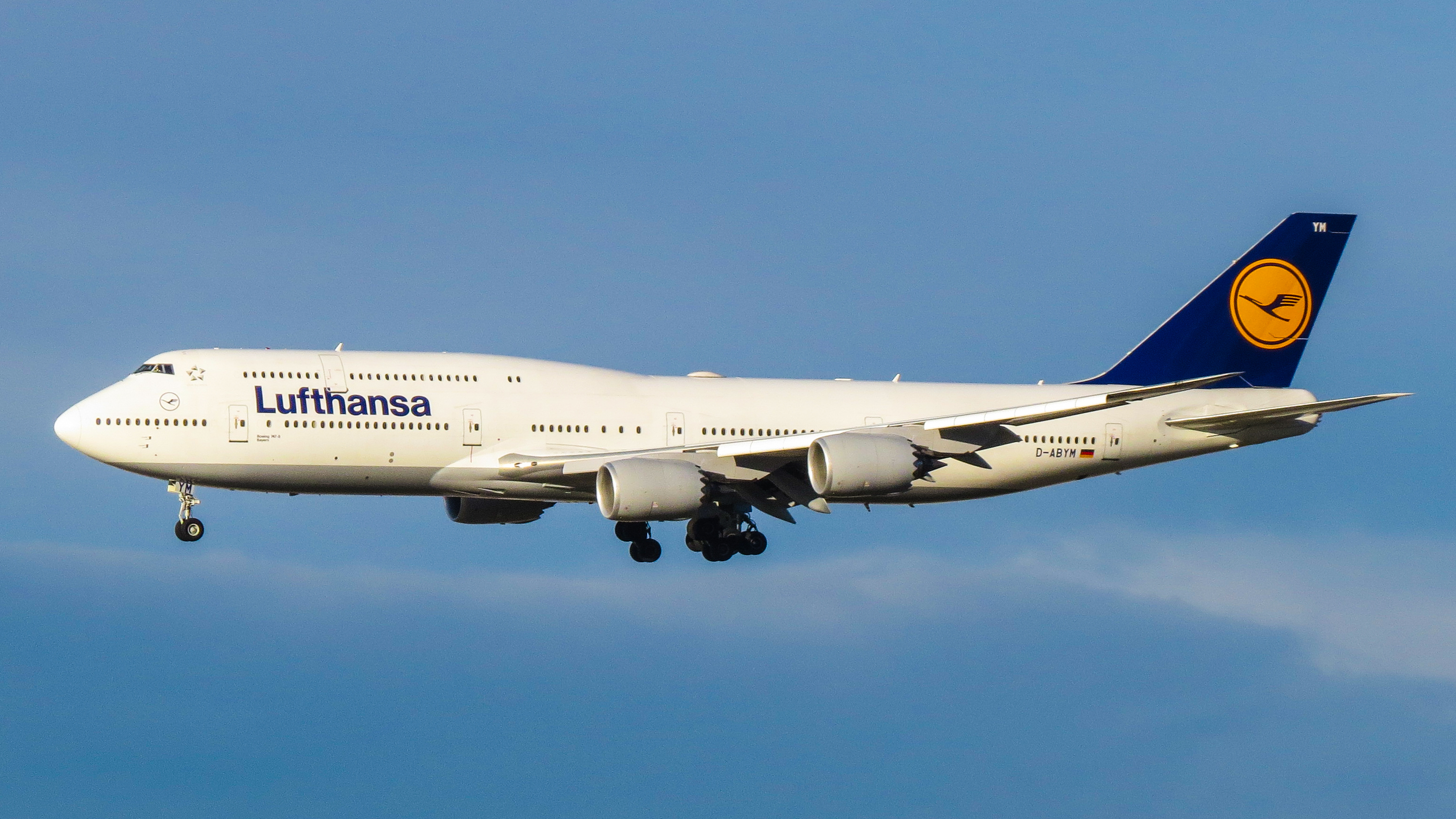
Lufthansa Plans to Retire Eight Boeing 747-400s by 2027, Keep 17 Newer Jumbos
Lufthansa’s Boeing 747 era is not ending in 2027, but its oldest chapter is. The airline expects its final eight Boeing 747-400s to leave the fleet by that year, reducing passengers’ remaining opportunities to fly the older version of the recognizable four-engine jumbo jet.

The deadline does not cover Lufthansa’s 17 newer Boeing 747-8s, which will remain in passenger service. That distinction leaves the German carrier with a continuing 747 operation even after it retires the last of a 747-400 fleet that averages 26.5 years in age.
Eight older jets still provide useful capacity
Lufthansa has already retired 15 of its 747-400s, but the final eight have remained useful while delayed deliveries of newer aircraft constrain long-haul capacity. All eight are based in Frankfurt, where they give the airline large-aircraft capacity that cannot necessarily be replaced on short notice simply because a more efficient design is available.
That is part of a broader fleet-management problem. The International Air Transport Association’s analysis of the global commercial fleet says aircraft shortages have forced airlines to retain older, less-efficient equipment and pushed retirement rates near record lows. It estimated the average global fleet age at about 15 years, making Lufthansa’s remaining 747-400s notably older than the industry fleet overall.
Keeping an aging aircraft is not free. Four-engine widebodies generally face a difficult economic comparison with newer twin-engine aircraft because additional engines add fuel use and maintenance exposure. Yet retiring a serviceable jet before replacement capacity arrives can create a different cost: fewer seats, less scheduling flexibility or an inability to operate the planned network. Lufthansa’s remaining 747-400s occupy that temporary gap between fleet-renewal goals and aircraft availability.
Reports on the retirement plan indicate that two of the eight aircraft are due to be grounded after the summer schedule ends on October 24, 2026. The other six are expected to leave progressively rather than through a single fleetwide withdrawal.
New York is set for the final transition
A farewell flight is planned on the Frankfurt to New York-JFK route, linking the retirement to the same city served by Lufthansa’s first passenger 747 operation. Schedule filings show an Airbus A350-900 replacing the 747-400 on that route beginning October 25, 2026.
The route change captures the engineering transition behind the retirement. The 747-400 was designed for an era in which four engines and very large passenger capacity were central to long-haul operations. Newer long-range twin-engine aircraft can cover many of those missions with lower fuel consumption and fewer engines to maintain, shifting the economic balance away from aging jumbos.
Lufthansa began passenger 747 service in April 1970, when aircraft D-ABYA flew from Frankfurt to New York-JFK. The airline introduced the 747-400 in 1989 and became the launch customer for the passenger 747-8 Intercontinental in 2012. At its peak, it operated more than 60 Boeing 747s.
The final eight 747-400s also carry an unusual reminder that aircraft availability depends on more than mechanical condition. Six Lufthansa examples were stored at the Netherlands’ Twente Airport during the 2020 pandemic downturn, but the airport’s certification allowed large aircraft to arrive for storage or dismantling without permitting routine departures by aircraft of the same size. A one-off exemption eventually allowed the jets to leave with limited fuel and stop in Frankfurt to refuel; three later returned to Lufthansa service.
For passengers, the approaching retirement means the familiar 747 upper deck and four-engine profile will become harder to find in Lufthansa’s older configuration. It will not disappear from the airline: after the last 747-400 leaves, 17 passenger 747-8s are still expected to carry the design and Lufthansa’s jumbo-jet history forward.
| More aerospace and engineering stories, right in your MSN feed. Follow AMI on MSN |
By Thomas Caldwell — AMI’s senior editor for mechanical and mobility engineering, covering vehicle electronics, systems integration, electrification, chassis systems, propulsion, and safety policy.




