


Russia Says Tu-160 Bomber Production Base Rebuilt, 80% of Systems Modernized
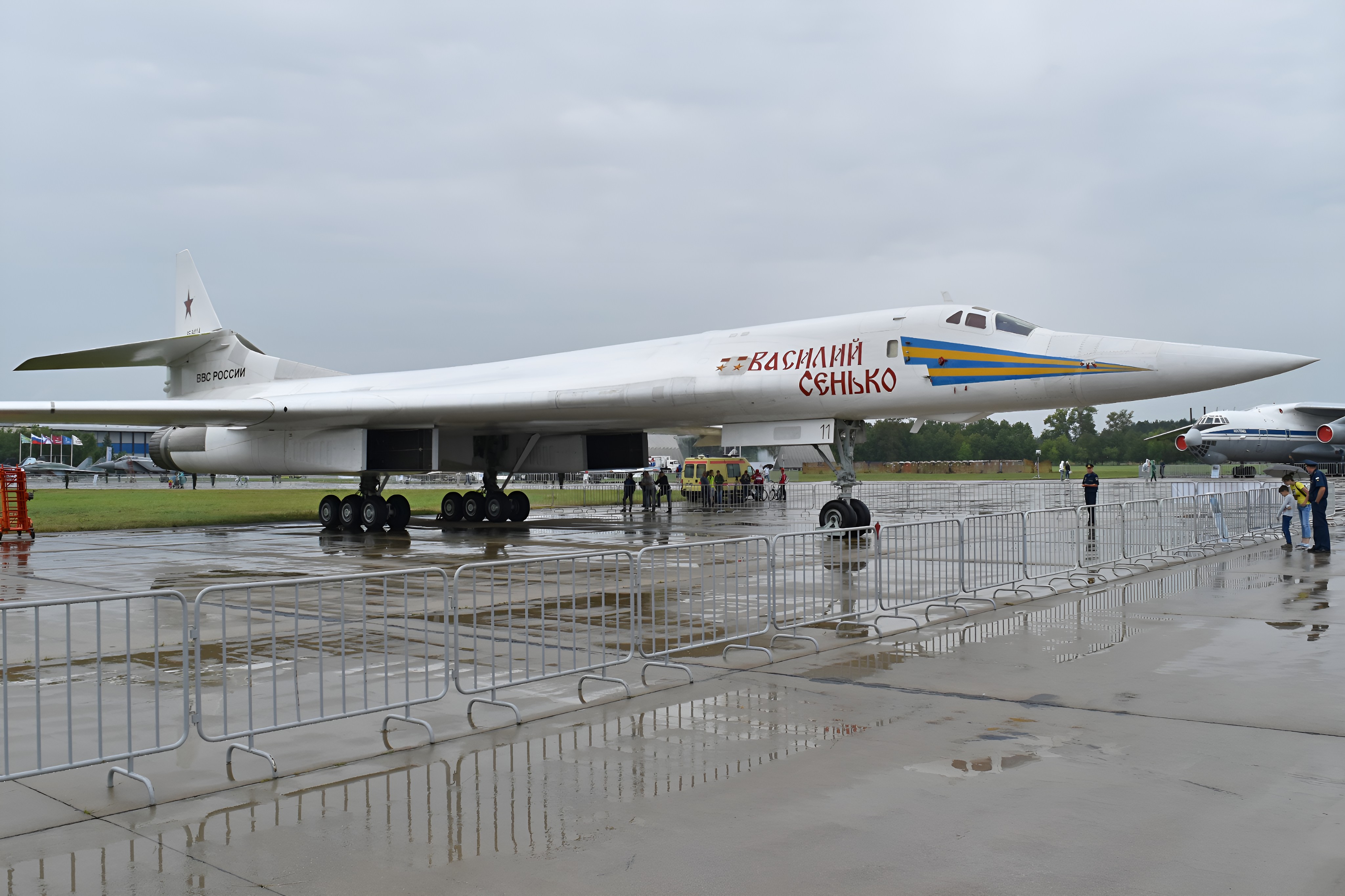
Russia says it has rebuilt the industrial foundation needed to manufacture the Tu-160 strategic bomber, potentially reversing the long production gap surrounding one of the Soviet era’s most complex aircraft. Tupolev CEO Yuri Abrosimov also says 80 percent of the Tu-160M’s systems and equipment have been modernized but Russia has not disclosed when serial production will begin, how many bombers it could deliver, or what the effort will cost.

The announcement, made by Abrosimov in an October 15 interview for which the year was not specified, is best understood as a step toward renewed production rather than confirmation that a production line is already delivering aircraft. It arrives more than a decade after plans to revive Tu-160 manufacturing were announced.
That gap between industrial capability and completed airplanes is the central issue. Recreating a bomber production base requires more than reopening an assembly building. It involves restoring design authority, tooling, materials, engine supply, electronics integration, quality control and a workforce able to build and test a large variable-sweep aircraft.
A Cold War airframe with new internal systems
The Tu-160M is intended to retain the original bomber’s recognizable shape and variable-geometry wings. Its wings can sweep between 20 and 65 degrees, allowing the aircraft’s aerodynamic configuration to change for different portions of flight. A more forward wing position supports lower-speed operation, while greater sweep is suited to high-speed and supersonic flight.
That architecture has a clear parallel in the American B-1B. The U.S. Air Force describes forward wing settings as useful for takeoff, landing and aerial refueling, with aft sweep used mainly during high-subsonic and supersonic flight. Variable sweep provides a broad operating envelope, but it also demands substantial structure and mechanical systems compared with a fixed wing.
For enthusiasts of older aircraft, the unusual part of the Russian project is precisely that combination: a variable-sweep bomber associated with Cold War engineering could return with extensively changed propulsion and electronics. Abrosimov described the Tu-160M as “built on an entirely new technological foundation, incorporating digital technologies, with 80 percent of its systems and equipment modernized.”
The proposed equipment changes include NK-32-02 engines as well as updated avionics, navigation equipment, communications and other onboard electronics. Aircraft-control and weapons-control systems are also included in the modernization effort. The 80 percent figure refers to systems and equipment, not to a wholly new airframe configuration.
Modularity could reduce future redesign work
Abrosimov said the modernization uses a modular approach, allowing equipment such as radar or navigation systems to be upgraded separately instead of forcing a redesign of the entire bomber. For a platform intended to remain in service for years, that separation can make later updates easier to introduce and reduce the amount of aircraft-wide integration work required for each replacement.
The program has also established a shared digital environment linking aircraft design with manufacturing. Sukhoi, Mikoyan and Ilyushin design bureaus helped prepare digital documentation, while United Aircraft Corporation enterprises use a common information system intended to move engineering changes into production more quickly.
Those tools can improve configuration control across a dispersed industrial network, but they do not establish production rate. Digital drawings and shared data still have to become conforming parts, assembled aircraft and completed ground and flight tests. Abrosimov identified reconstruction of the broader industrial and technological framework as the program’s main manufacturing hurdle.
Sanctions leave a major unanswered production question
Supporters of Ukraine will focus on whether Russia’s sanctions-hit aerospace sector can actually build the bomber with its planned new engines and avionics at meaningful scale. The European Union’s latest industrial sanctions package lists 1,569 individuals and entities linked to Russia’s military-industrial complex, including suppliers associated with semiconductors, computers, radar, communications, navigation and aviation technologies.
Russia has not provided an independent assessment of how sanctions have affected the Tu-160M effort. Nor has it released a production quantity, delivery schedule or program cost. Those omissions make it impossible to determine whether the rebuilt foundation can support a steady bomber output or only limited, time-intensive production.
Abrosimov said resumed serial manufacturing would support Russia’s Long-Range Aviation fleet and the airborne component of its nuclear triad. For now, however, the verified milestone is narrower: Russia claims it has reconstructed the capability needed to build the Tu-160 again. The stronger test will come when that industrial network produces aircraft on a disclosed schedule and at a repeatable rate.
| More aerospace and engineering stories, right in your MSN feed. Follow AMI on MSN |
By David Whitaker — Associate editor for AMI’s aerospace and drone systems desk, translating flight systems, aircraft programs, spaceflight, and UAV developments into accessible technical stories.




