USS Ronald Reagan Controls MQ-25A Tanker Drone 2,100 Miles Away Without Flight
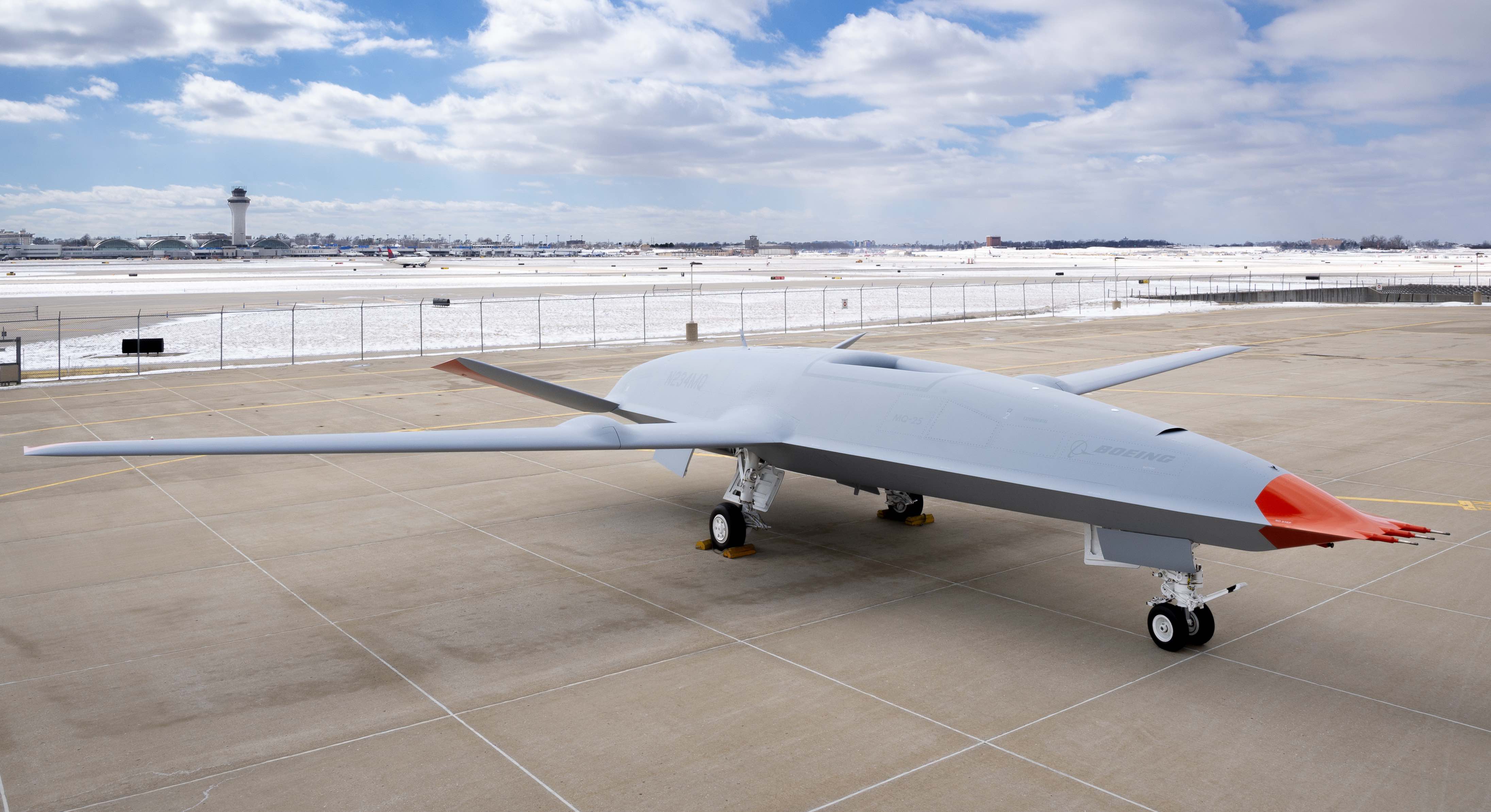
A crew aboard USS Ronald Reagan controlled a Boeing MQ-25A test aircraft sitting at a facility in Illinois while the aircraft carrier was underway in the Pacific. The Navy announced on October 19 that the command connection spanned more than 2,100 miles, making it the first successful link between an underway carrier’s control station and an MQ-25A.
It is an example of an established carrier acquiring a consequential new function through communications and control equipment. Sailors effectively operated a Boeing drone at a factory in Mascoutah, Illinois, from a moving ship thousands of miles away. But they did not fly it: the Navy reported no autonomous flight, aerial refueling, carrier launch or carrier landing during this demonstration.
The satellite link was the test
The exercise focused on the command architecture that will eventually connect sailors aboard a carrier with an unmanned tanker operating around the ship. Ronald Reagan’s Unmanned Air Warfare Center used an MD-5C Ground Control Station and a proliferated low Earth orbit satellite network to establish the beyond-line-of-sight connection.
The MD-5C brings together the Navy’s command, control, communications, computers and intelligence network, Lockheed Martin hardware and software, and other government-produced equipment. Testing involved the Navy’s Unmanned Carrier Aviation Program Office as well as personnel from Boeing and Lockheed Martin.
That integration work can be less visible than an aircraft taking off or plugging a refueling hose into another jet, but it is fundamental to routine unmanned operations. A carrier-based system must pass commands through shipboard networks and external communications links while giving sailors a workable interface for managing the aircraft. Procedures, network compatibility and control-system behavior all have to be validated before the complete tanker mission can be demonstrated from a carrier.
The Navy described the event as one in a series of build-up exercises following earlier pier-side and at-sea evaluations. This stage established that an underway carrier’s control station could connect to the remote test aircraft over the satellite network. It did not establish the aircraft’s performance during launch, recovery or refueling, nor did it demonstrate a complete operational mission.
Why a tanker drone matters to Super Hornets
The MQ-25A is being developed as the Navy’s first operational carrier-based unmanned aerial refueling aircraft. Its intended customers in the air are crewed aircraft including the F/A-18E/F Super Hornet. By transferring fuel to those fighters, the Stingray is expected to help them remain airborne longer and operate farther from their carrier.
The other benefit concerns how the Navy uses its existing aircraft. Super Hornets currently perform “buddy tanking,” carrying fuel for other aircraft rather than concentrating on their primary combat-aircraft roles. A dedicated unmanned tanker could shift some of that refueling burden away from the crewed fighter fleet. Carrier-aviation followers waiting to see whether tanker drones can free Super Hornets now have evidence that the shipboard control link is taking shape, but not yet a carrier-based refueling result.
The control station has significance beyond one aircraft type as well. The Navy intends the MD-5C architecture to command the MQ-25A and potentially additional unmanned carrier aircraft. That makes the Stingray both a tanker program and an early test of how sailors, software, satellite networks and uncrewed aircraft will be organized within a future carrier air wing.
Two carriers, USS Theodore Roosevelt and USS Ronald Reagan, have received MD-5C ground control systems, according to FlightGlobal. Installing the equipment and completing a long-distance connection are concrete integration steps. The harder milestones still ahead are the ones visible on the flight deck and in the air: carrier flight trials, launch and recovery, and the tanker mission that can actually release Super Hornets from refueling duty.
| More aerospace and engineering stories, right in your MSN feed. Follow AMI on MSN |
By Stephen Wallace — Editor for AMI’s aerospace integration and unmanned mobility coverage, focused on drone manufacturing, VTOL systems, autonomous networks, and air-ground mobility links.