


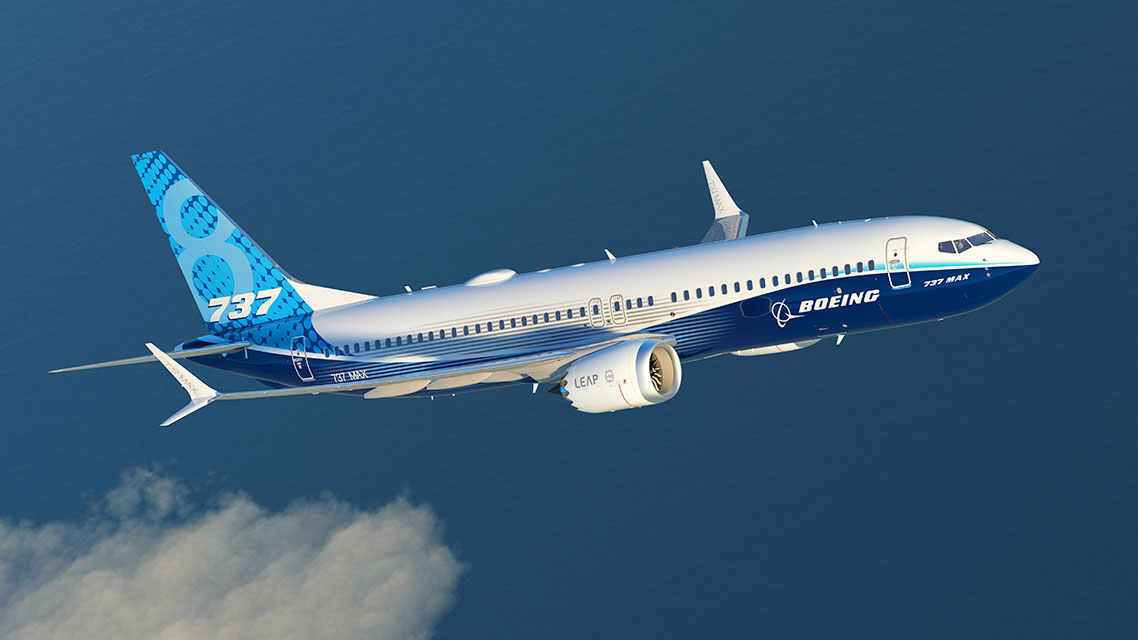
Boeing 737 MAX 10 Approved After Nine-Year Review, Clearing Deliveries
The Boeing 737 MAX 10 has cleared its biggest regulatory barrier. On October 20, 2026, the Federal Aviation Administration issued an amended type certificate confirming that Boeing’s largest 737 MAX complies with applicable US design and safety requirements. The agency also updated the aircraft’s Production Limitation Record, authorizing production.
That decision ends a certification review stretching more than nine years from the MAX 10’s June 2017 launch and gives Boeing a path to begin deliveries in the coming months. More than 30 customers have ordered 1,555 aircraft, according to Boeing, making the approval consequential for airlines that have spent years planning fleets around a jet they could not yet receive.
Certification is a material change in the program’s status, but it is not the same as immediate passenger service. Boeing must move aircraft through production, customer acceptance and delivery. Airlines then have their own preparations, including crew training, maintenance support and operational approvals. Foreign regulators also retain authority in their jurisdictions, so FAA approval does not automatically provide worldwide clearance.
A review reshaped by heightened safety scrutiny
The MAX 10 first flew on June 18, 2021, nearly four years after its launch. Its certification unfolded under a substantially tougher safety environment following the Lion Air and Ethiopian Airlines crashes in 2018 and 2019. Those accidents involved the smaller MAX 8, not the MAX 10, and killed 346 people, leading to the worldwide grounding of the MAX fleet.
The FAA required the MAX 10 to incorporate improvements addressing federal aircraft-certification legislation and National Transportation Safety Board recommendations. Among them were flight-control updates and an enhanced angle-of-attack sensor. Angle of attack describes the relationship between an aircraft’s wing and the airflow, information that can be important to flight-control and stall-warning functions.
The review also had to absorb technical issues found late in development. An engine anti-ice concern involved the possibility of overheating under certain conditions. Then, on September 28, 2026, the FAA delayed certification while examining flight-management computer software that could affect automated vertical guidance during a go-around.
The FAA’s Corrective Action Review Board concluded on October 2 that the software fault was not a safety concern because pilots retained control and cockpit indications remained clear. That finding allowed certification to proceed without making a software correction a condition of approval.
Boeing reported more than 2,000 certification flight hours, nearly 1,000 test flights and approximately 1,000 hours of ground testing. Those figures describe the scale of the test campaign, while the amended type certificate records the FAA’s determination that the final design meets applicable requirements. FAA Administrator Bryan Bedford said the agency would continue holding Boeing to its safety standards as production begins.
Why 1,555 orders make the approval commercially critical
The MAX 10 represents more than 30% of Boeing’s current 737 MAX order book, according to the manufacturer. Certification now lets customers move from provisional fleet schedules toward concrete delivery, training and entry-into-service plans, although the timing will still depend on Boeing’s output, aircraft acceptance and relevant national approvals.
Capacity is the MAX 10’s central selling point. Boeing says it can carry as many as 230 passengers in a maximum-density configuration, or typically 185 to 210 in a two-class cabin, with a range of up to 3,100 nautical miles. That gives airlines more seats than smaller MAX variants while preserving the operating and maintenance commonality of the 737 family.
The design also fills a strategically important gap in Boeing’s competition with the Airbus A321neo. Both address the higher-capacity end of the single-aisle market, where airlines may need more seats without moving to a larger twin-aisle aircraft. Airbus benefited while the MAX 10 remained uncertified, making Boeing’s ability to produce and deliver the aircraft not merely accumulate orders central to the contest.
The program has therefore moved from regulatory uncertainty to an industrial execution test. FAA certification permits Boeing to build and deliver the MAX 10 in the United States, but converting a backlog of 1,555 aircraft into operating fleets will require stable production, customer acceptance and additional regulatory validations. After more than nine years of review, the next measurable milestone is the first completed handover.
| More aerospace and engineering stories, right in your MSN feed. Follow AMI on MSN |
By David Whitaker — Associate editor for AMI’s aerospace and drone systems desk, translating flight systems, aircraft programs, spaceflight, and UAV developments into accessible technical stories.



