


Tesla and SpaceX Open Merger Talks Without Musk in the Room
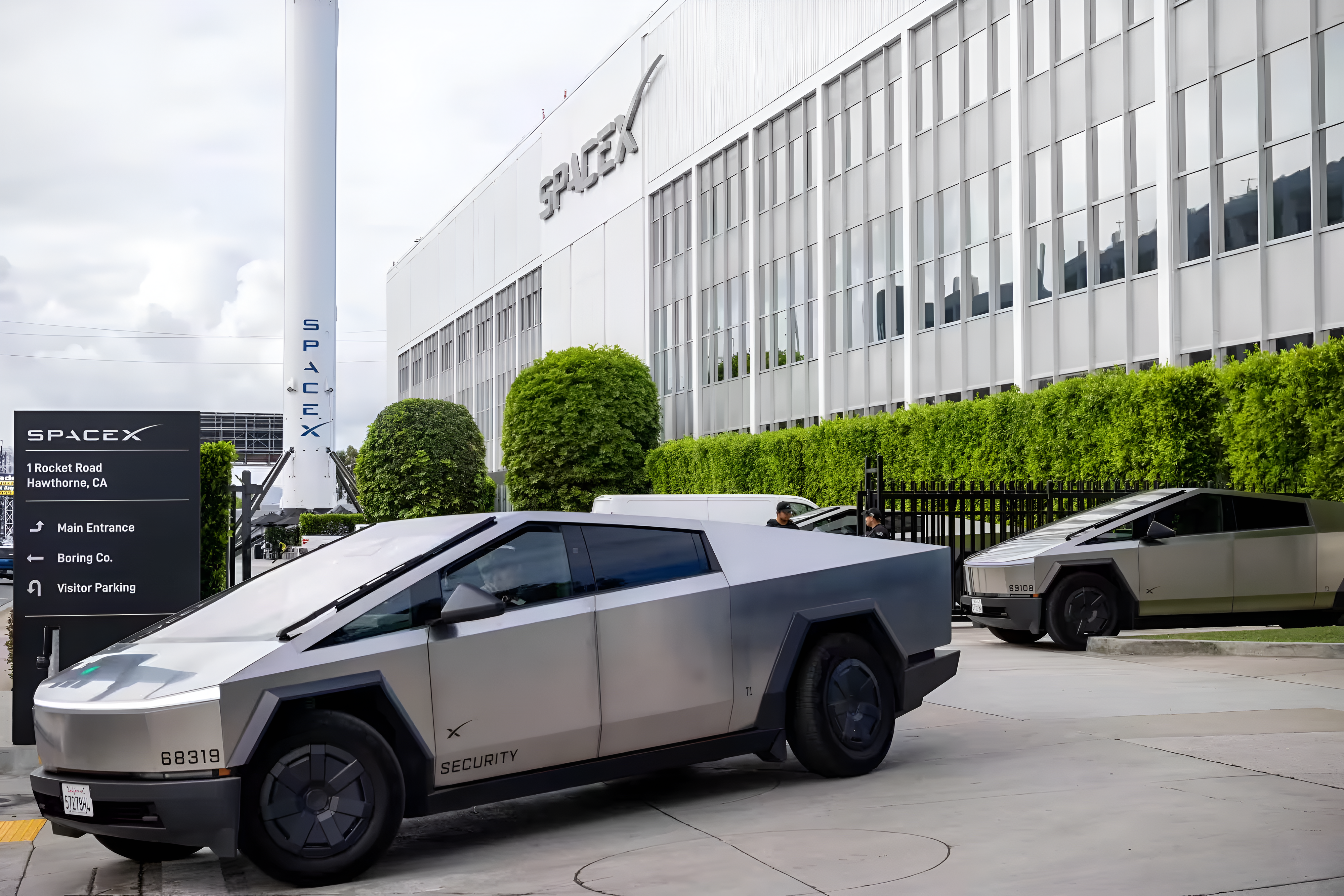
Tesla and SpaceX are exploring a merger, but the executive who runs both companies says he cannot participate in the negotiations. Elon Musk said independent directors have formed special committees at each company because his leadership and ownership interests put him on both sides of any potential transaction.
Even discussing the combination left Musk feeling as though he was “tap dancing through a minefield,” he said during SpaceX’s third-quarter earnings call. No terms have been agreed, a merger remains uncertain, and Tesla’s annual proxy filed Monday contains no proposal for shareholders to consider. For followers asking whether Tesla shareholders would approve such a deal, the answer is therefore unresolved: they have not been given a transaction, price or formal recommendation on which to vote.
Why Musk is outside the negotiations
Musk is chief executive of both Tesla and SpaceX. He owns roughly 20% of Tesla and 45% of SpaceX while controlling about 82% of SpaceX’s voting power. Those overlapping positions create the conflict that prompted his exclusion from the special committees’ deliberations.
Special committees are commonly used when an insider or controlling shareholder has interests on both sides of a transaction. Their purpose is to approximate arm’s-length bargaining by assigning negotiations to directors who are independent and disinterested. A committee’s credibility depends on more than its name: established governance guidance for conflict transactions says it should have independent legal and financial advisers, access to material information and genuine authority to reject the deal.
Musk described the resulting separation as “an odd kabuki dance where two groups of people are talking and I can’t be in the conversation.” That exclusion is a safeguard rather than an indication that negotiations are advanced. The committees were established early, before material terms were settled, according to Musk’s account. What remains unknown is their precise mandate, which directors are participating, which advisers they may retain and whether either committee ultimately recommends proceeding.
Tesla’s voting hurdle reaches beyond meeting turnout
Musk said the Tesla side would require support from a majority of all outstanding shares, a threshold he characterized as high. That description is important because approval based on outstanding shares is more demanding than a simple majority of votes actually cast at a meeting. Shares that do not support the proposal would leave the transaction short of the required total, regardless of why their holders did not vote for it.
Musk’s Tesla ownership would represent a substantial bloc, but roughly four-fifths of the company is held by others. Before those shareholders could decide whether combining an electric-vehicle and robotics company with a launch, satellite-connectivity and computing business is worthwhile, they would need the proposed exchange terms and disclosures explaining how the committees assessed fairness. None of that exists publicly at this preliminary stage.
The companies already have financial and operational ties. Tesla’s proxy confirmed a $2 billion investment in SpaceX, and overlapping relationships exist among some directors. Musk also pointed to possible cooperation in artificial-intelligence software, chip design, robotics and connectivity. Terafab, described as a planned chip-manufacturing complex being developed jointly by Tesla and SpaceX, offers a concrete example of work that already crosses the corporate boundary.
Those technical overlaps establish a strategic argument for closer coordination, but they do not settle whether a full merger is preferable to contracts, joint development or continued investment between separate companies. Tesla builds vehicles, energy products and robotics systems; SpaceX operates launch and satellite businesses with different customers, regulatory obligations and capital demands. A combined organization would still need to allocate engineering resources and risk across those distinct systems.
SpaceX’s latest results provide context for the timing but not a deal value: it reported fiscal third-quarter 2027 revenue of $14.58 billion and net income of $4.4 billion, along with its first operating profit since its June public offering. Any formal transaction price would have to emerge from the independent process rather than current market values.
The next consequential document is not an earnings figure but a committee-backed proposal. Until one appears, Tesla shareholders are being asked no merger question at all and if one does arrive, winning a majority of every outstanding share may be the step that determines whether the combination advances.
| More aerospace and engineering stories, right in your MSN feed. Follow AMI on MSN |
By Thomas Caldwell — AMI’s senior editor for mechanical and mobility engineering, covering vehicle electronics, systems integration, electrification, chassis systems, propulsion, and safety policy.



