


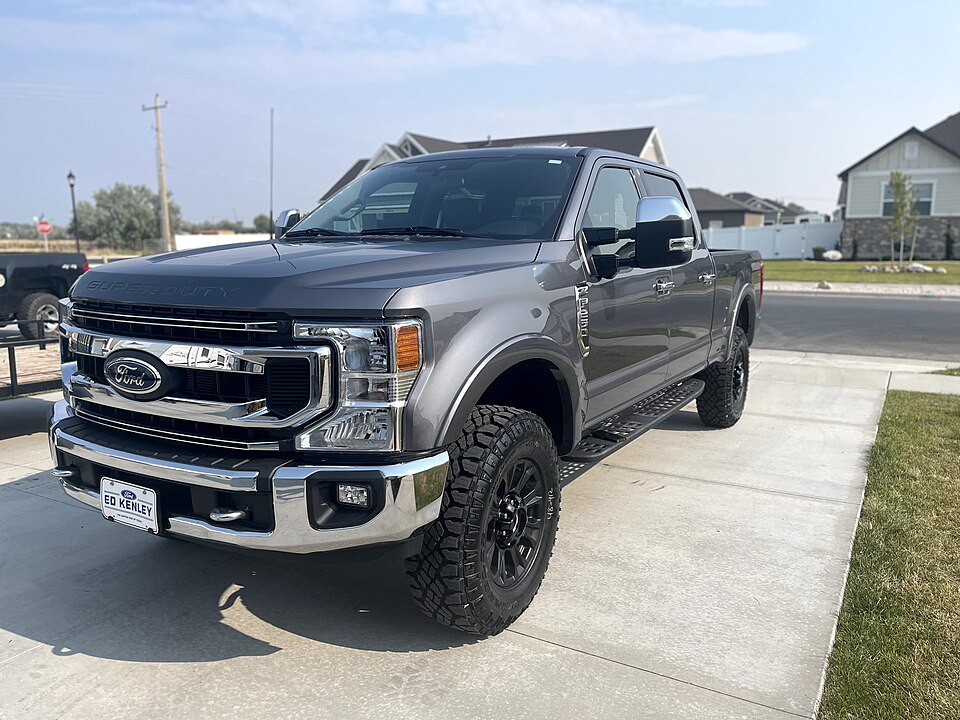
Ford Recalls 102,159 F-Series Trucks Over Inaccurate Speed and Engine Gauges
Ford is recalling 102,159 recent F-Series trucks because two of the most basic instruments facing the driver the analog speedometer and tachometer may provide inaccurate readings. A faulty module inside the instrument cluster can cause either gauge to stick or move without corresponding input from the vehicle.

The National Highway Traffic Safety Administration posted the action as campaign 26V653. It covers certain heavy-duty F-Series trucks from the 2025 and 2026 model years, along with certain light-duty trucks from the 2026 model year. The available campaign information does not identify every individual F-Series model or configuration included, so owners should not assume that every truck from those model years is affected.
A display failure with direct consequences for the driver
The speedometer translates vehicle-speed information into a value the driver can use immediately. The tachometer performs a parallel job for engine speed, showing revolutions per minute. In the recalled trucks, the cluster module can disrupt the indicated positions of both analog gauges, even though the needles appear to remain active.
That behavior is more problematic than a completely dark display in one important respect: a stuck or independently moving needle can still present a plausible-looking value. Depending on its position, the speedometer could give the driver inaccurate information about road speed, while the tachometer could misrepresent how fast the engine is turning.
The recall description ties the problem to the instrument-cluster module rather than to the systems that physically determine vehicle or engine speed. The documented defect concerns what the analog gauges display to the driver. It does not identify a mechanical problem with the engine, transmission or wheel-speed measurement hardware.
Speed information is a fundamental human-machine interface, not merely a convenience feature. Drivers use it to compare their motion with posted limits and changing road conditions. Federal requirements also govern how speedometers are presented; NHTSA has explained that U.S. speedometers must be labeled in miles per hour, with kilometers per hour permitted as an additional scale.
Notices begin before parts are expected
Ford is scheduled to begin mailing owner notification letters on October 26. Replacement parts are expected to become available during a December 7-11 window, leaving an anticipated gap of roughly six weeks between the start of notifications and parts availability.
The campaign information does not specify the replacement procedure or identify an interim warning. Owners receiving a letter will therefore need to follow Ford’s campaign instructions and coordinate the remedy with a dealer once the required components are available.
Vehicle owners can check for open campaigns through NHTSA’s recall resources, which explain how to search by vehicle identification number and how to report a suspected safety defect. A VIN check is more precise than relying on model year alone because recall populations can be limited by equipment, configuration or production range.
NHTSA says recall repairs are free at the manufacturer’s dealership and recommends addressing open recalls promptly. The agency also notes that recalls do not expire, although parts supply and appointment availability can affect when a remedy is completed.
Why the parts schedule matters
The timing highlights a recurring systems-integration challenge in vehicle recalls. Identifying a defective module and notifying owners are only the first stages. The manufacturer must also secure conforming replacement hardware, distribute it across a dealer network and match each repair to an eligible VIN.
For this campaign, the practical constraint is clear: notification is scheduled to start in October, but Ford does not expect replacement parts until December 7-11. Until the remedy is available and installed, affected owners face the unusual problem of having analog needles that may look functional while providing inaccurate vehicle-speed or engine-speed information.
| More aerospace and engineering stories, right in your MSN feed. Follow AMI on MSN |
By Thomas Caldwell — AMI’s senior editor for mechanical and mobility engineering, covering vehicle electronics, systems integration, electrification, chassis systems, propulsion, and safety policy.




