


NOAA Forecast Minor October 20 Solar Storm, but Outcome Is Unconfirmed
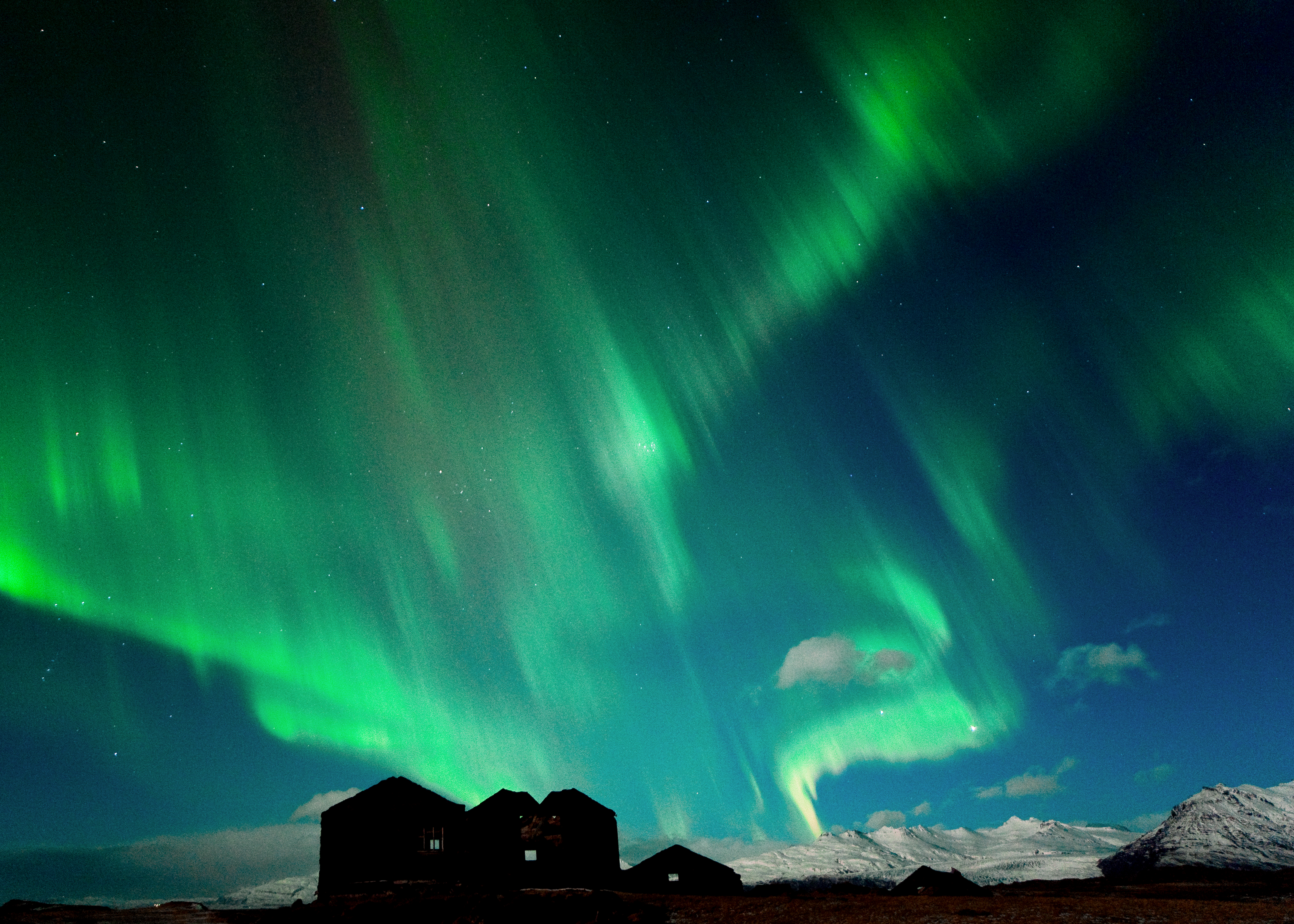
NOAA forecast that a fast solar-wind stream could produce a minor geomagnetic storm on October 20, 2026, potentially giving high-latitude observers an aurora opportunity. The forecast called for Kp 5 the threshold for a G1 storm, the weakest category on NOAA’s geomagnetic-storm scale but the available information contains no measured October 20 result confirming that level was reached.

That leaves the event with a straightforward but unanswered technical question: Did the predicted stream interact with Earth’s magnetic field strongly enough to push the planetary Kp index to 5? Because the forecast window has passed, the answer requires post-event Kp and solar-wind measurements rather than the two-day outlook alone.
What NOAA expected to arrive
The forecast centered on a high-speed stream escaping from a positive-polarity coronal hole. A coronal hole is an area in the Sun’s corona where open magnetic-field lines allow solar wind to flow outward faster than it does from surrounding regions. NOAA expected this stream to become geoeffective late on October 19 and continue through October 20.
Earth was already passing through the tail of an earlier stream from a negative-polarity coronal hole. During the preceding 24 hours, solar-wind speed ranged from 401 to 514 kilometers per second. The total interplanetary magnetic field measured between 4 and 8 nanoteslas, while its southward component briefly reached minus 7 nanoteslas.
A reading at 10:49 UTC on October 18 showed solar wind moving at 479.6 kilometers per second, with a proton density of 2.8 per cubic centimeter and Kp at 2. NOAA expected conditions to return to background levels that day before the next stream arrived. Those figures established the pre-event environment; they did not confirm the predicted October 20 storm.
This was not a forecast for an Earth-directed solar eruption
Available coronagraph imagery showed no coronal mass ejection, or CME, directed toward Earth. That boundary is important because a coronal-hole stream and a CME are different solar-wind drivers, even though either can disturb Earth’s magnetosphere.
A coronal-hole stream is a sustained region of faster solar wind rotating into alignment with Earth. A coronal mass ejection, by contrast, is a large expulsion of plasma and magnetic field from the Sun’s corona. Earth-directed CMEs can carry magnetic fields stronger than the background solar wind and, under favorable conditions, produce more intense geomagnetic storms.
For the October 20 forecast, storm strength depended on more than wind speed. The orientation and duration of the interplanetary magnetic field particularly a sustained southward component would influence how effectively energy coupled into Earth’s magnetosphere. That variable cannot be resolved precisely two days in advance, which is why the predicted arrival time and Kp level still required measurement.
Solar activity was otherwise low. NOAA assigned a 20% chance of an M-class flare through October 20, associated with active regions 4551 and 4557. Its daily probabilities included a 20% chance of an R1-R2 radio blackout, a 5% chance of an R3 or stronger blackout and a 5% chance of an S1 or stronger radiation storm. NOAA did not expect a radiation storm.
The aurora claim has a firm geographic limit
The advisory supported a chance of aurora at high latitudes if G1 conditions developed. It did not establish visibility from Serbia or any specific lower-latitude location. Aurora visibility also depends on local darkness, cloud cover and the storm’s timing, so a planetary Kp forecast alone cannot guarantee a view from a particular city.
The missing post-event reading is therefore decisive. A measured three-hour Kp value of 5 would confirm that G1 conditions occurred during the window; lower readings would show that the coronal-hole stream produced a weaker response than forecast. Without that October 20 measurement, the supported conclusion remains limited to what NOAA predicted: a possible minor storm and high-latitude aurora, not a confirmed geomagnetic event.
| More aerospace and engineering stories, right in your MSN feed. Follow AMI on MSN |
By David Whitaker — Associate editor for AMI’s aerospace and drone systems desk, translating flight systems, aircraft programs, spaceflight, and UAV developments into accessible technical stories.




