Tesla Starts Optimus Production, Targets 20,000 Robots Weekly by Late 2027
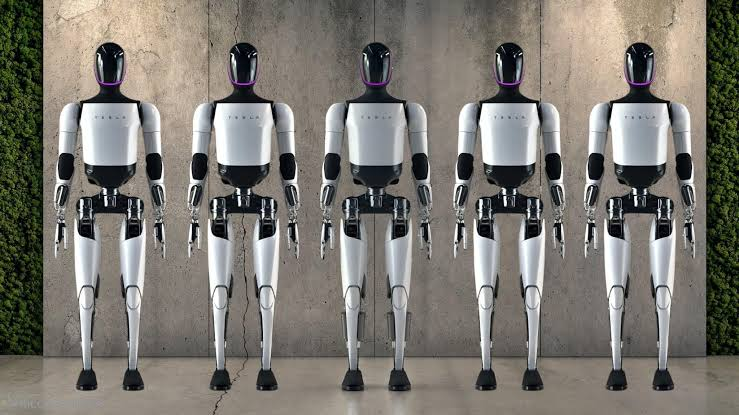
Tesla is now building Optimus humanoid robots to production standards, yet the machinery coming off its Fremont line remains separated from dependable commercial work by unresolved problems in reliability, dexterity and autonomous-task software. The company has paired that early manufacturing milestone with a target of 20,000 robots per week by the end of 2027 a rate equivalent to roughly one million units a year.
Tesla disclosed the move in its third-quarter 2026 shareholder update on October 21. Factory space in Fremont, California, that previously produced electric vehicles has been repurposed for robotics, marking the first time Tesla has manufactured Optimus units using what it considers production-standard methods. Chief executive Elon Musk described the current stage as early production and said output would rise slowly because humanoid robots are a new product category for the company.
Production hardware is only the first layer
Beginning production is a meaningful change from building prototypes individually or in small development batches. A production line forces repeatability into assembly, parts delivery, testing and quality control. It also produces a larger population of machines from which Tesla can identify recurring mechanical faults and gather operational data.
It does not establish the capacity required for 20,000 units each week. Sustaining that rate would require a supply chain able to deliver actuators, sensors, processors, structural components and other hardware in consistent volumes. Assembly stations would need tightly controlled cycle times, while inspection and end-of-line testing would have to catch faults without becoming throughput bottlenecks.
Tesla expects both the robot and its manufacturing methods to change during the ramp. That creates a familiar industrialization tension: early units can expose weaknesses, but design changes can also disrupt tooling, supplier specifications and quality procedures. Musk has warned that the expansion will be uneven and involve setbacks.
Reliability must extend beyond a demonstration
For industrial customers, useful performance is measured over shifts and repeated task cycles rather than isolated successful actions. Optimus must operate safely for extended periods without frequent component failures or repairs. Wear in joints, hands and other moving assemblies can affect accuracy, force control and availability, making service life and maintenance demand as important as whether the robot can complete a task once.
Hands are a particularly difficult mechanical and control problem because they combine multiple moving elements with sensing, grip-force regulation and contact with objects of varying shapes and stiffness. Tesla is still refining that part of the hardware, along with the broader durability of the machine. Greater dexterity adds capability, but it also introduces more components, control variables and potential wear points.
The workplace adds another boundary. Traditional industrial robots have often been separated from people by cages and other engineering controls, whereas mobile or collaborative machines are intended to operate closer to workers. The US National Institute for Occupational Safety and Health says newer forms of robotics require tested risk-assessment methods and control strategies, and its Center for Occupational Robotics Research studies issues including unanticipated contact, human-machine interfaces and safe workplace design.
Autonomy is a separate production problem
Even mechanically reliable robots need software capable of interpreting unfamiliar surroundings and adapting actions when objects or conditions change. A fixed industrial machine can repeat a tightly defined motion in a controlled cell. A general-purpose humanoid is expected to recognize varied situations, plan movements and recover when a task does not proceed exactly as anticipated.
Tesla has not disclosed how many production-standard robots it has built, what tasks they can currently perform autonomously or how consistently they complete those tasks without human intervention. The company is expanding computing infrastructure for vehicle and Optimus development, targeting 400 megawatts of training-computing capacity by the end of 2026. More computing can support larger training workloads, but dependable physical operation also requires suitable training data, robust control software and validation on real machines.
Tesla also expects equipment commissioning at an Austin fabrication facility to begin in 2027. That could support a broader manufacturing system, but commissioning equipment is another intermediate step rather than proof of stable high-volume output.
No date has been established for large-scale commercial availability. Fremont therefore represents the start of industrial learning, not the completion of it: Tesla can now build Optimus to production standards, while the 20,000-per-week goal depends on whether hardware durability, autonomous operation, supplier scale and factory efficiency can mature together before the end of 2027.
| More aerospace and engineering stories, right in your MSN feed. Follow AMI on MSN |
By Jonathan Barrett — Editor for AMI’s future mobility and autonomous systems section, with two decades covering robotics, e-mobility, drone-vehicle convergence, and transport mechanical systems.