Quantum Systems Drone Reaches 777 Kilometers per Hour, but Record Remains Unofficial
A battery-powered drone can reach an extraordinary speed and still fall short of a world record. Quantum Systems says its Apex Recordhunter hit 777 kilometers per hour during a flight in central Germany, but technical trouble prevented the opposite-direction run required for official recognition.

The result therefore stands as a reported one-way speed rather than a ratified record. Quantum Systems engineer and pilot Robert Gardemin identified 661 kilometers per hour as the previous mark. Droneworldrecords.org analyzed the test’s GPS data on site and cross-checked it against information from the aircraft’s black box, according to the account of the attempt.
A carefully prepared sprint
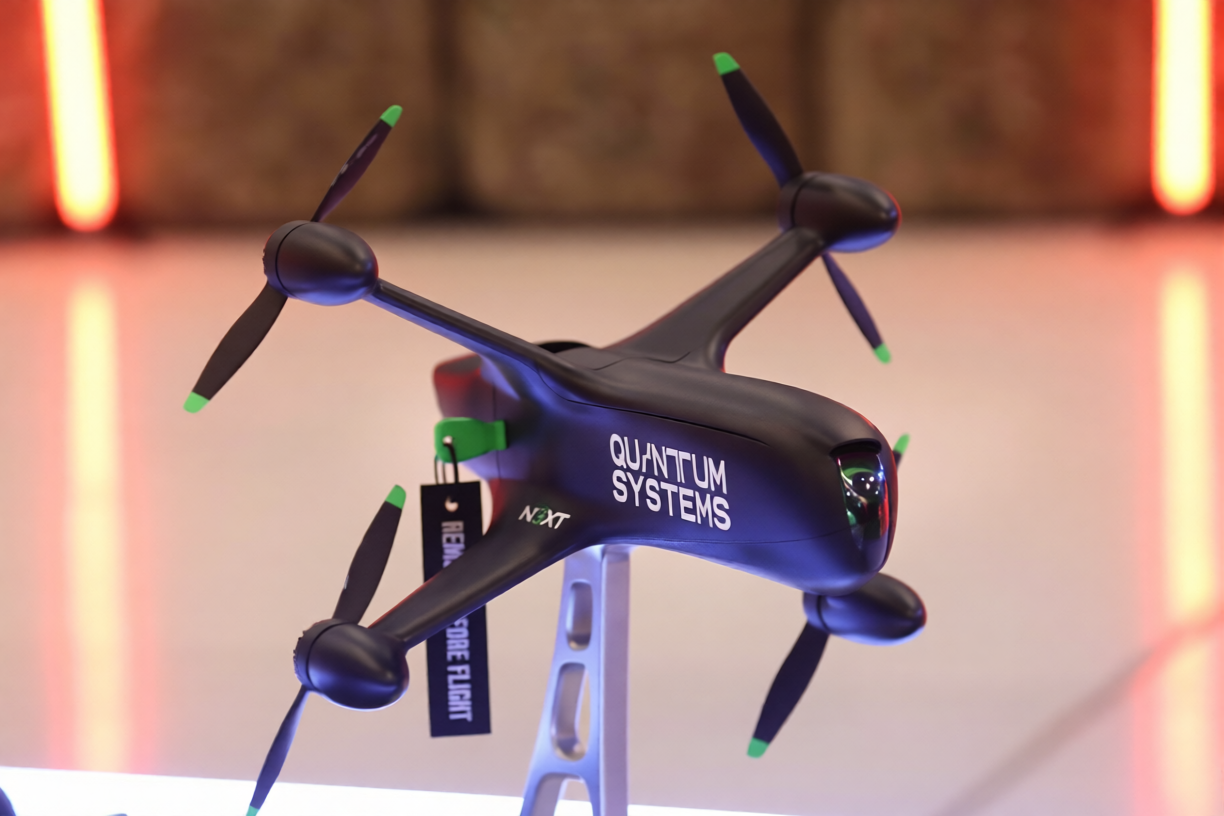
The Apex Recordhunter is an X-wing quadcopter, a configuration that places four propulsion units around a compact airframe. It held an altitude of about 50 meters during the high-speed run. Gardemin said aerodynamics was the dominant factor, but emphasized that the result depended on the aircraft’s aerodynamics, electronics, lightweight structure and batteries operating together.
Preparation extended to opposite thermal treatments for two critical parts of the powertrain. The team precooled the motors with dry ice while preheating the battery. That combination illustrates the narrow operating window behind an extreme battery-powered sprint: the motors benefit from entering the run with additional thermal margin, while a warmer battery can deliver power without the increased internal resistance associated with low temperatures.
Battery temperature management is a wider constraint in electric aviation. Research on electric-aircraft battery cooling describes the need to balance temperature, pack weight and cooling power, especially under demanding discharge conditions. The Recordhunter’s preflight treatment was a test-specific preparation, however, not evidence of a reusable onboard thermal-management system.
The flight also required more than reaching peak speed. Gardemin had to manage braking points, decelerate the aircraft and bring it into a net landing. The disrupted reverse attempt shows why a record procedure asks for more than a single favorable pass: completing runs in opposite directions helps control for environmental effects and demonstrates that the result can be repeated within the prescribed conditions.
Formal recognition in aviation commonly depends on a defined course and ratification process. For comparison, the World Air Sports Federation ratified two electric-aircraft records after speeds were measured over specified 15-kilometer and 3-kilometer courses. Those records involved a much larger crewed aircraft in a different category, so their speeds are not direct comparisons with a compact quadcopter. They do show the procedural distance between recording a peak figure and securing an official record.
The prototype leaves major questions unanswered
Quantum Systems has not disclosed the Apex Recordhunter’s weight, motor specifications or battery performance. Those omissions prevent an independent assessment of power density, energy use, endurance or the design margin available after the speed run. The reported 777-kilometer-per-hour figure demonstrates a peak-speed concept, but it does not establish how long the aircraft can sustain that condition or how readily the propulsion package can be reproduced.
Cost reinforces that distinction. Quantum Systems co-founder and co-CEO Florian Seibel characterized the record aircraft as an approximately €50,000 demonstrator using polished, laser-sintered aluminum parts. He contrasted it with a prospective €5,000 interceptor that could substitute injection-molded plastic components. Moving from carefully finished metal parts to molded components could sharply reduce unit cost, but it also requires tooling, repeatable material properties, quality controls and validation that the cheaper structure can tolerate its intended loads.
Seibel also said Quantum Systems could produce 100,000 lower-cost units per month. No demonstrated production result accompanies that claim. Output on that scale would depend on more than molding airframes: motors, power electronics, batteries, sensors, assembly processes and acceptance testing would all need to support the same production rhythm.
A faster Skyron is the practical target
Quantum Systems intends to transfer propulsion and design lessons from the Recordhunter into its Skyron interceptor family. The company says the current Skyron reaches up to 400 kilometers per hour, while a version designed for approximately 600 kilometers per hour is under development.
That lower target is revealing. A practical aircraft must purchase speed without inheriting every costly feature and test-day preparation of the record demonstrator. It also needs repeatable manufacturing, predictable thermal behavior and enough operating margin to function outside a specially managed record attempt.
The Apex Recordhunter has shown that a compact battery aircraft can reportedly touch 777 kilometers per hour. Its next meaningful milestones are more demanding: complete the required reverse run, disclose enough data to establish what the achievement represents, and demonstrate that its propulsion lessons can survive the transition from a €50,000 prototype to a repeatable, lower-cost aircraft.
| More aerospace and engineering stories, right in your MSN feed. Follow AMI on MSN |
By Stephen Wallace — Editor for AMI’s aerospace integration and unmanned mobility coverage, focused on drone manufacturing, VTOL systems, autonomous networks, and air-ground mobility links.