


DOE Approves $23.5 Billion Savannah River Warhead-Core Factory, Due 2038
The Department of Energy has committed to a $23.5 billion main processing building at the Savannah River Site, with completion estimated for December 2038, before the government has established a comprehensive cost estimate for its entire national plutonium-pit production program. DOE approved the building’s performance baseline and authorized full construction on Oct. 15.

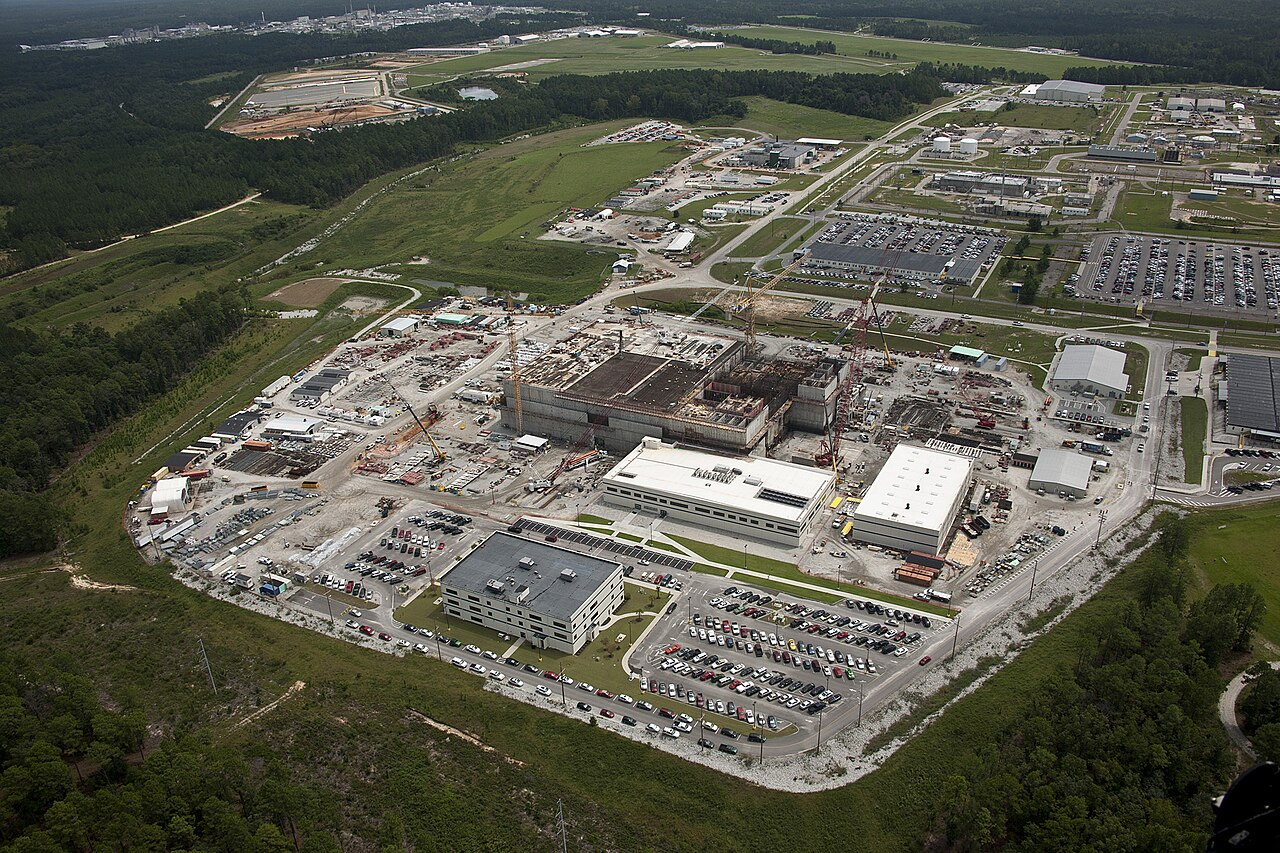
The decision moves the Savannah River Plutonium Processing Facility from design into full-scale construction. The South Carolina facility will manufacture plutonium pits the cores used in nuclear warheads and become the second U.S. production site alongside Los Alamos National Laboratory in New Mexico.
The $23.5 billion figure establishes the cost and schedule baseline for Savannah River’s main building. It is not the total cost of restoring, operating and sustaining pit production across the national nuclear-weapons complex. In an April 2026 update, the Government Accountability Office said the National Nuclear Security Administration still lacked a comprehensive lifecycle estimate meeting GAO cost-estimating standards. NNSA expected to establish that estimate in December 2026.
A firm building commitment inside an unfinished national estimate
That boundary is central to understanding what DOE has approved. A performance baseline gives managers and overseers a reference point against which future cost growth and delays can be measured. It does not capture every supporting facility, Los Alamos expense, operating cost or long-term program requirement associated with national pit production.
The project’s scale also extends beyond the main structure. The full Savannah River production complex covers 160 acres and includes auxiliary buildings. It repurposes an unfinished structure originally intended for a mixed-oxide nuclear-fuel facility, a project DOE terminated in 2018. Reuse avoids starting with an entirely empty site, but nuclear-material processing still requires specialized safety, security and environmental systems that make these facilities unusually expensive and difficult to estimate early.
Past performance across NNSA’s broader construction portfolio gives the new baseline added significance. A separate February GAO assessment found that cumulative overruns among major NNSA construction projects had increased from $2.1 billion to $4.8 billion since its previous review. Combined delays across that portfolio rose from nine years to 30 years as of June 2025. Those are portfolio-wide figures, not overruns attributable solely to pit production, but they show why a project extending into 2038 will require sustained cost and schedule scrutiny.
The construction commitment also carries a substantial workforce tradeoff. Savannah River officials anticipate more than 3,000 new workers at peak construction and an operating workforce exceeding 2,000 once the facility is complete. A separate training center is forecast for completion in 2028, roughly a decade before the main building’s current completion date. That sequencing is intended to develop a qualified workforce while construction proceeds, but it also means training, staffing and retention must be managed across a long interval before production infrastructure is ready.
Two sites provide redundancy, but oversight spans both
NNSA’s two-site strategy is designed to protect production from a shutdown, accident or other disruption at either location. Los Alamos completed the first fully qualified production pit for the W87-1 warhead in October 2024. Savannah River would add geographically separated capacity rather than leaving the mission concentrated at one laboratory.
Safety findings at Los Alamos illustrate the oversight burden attached to that strategy. A DOE independent assessment of Plutonium Facility Building 4 identified four findings involving accident analysis, engineering practices and investigations of significant quality problems. Inspectors found that selected systems generally operated and were maintained according to applicable requirements, while warning that weaknesses could reduce their ability to perform safety functions. Some accident-analysis assumptions could underestimate potential public radiation exposure, although the assessment documented no actual public exposure.
Independent access is another unresolved pressure point. The Defense Nuclear Facilities Safety Board recorded eight explicit information-access denials across the wider weapons complex during the first half of 2026. Overdue requests included a pit-production action plan and a completed DOE study of the production mission. As of Oct. 22, the board said it could not post all technical documents while it worked with DOE on a sensitivity-review process. Restricted access can limit how quickly an outside federal watchdog evaluates assumptions and communicates concerns as construction advances.
The scientific case is more measured than a simple claim of immediate material failure. A March 2026 JASON advisory summary found that stockpile plutonium appears to be aging slowly and that observed degradation does not call present weapons performance into question. The scientists nevertheless recommended continued aging research and production capabilities that could address future problems. The public summary did not validate a particular annual production target.
DOE has therefore locked in a defined building cost and a 2038 deadline while broader questions remain open: the lifecycle price of the national production system, the transparency available to safety overseers and the amount of capacity ultimately required. The next major accounting milestone is NNSA’s expected comprehensive lifecycle estimate in December 2026 the figure needed to place Savannah River’s $23.5 billion baseline inside the full national commitment.
| More aerospace and engineering stories, right in your MSN feed. Follow AMI on MSN |
By David Whitaker — Associate editor for AMI’s aerospace and drone systems desk, translating flight systems, aircraft programs, spaceflight, and UAV developments into accessible technical stories.



