


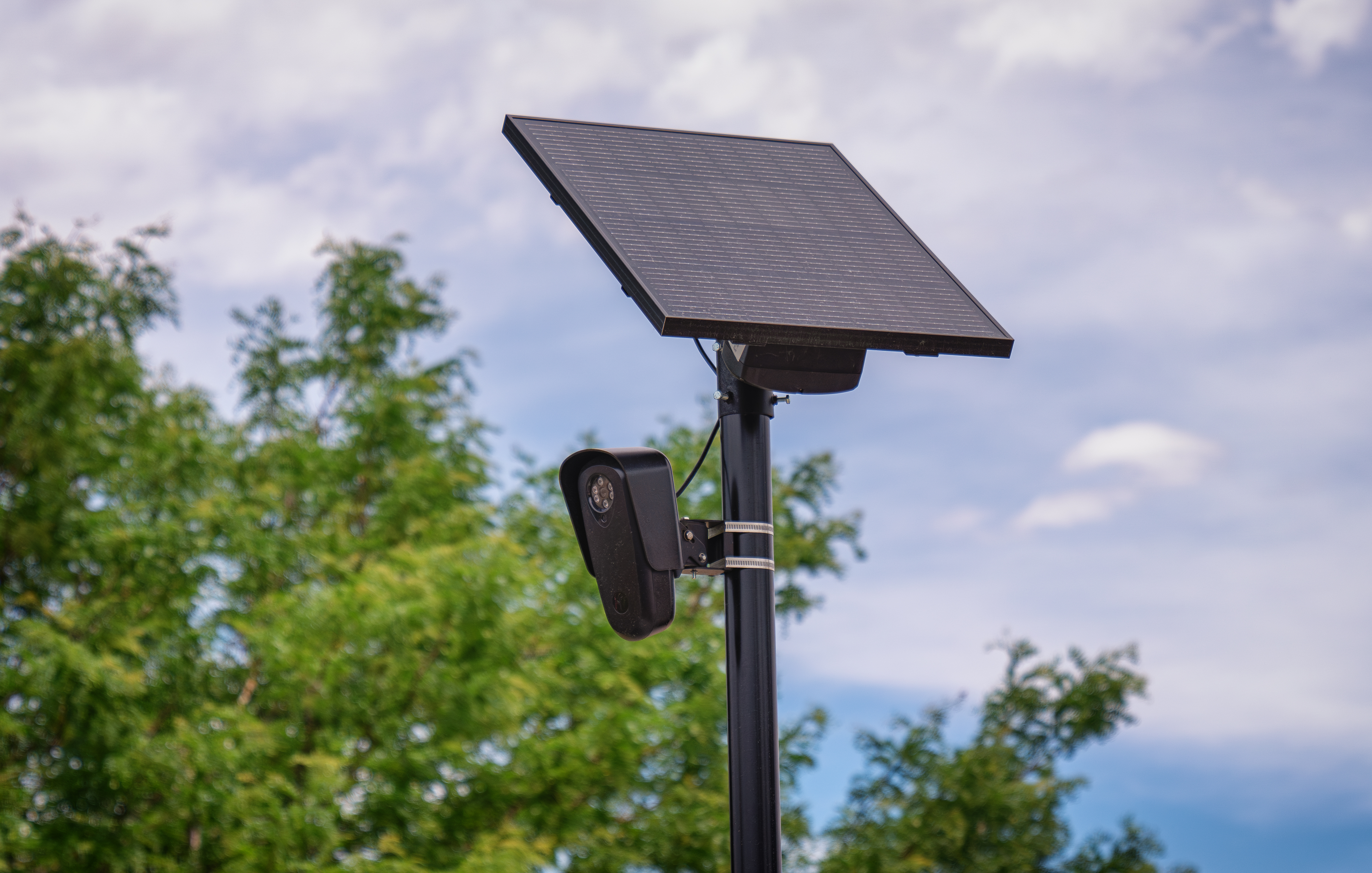
River Falls Police Move to End $111,000 Flock Camera Contract
River Falls police plan to discontinue the city’s Flock Safety license-plate cameras after an internal review undermined the department’s confidence in the provider. The department will ask the City Council to remove Flock funding from its 2027 and 2028 budgets, although that change still requires council action and Police Chief Gordon Young has said more information about the review will be released later.

The proposed withdrawal creates an unusual tension: police say the cameras contributed to successful investigations, yet the department no longer considers its relationship with the provider sustainable. For residents and taxpayers, the decision is therefore about more than whether cameras can read plates. It tests how procurement, data controls, alert verification and public confidence determine whether a surveillance system remains usable.
River Falls’ official camera FAQ lists a first-year cost of $30,350 and subsequent annual charges of $27,000, for a total of $111,350 from December 2024 through December 2028. The contract automatically renews unless the city gives notice of nonrenewal at least 30 days before it ends. Removing future budget funding would be a consequential step, but the council still needs clarity on how that action interacts with the existing four-year commitment and any costs associated with ending service.
The procurement history also shaped the loss-of-control concerns raised by residents. Some early Flock charges were included in nearly $1.8 million in bills approved by the council on Jan. 14, 2025. Flock was not explicitly identified on the online consent agenda or under new business, and there was no camera-specific council vote. City Administrator Scot Simpson said the approval was consistent with our purchasing and bill approval practices.
A purchasing process can comply with routine municipal practice while still leaving the public without a clear, dedicated decision point for a technology that creates searchable vehicle records. The fairness issue is not limited to the contract’s dollar value. Drivers whose plates are captured cannot opt out, while taxpayers fund the cameras, cloud storage, access controls and oversight. That makes visible authorization and clearly defined operating rules important parts of the system not administrative details outside it.
The cameras capture plate numbers and vehicle characteristics such as make, model, color and visible distinguishing features. River Falls said its system did not identify drivers, use facial recognition or provide live video. Records were generally retained on cloud servers for 30 days unless connected to an open investigation, and Deputy Chief Matthew Kennett audited activity every two weeks.
Those safeguards address only part of the operating chain. A plate-reader alert is a machine-generated lead, not a final identification. Young said officers must verify that the plate being sought is actually the plate in front of them before taking action. The city’s policy likewise treated an alert as insufficient by itself to establish probable cause. This human-verification layer is essential because image quality, plate interpretation and database status can all affect whether a match is operationally reliable.
Data governance presents a separate engineering and policy problem. A camera may perform its detection function correctly while the larger network still raises questions about who can search the resulting records, which outside agencies can request access, how searches are logged and whether the provider’s sharing architecture matches local policy. River Falls’ FAQ said outside law-enforcement agencies could request access and listed several federal entities that had done so as of August 2026. It also stated that immigration authorities were not among those requesters.
The department reported practical benefits. As of Aug. 27, 2026, its FAQ attributed assistance in 33 arrests to Flock, with uses spanning theft, larceny, hit-and-run and assault investigations, as well as crashes, welfare checks and searches for wanted people. Those results explain why ending the program is a tradeoff rather than a declaration that plate readers have no investigative value.
Neighboring Pierce County illustrates that the dispute is not necessarily about abandoning the entire technology category. The county continues to operate four Axon plate readers bought with opioid-settlement funds. Sheriff Chad Koranda said Axon was selected partly because of concerns about Flock’s data-sharing practices. Pierce County has not announced plans to discontinue its separate system.
That contrast places vendor architecture and governance alongside camera performance in any municipal evaluation. Agencies must assess not only whether a system finds relevant vehicles, but also whether its contract is transparent, its alerts can be independently checked, its records are retained for a defensible period and its access rules remain under local control. River Falls’ next decisive step belongs to the City Council, which must determine what removing the 2027 and 2028 funding means for the cameras, the remaining contract and the city’s searchable vehicle data.
| More aerospace and engineering stories, right in your MSN feed. Follow AMI on MSN |
By Thomas Caldwell — AMI’s senior editor for mechanical and mobility engineering, covering vehicle electronics, systems integration, electrification, chassis systems, propulsion, and safety policy.




