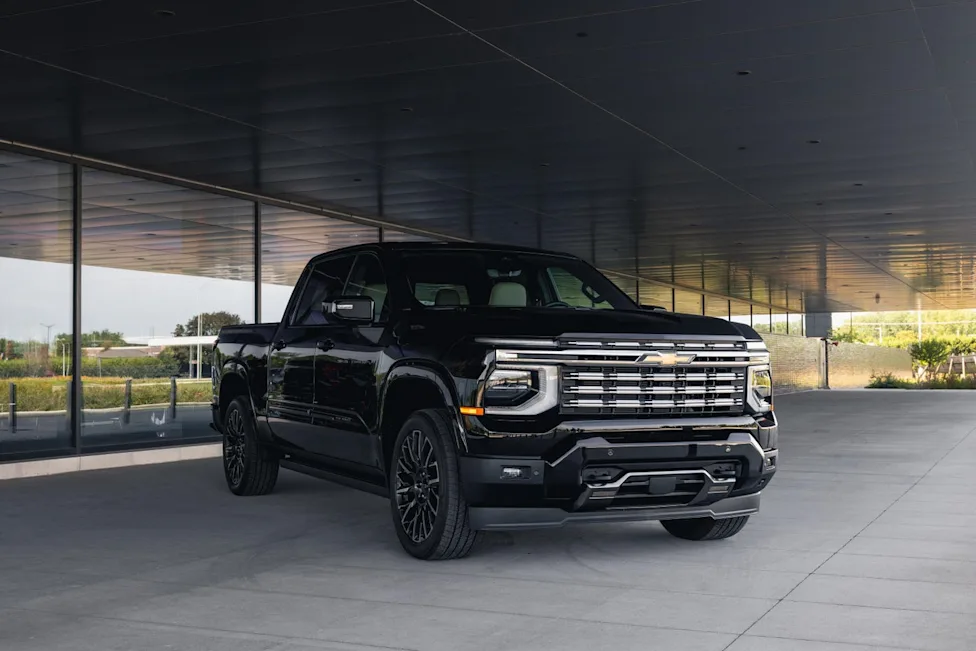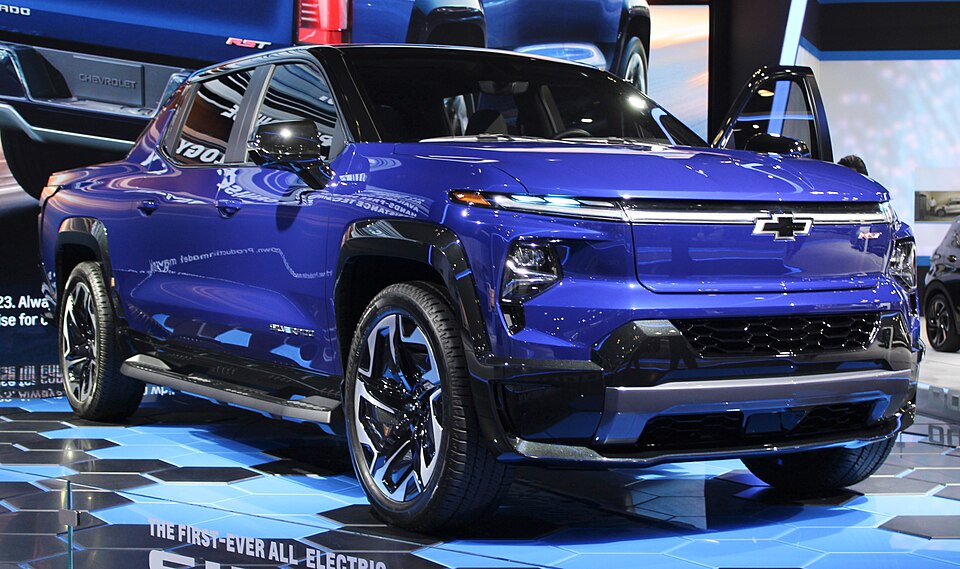
Silverado EV Camper Tow Cost $651, Exceeding Estimated Gas and Diesel
A 2026 Chevrolet Silverado EV owner’s 1,216-mile camper tow ended with a reported energy bill of $651.47, according to a published account of the trip. That total was about $40 higher than the account’s estimated gasoline cost and approximately $11 above its diesel estimate. The reversal came after one ordinary packing error: leaving a portable charger at home led to a $59 destination top-up.

Before that extra charge, the electric truck had retained a narrow cost advantage. Its public fast-charging sessions cost $592.47, about $18 less than the estimated gasoline bill and $48 less than the diesel calculation. The destination payment erased both margins, illustrating how long-distance electric towing can become highly sensitive to charging location and price.
A large trailer drove energy demand
The Silverado EV towed a Grand Design Imagine 2970RL camper described as roughly 34 feet long and nearly 8,000 pounds dry. The round trip to Hilton Head, South Carolina, was completed at approximately 62 mph.
Over 1,216 miles, the truck received 1,227.4 kilowatt-hours from public fast chargers and returned 0.99 miles per kilowatt-hour. The roadside charging bill of $592.47 works out to an average electricity price of about 48 cents per kilowatt-hour. Charging sessions totaled 3 hours and 37 minutes, with individual stops generally lasting 15 to 30 minutes.
A camper’s mass adds rolling and acceleration resistance, but at sustained road speed its large frontal area also imposes a substantial aerodynamic load. Drag rises with the square of speed, while the power needed to overcome it rises still faster. That makes a tall, wide trailer an especially demanding load on a highway, regardless of whether the tow vehicle uses electricity, gasoline or diesel.
Research into vehicle and trailer aerodynamics supports that mechanism. A 2023 computational study of van and trailer combinations found that trailer configuration, exposed components and airflow around the gap between vehicles could materially change drag. Its geometry was different from this camper, so its numerical reductions do not describe the Silverado trip. The broader finding is applicable: trailer shape and airflow management can strongly influence the energy needed to maintain highway speed.
Charging price determined the comparison
The gasoline and diesel figures were calculations, not measured results from trucks driven over the same route. The comparison assumed 8.5 mpg while towing for a gasoline pickup and 12 mpg for a diesel, together with stated national fuel averages. That produced estimated trip costs of about $611 for gasoline and $640 for diesel.
Those assumptions establish the boundary of the comparison. A different truck, trailer, route, speed or fuel price would change the result. Likewise, this owner’s charging cost does not represent every Silverado EV tow. Home electricity, campground power or lower-priced public stations could produce a materially different bill.
The owner reported choosing faster or more conveniently located GM Energy and Mercedes-Benz stations, adding roughly $40 compared with cheaper alternatives such as Electrify America. That was an operating tradeoff rather than wasted energy: lower prices can come with extra routing, less suitable stall geometry or more maneuvering with a long trailer.
Charging-stall layout is part of the system. Pull-through spaces let a truck and camper remain connected, while conventional parking-oriented chargers may require careful positioning or unhitching. The owner said a remote-operated electric tongue jack reduced necessary unhitching time to less than 90 seconds. He also credited expanding charging corridors, improved charger reliability, more pull-through stalls and Super Cruise with reducing stress and fatigue.
The trip therefore produced two different outcomes. The Silverado completed a long tow with stops generally measured in tens of minutes, yet buying nearly all of its energy from public fast chargers left only a small initial saving. Once the forgotten portable charger triggered a $59 destination purchase, the final $651.47 bill moved above both estimated combustion alternatives.
| More aerospace and engineering stories, right in your MSN feed. Follow AMI on MSN |
By Thomas Caldwell — AMI’s senior editor for mechanical and mobility engineering, covering vehicle electronics, systems integration, electrification, chassis systems, propulsion, and safety policy.