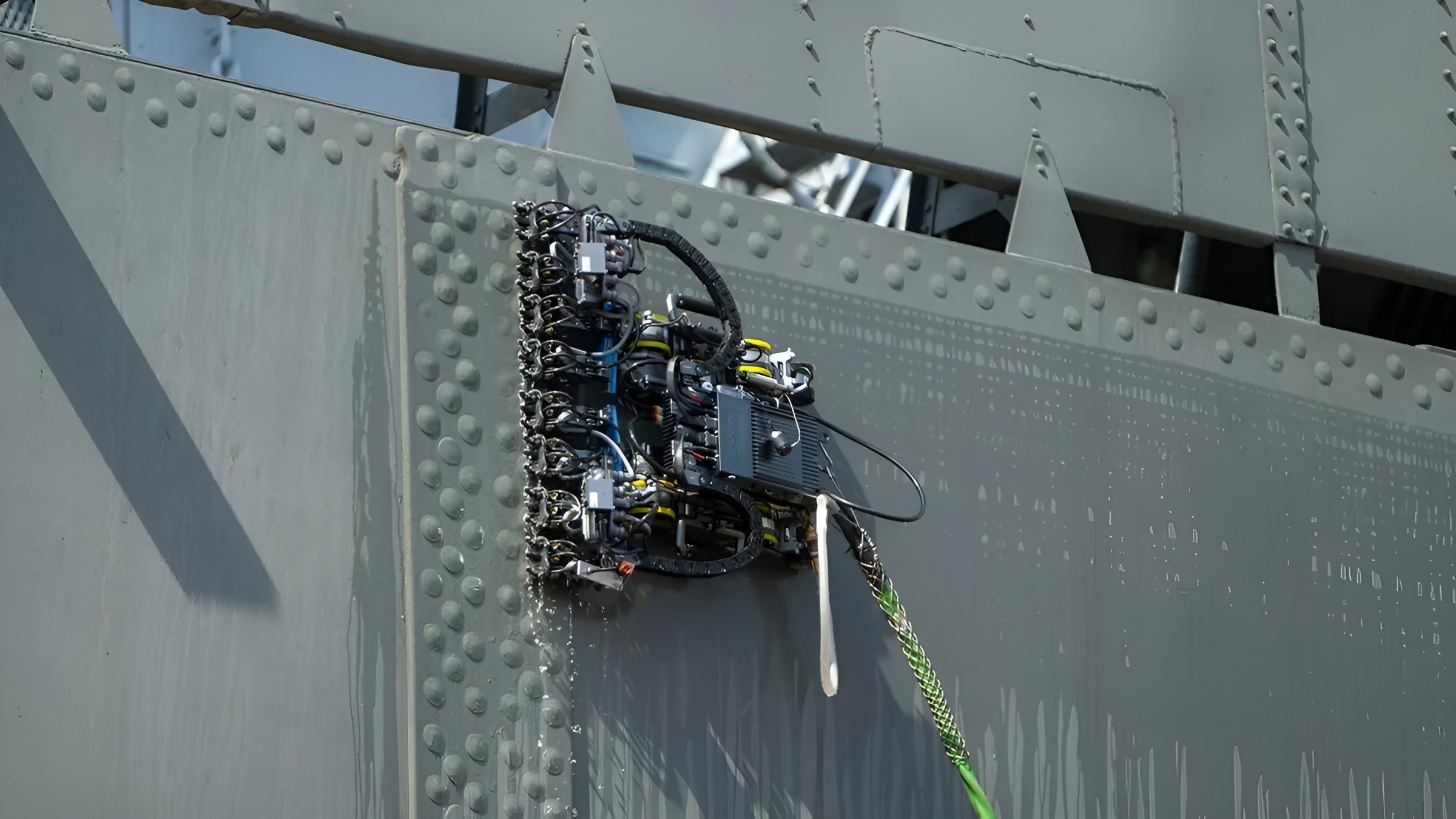
Navy Raises Gecko Robotics Ceiling to $300 Million Amid Ship Delays
$300 million is the new ceiling on the U.S. Navy’s ship-inspection contract with Pittsburgh-based Gecko Robotics, up from $70 million. The expansion scales access to hull-climbing robots, drones and fixed sensors as routine destroyer overhauls average 212 days about four months longer than planned.
The ceiling is the maximum value available under the contract, not a statement that the Navy has already spent or committed the full amount. No spending to date figure or breakdown of the additional deliverables has been provided. What the increase does show is that robotic inspection has moved beyond a limited trial-sized procurement and into a substantially larger maintenance program.
What the robots can change
Ship inspection is fundamentally a sensing and data-management problem. Sensors must reach relevant surfaces, capture consistent measurements and convert those measurements into information that maintenance planners can use. Gecko’s mobile robots are designed to climb hulls and other structures, while drones and fixed sensors extend data collection to other areas and monitoring periods.
Company officials say the resulting system can identify structural problems faster than traditional inspection methods. Earlier detection could help planners define repair work before a vessel enters a congested maintenance period, reducing the risk that newly discovered work expands the schedule after labor, dock space and materials have already been allocated.
That is the practical advantage the Navy is purchasing: not robotic movement for its own sake, but a potentially faster path from physical inspection to repair planning. Repeatable sensor positioning can also make measurements easier to compare over time, although the available information does not specify the sensors, inspection coverage or performance thresholds required under the expanded contract.
Robots address only part of the maintenance chain. Finding a defect faster does not provide the skilled labor, replacement material, dry-dock availability or authorization needed to repair it. The effect on turnaround time will therefore depend on whether inspection data arrives early enough, is trusted by Navy engineers and is integrated into decisions across shipyards and contractors.
A larger maintenance constraint
The procurement sits inside a maintenance system facing capacity, infrastructure and oversight problems far larger than one inspection contract. A September 2026 Government Accountability Office assessment estimated that the Navy’s effort to modernize its four public shipyards will exceed $200 billion and require more than 50 additional years. GAO called for standardized reporting on costs, schedules and risks.
A separate GAO assessment of attack-submarine maintenance found more than 15,000 lost operational days over a decade and an estimated $3.4 billion in costs associated with delays and idle time. Those findings concern a different part of the fleet, but they illustrate the system-level burden created when maintenance capacity cannot keep pace with demand.
Long deployments add another dimension. The aircraft carrier USS Abraham Lincoln recently completed a record 265 uninterrupted days at sea before returning to port. Inspection tools cannot shorten deployments directly, but maintenance duration affects how quickly ships can be returned to the pool available for future assignments.
The savings claim still needs fleetwide proof
Gecko estimates that its technology can save the military about $8 million in repairs per ship. That remains a company estimate; no Navy-verified fleetwide result has been provided. The figure also cannot be evaluated fully without knowing which ship classes, repair categories, inspection baselines and deployment scales it covers.
A useful public accounting of the expanded contract would therefore track more than the number of robots deployed. Relevant measures include inspection time, defects found before maintenance begins, unplanned work discovered later, days removed from overhaul schedules and verified repair costs avoided. These measures would separate faster data collection from an actual improvement in ship availability.
Gecko CEO Jake Loosararian said, “When something works, it scales fast.” The Navy has now created room for that scale by raising the ceiling more than fourfold. The remaining test is operational: whether broader robotic inspection produces independently measured reductions in a maintenance system where destroyer overhauls are already running roughly four months late.
| More aerospace and engineering stories, right in your MSN feed. Follow AMI on MSN |
By Jonathan Barrett — Editor for AMI’s future mobility and autonomous systems section, with two decades covering robotics, e-mobility, drone-vehicle convergence, and transport mechanical systems.