


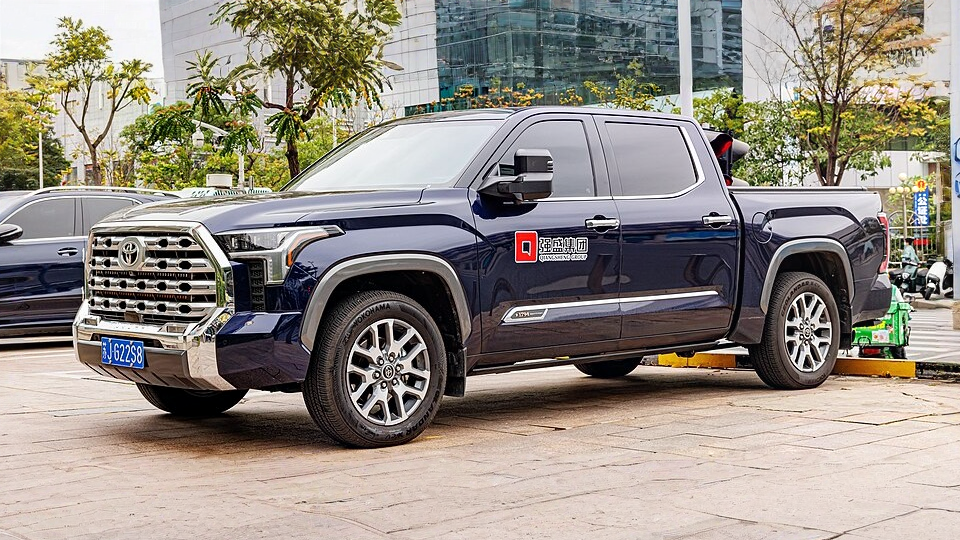
Toyota Opens Engine-Recall Inspections to 26,000 More Tundras, but Replacement Isn’t Automatic
Approximately 26,000 more Toyota Tundras can now enter the company’s engine-recall remedy process, giving covered owners access earlier than Toyota’s previously published phase schedule indicated. Availability, however, does not guarantee an immediate dealer appointment or a replacement engine: each truck’s vehicle identification number and inspection result determine what happens next.

Updated materials for Toyota campaign 25TA14 list remedy Phases 3 and 4 as available. Each phase contains approximately 13,000 trucks, raising the combined population in available Phases 1 through 4 from about 23,000 to approximately 49,000. Those figures describe trucks assigned to available phases, not completed inspections, repairs or engine replacements.
The timing is notable because Toyota’s September 17 dealer letter, posted by the National Highway Traffic Safety Administration, had scheduled Phase 3 for December 2026 and Phase 4 for February 2027. The updated chart does not identify exactly when the two phases opened, but both are now shown as available rather than awaiting those estimated launch dates.
VIN status controls access
Phases 3 and 4 cover certain 2023 and 2024 model-year Tundras. Model year alone is not enough to establish eligibility, so an owner cannot assume that every truck built during those years is included. The relevant check is the campaign status attached to the individual vehicle identification number through Toyota or a dealer.
For a VIN-eligible truck, remedy availability opens the door to Toyota’s no-charge inspection process. It does not mean the dealer will automatically remove and replace the engine. Dealers use inspection software and available vehicle drive data to evaluate the condition of the engine’s No. 1 main bearing.
Toyota calls for engine replacement when that process cannot confirm that the bearing will remain free of abnormal wear caused by the recall condition. Both the inspection and any required remedy are provided without charge. The final number of engines that will need replacement therefore cannot be determined from the phase populations alone.
Why the inspection focuses on a main bearing
Toyota identifies machining debris potentially left inside the engine after production as the underlying concern. The company says the resulting condition can produce knocking, rough running, failure to start or loss of motive power.
A main bearing supports the crankshaft while maintaining an oil film between moving and stationary surfaces. Foreign particles can damage a bearing surface or disrupt that lubricated interface, which is why particulate contamination is a controlled manufacturing concern rather than a cosmetic issue. Automotive technical-cleanliness frameworks such as ISO 16232 and VDA 19 set out methods for assessing contamination on functionally important vehicle components and fluid systems.
Toyota’s remedy structure also illustrates why access is being managed in phases. Opening a phase makes its covered vehicles eligible to proceed, but dealer capacity, parts planning, inspection time and the number of engines ultimately identified for replacement can still affect appointment timing. Owners should verify both VIN eligibility and local scheduling before arranging a visit.
Five phases remain on the chart. Their estimated launches are March 2027 for Phase 5, April for Phase 6, June for Phase 7, August for Phase 8 and September for Phase 9. Those dates remain subject to change, as the early availability of Phases 3 and 4 already demonstrates. For the approximately 26,000 newly added trucks, the immediate change is earlier access to a decision not a predetermined replacement engine.
| More aerospace and engineering stories, right in your MSN feed. Follow AMI on MSN |
By Thomas Caldwell — AMI’s senior editor for mechanical and mobility engineering, covering vehicle electronics, systems integration, electrification, chassis systems, propulsion, and safety policy.




