


Around 20 US Military Flights Signal Taura Expansion After Ecuador Rejects Bases
About 20 US military flights, newly cleared ground and rapidly deployable structures are changing the operating picture at Ecuador’s Taura Air Base. The activity identified between June and mid-October points to greater capacity for aircraft movement, maintenance and logistical support, even as the legal basis and intended duration of the US presence remain unresolved.
The buildup follows Ecuadorans’ vote against allowing foreign military bases. Ecuador’s constitution prohibits foreign military bases and foreign facilities for military purposes, placing the distinction between temporary cooperation and an enduring foreign installation at the center of the issue.
Heavy airlift is the clearest capacity signal
Flight records reviewed by AFP identified C-130 Hercules and C-17 Globemaster transports, V-22 Osprey tiltrotor aircraft and Black Hawk helicopters arriving at Taura. Several flights connected the Ecuadoran installation with US military facilities through stops in Puerto Rico and Panama, although detailed routing is less important than the mix and frequency of aircraft involved.
The C-17 is particularly consequential because it is built to move large cargo loads between major and forward operating bases. According to the US Air Force’s C-17 fact sheet, the aircraft can carry up to 170,900 pounds of cargo and operate from runways as short as 3,500 feet. Taura’s runway exceeds 3,000 meters, or roughly 9,840 feet, giving it substantially more runway length than the minimum cited for the transport.
A long runway alone does not make an air base a sustained logistics hub. Aircraft also require parking space, ground handling, fuel, maintenance support, personnel facilities and secure operating areas. That is where the construction becomes significant.
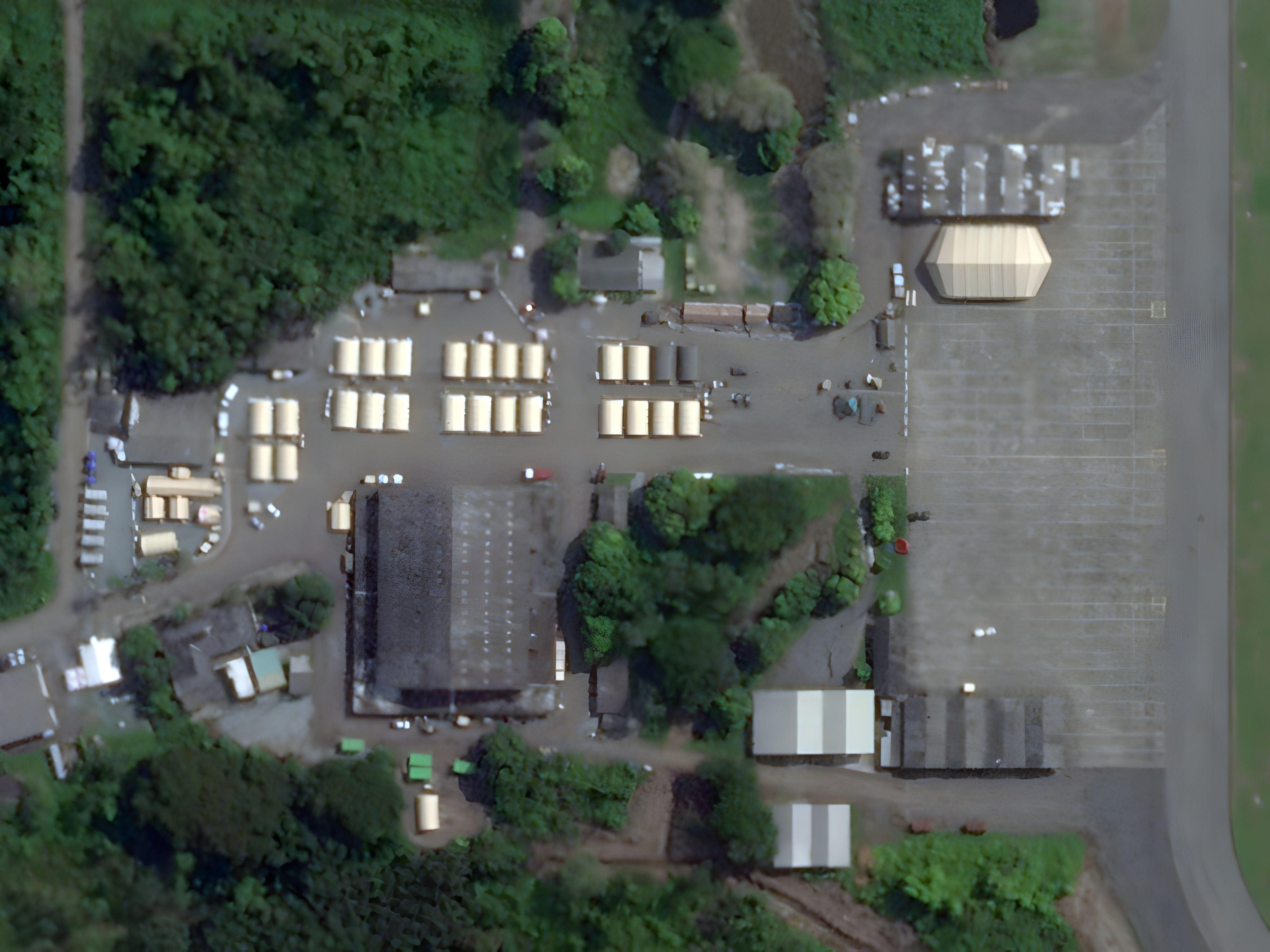
Satellite imagery showed cleared vegetation, new operational areas and dozens of structures consistent with deployable military tents. Another structure, roughly 40 by 20 meters, resembled a retractable aircraft-maintenance hangar. AFP also observed three construction trucks entering and leaving the guarded facility within 10 minutes.
Deployable structures allow capacity to be added faster than permanent buildings would permit. A covered maintenance area can protect aircraft and crews from weather while enabling inspections or servicing, while tented facilities can support personnel, administration and logistics. The available imagery does not establish precisely how each structure will be used, but the combination is more operationally meaningful than any single tent, hangar or aircraft arrival viewed in isolation.
Temporary flights, longer-term infrastructure
A September 8 letter obtained by AFP from then Ecuadoran Air Force commander Mauricio Salazar described plans for the US Air Force to “use and modify infrastructure at the base” and operate “temporary support flights.” Salazar warned senior commanders that hosting US troops, supporting the US Air Force and receiving continuing personnel flights might be illegal or unconstitutional. He was removed as Air Force commander two days after the letter’s date.
Ecuador’s Air Force did not respond to AFP’s questions. The Pentagon referred questions to US Southern Command, which did not immediately answer them. Without a public explanation of the governing agreement, personnel status or operating period, the boundary between rotational access and a prohibited foreign base remains unsettled.
Announced aircraft deployments add another layer. Ecuador’s defense minister said in August that the United States would deploy three Black Hawk helicopters through bilateral security cooperation. The following month, President Daniel Noboa said Ecuador would operate two MQ-9 Reaper drones. Those announcements indicate an expanding aviation partnership, but they do not by themselves define who will control Taura’s new infrastructure or how long US personnel will remain.
Taura is Ecuador’s only installation reserved exclusively for military aviation, and its runway is longer than the one at nearby Guayaquil’s international airport. That combination avoids routine competition with civilian airline traffic and provides room for heavy transports, helicopters and remotely piloted aircraft to use the same military complex.
There is also a historical benchmark. US forces previously conducted counterdrug aviation operations from Ecuador’s Manta air base under a 1999 agreement that lasted until 2009. The US Air Force reported that the arrangement allowed up to 500 US personnel and included ramps, accommodation, offices and other support infrastructure. Taura has not been confirmed as a replacement on those terms, but Manta shows how recurring surveillance flights can require a broader ground-support system.
Retired Ecuadoran Air Force colonel Roberto Marchan assessed that “the US military is establishing a capability there.” The aircraft traffic and construction support the capacity portion of that judgment. Whether the capability is temporary cooperation or an enduring foreign presence depends on agreements and operating limits that neither government has publicly clarified.
| More aerospace and engineering stories, right in your MSN feed. Follow AMI on MSN |
By David Whitaker — Associate editor for AMI’s aerospace and drone systems desk, translating flight systems, aircraft programs, spaceflight, and UAV developments into accessible technical stories.



