


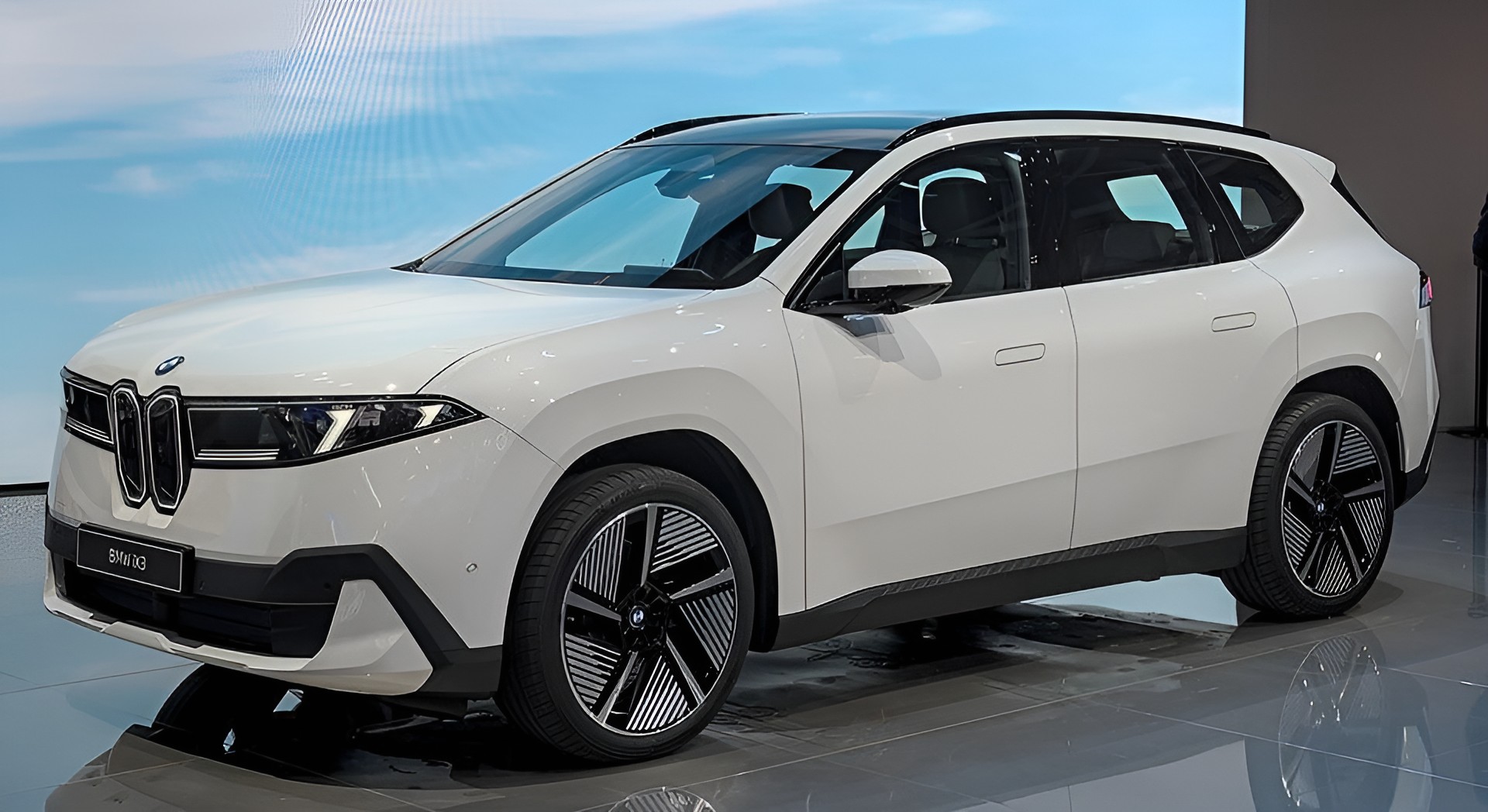
BMW iX3 Completes 621-Mile Cold-Weather Test in 8 Hours 55 Minutes
Eight hours and 55 minutes: that was the total time required for a BMW iX3 xDrive50 to complete a 621-mile highway test, including two charging stops. EV enthusiast Bjorn Nyland conducted the real-traffic run with a full battery at the start, cruise control set to 75 mph and an ambient temperature of about 32 degrees Fahrenheit.

The result tied the listed times for the Tesla Model S Long Range and Zeekr 7X Performance. It did not beat those vehicles outright. The notable difference was energy use: the iX3 reportedly consumed less energy than either rival even though its test took place in colder weather.
Efficiency and charging worked together
Nyland reported average consumption of 42.9 kilowatt-hours per 100 miles, equivalent to 2.3 miles per kilowatt-hour or 26.7 kilowatt-hours per 100 kilometers. The tested electric SUV has a stated 108-kilowatt-hour battery and can charge at up to 400 kilowatts.
Those specifications help explain the result, but no single number determines road-trip performance. Battery capacity controls how much energy the vehicle can carry. Highway efficiency determines how quickly that energy is consumed. Charging power affects how rapidly useful range can be restored during a stop. The iX3 combined all three well enough to cover 1,000 kilometers with only two charging sessions and finish in less than nine hours.
Peak charging power should not be treated as the rate maintained throughout an entire session. Battery temperature, state of charge and the charger’s available output can all affect the power delivered. Even so, a high peak can shorten stops when the vehicle and charger are able to use it. The total elapsed time is therefore more informative for a road trip than a peak-power specification viewed alone.
The test conditions also worked against extracting the vehicle’s maximum possible range. In addition to freezing-point temperatures and sustained highway speed, the iX3 used 21-inch wheels rather than the more efficient 20-inch option. Larger wheels and their associated tires can raise rolling and aerodynamic losses, although this run did not isolate the size difference as a separate variable.
Cold weather remains an important boundary
At 32 degrees Fahrenheit, electric vehicles in Recurrent’s winter analysis retain an average of 78% of the maximum range they achieve under ideal-temperature conditions. Its analysis covers 34 models and real-world data from more than 30,000 U.S. vehicles, while individual model results at that temperature range from 69% to 88%.
Cold weather affects an EV through several paths. Battery reactions slow, while cabin heating consumes energy that would otherwise be available for propulsion. Highway speed adds another demand because aerodynamic drag rises rapidly as speed increases. Winter road trips consequently test more than the nominal size of the battery pack.
The iX3 result is useful because it captures the combined system outcome rather than presenting range, consumption and charging as independent claims. A large battery can still produce a slow trip if consumption is high or charging is weak. Strong efficiency can reduce the energy needed at each stop, while rapid charging can limit the time penalty for energy that must be added along the route.
One run, not a universal ranking
This was one enthusiast-run test in real traffic under a particular set of conditions. Traffic flow, charger availability, weather, wheel choice, cabin settings and charging behavior can all change the elapsed time. The run therefore offers a concrete example of the iX3’s long-distance performance, not a guarantee that every driver will reproduce it.
It also leaves the competitive result more nuanced than a simple win. The BMW matched the Tesla Model S Long Range and Zeekr 7X Performance at eight hours and 55 minutes, while reportedly using less energy in colder conditions. For drivers concerned that a 621-mile electric journey must require numerous or lengthy stops, the two-stop result is the most direct measure of what the battery, drivetrain and charging system achieved together.
| More aerospace and engineering stories, right in your MSN feed. Follow AMI on MSN |
By Thomas Caldwell — AMI’s senior editor for mechanical and mobility engineering, covering vehicle electronics, systems integration, electrification, chassis systems, propulsion, and safety policy.




