


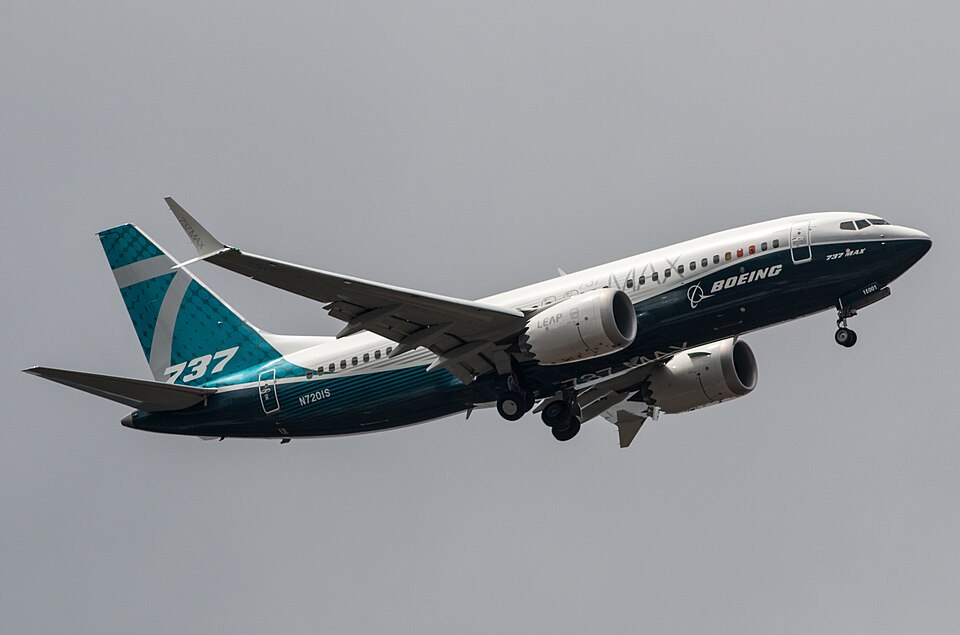
Boeing Delays 52-Jet Monthly 737 MAX Target Until Second Half of 2027
Boeing faces strong pressure to deliver more 737 MAX aircraft, but it will not raise production to 52 jets per month until the second half of 2027. Chief Executive Kelly Ortberg said the company must first make output reliable at 47 per month, extending a critical factory stabilization effort into next year.

The decision prioritizes predictable manufacturing flow over an earlier rate increase. In its third-quarter results, Boeing said the 737 program was progressing toward a stable rate of 47 aircraft per month. Ortberg identified wing production and fuselage work at Boeing’s Wichita, Kansas, operation as areas that need greater predictability before the next increase.
Everybody wants us to go faster. I get that, but we’re going to stay disciplined as we ramp up here, Ortberg said. He added that executing the ramp correctly was more important than reaching the next rate in a particular month.
Why 47 aircraft per month must become repeatable
A production rate is sustainable only when the larger manufacturing system can repeatedly support it. Final assembly cannot compensate indefinitely for unstable deliveries of major structures such as wings and fuselages. If those components arrive late or require uneven work, aircraft can accumulate between production stages, labor can be diverted from planned tasks and delivery timing can become less predictable.
Boeing is also bringing its newer 737 line in Everett, Washington, into the production system. Reaching 52 aircraft per month requires that line to produce five jets monthly while fuselage output in Wichita rises to match the overall cadence. Boeing is currently making fuselages at a lower rate while using existing inventory, so the Wichita operation must transition from drawing down that buffer to supporting ongoing production directly.
That makes 47 per month more than an intermediate number. It is a systems test for whether wings, fuselages, final assembly, labor and suppliers can remain synchronized at a sustained pace. Boeing expects the effort to become fully stable at that rate to continue into 2027. A premature increase could raise work in progress and costs without producing a corresponding rise in completed aircraft.
The slower ramp will also extend the time needed to reduce Boeing’s commercial backlog. The company ended the quarter with more than 6,300 commercial aircraft on order, valued at a record $612 billion. It delivered 161 aircraft during the quarter, only one more than in the comparable period a year earlier, while commercial-aircraft revenue declined.
Safety and quality remain part of the production constraint
Ortberg became CEO in August 2024 after two deadly 737 MAX crashes and a serious January 2024 in-flight incident had intensified scrutiny of Boeing’s safety culture and manufacturing controls. The company has since stressed that production recovery must be tied to quality and disciplined execution rather than output alone.
The new timetable puts that policy into measurable terms. Boeing is accepting several additional quarters before reaching 52 aircraft per month rather than treating final-assembly capacity as the only requirement. Ortberg said the company has built a stronger foundation but still needs to deliver its backlog, strengthen its culture and improve its daily work.
There are signs of program progress alongside the delay. The Federal Aviation Administration certified the 737 MAX 7 and MAX 10 during the quarter, according to Boeing. The company also said certification flight testing for the 777-9 continued, with the first delivery still targeted for 2027.
Financial pressure to increase deliveries remains substantial. Boeing reported a third-quarter loss of $116 million, compared with a $5.3 billion loss a year earlier, while total revenue rose four percent to $24.2 billion. Higher defense and services activity supported that increase, but the company’s commercial-aircraft operation still faced higher projected costs from production-rate adjustments and the supply chain.
The next meaningful milestone is therefore not the 52-aircraft target itself. It is whether Boeing can hold 47 aircraft per month with predictable wing and fuselage flow. Until that intermediate rate becomes routine, the higher target remains a capacity plan rather than a stable production system.
| More aerospace and engineering stories, right in your MSN feed. Follow AMI on MSN |
By Thomas Caldwell — AMI’s senior editor for mechanical and mobility engineering, covering vehicle electronics, systems integration, electrification, chassis systems, propulsion, and safety policy.




